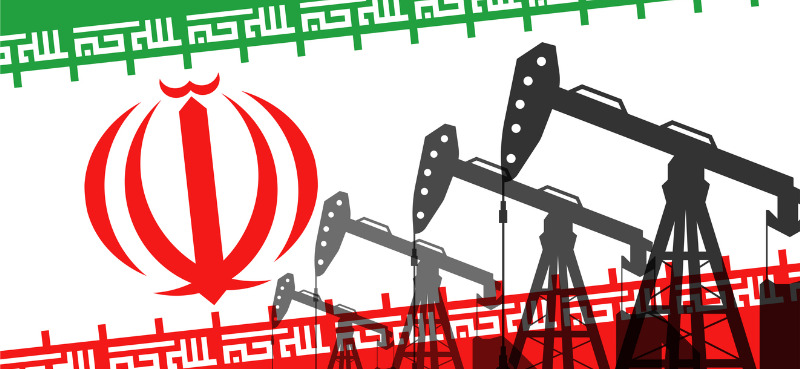


The war around the Strait of Hormuz just entered a more dangerous phase.
Until now, the market’s main concern has been the blockade itself: disrupted tanker traffic, stranded oil supply, and rising crude prices.
But this latest exchange adds a new layer of risk.
On June 9, Iran downed a U.S. Army Apache helicopter near the Strait of Hormuz. The crew was rescued safely, but Washington responded within hours. The U.S. military launched what it called “self-defense strikes” on Iranian air defense systems, ground-control stations, and surveillance radar sites near the strait.
Iran’s response came fast. The Islamic Revolutionary Guard Corps launched missile and drone attacks on U.S. positions in Bahrain, Kuwait, and Jordan. Authorities reported the projectiles were intercepted, with no casualties.
That’s the good news.
The bad news is that this is no longer just a shipping crisis. It’s now a direct military exchange between the U.S. and Iran in the middle of the world’s most important oil chokepoint.
And the math was already ugly.
The Hormuz math
The Strait of Hormuz is a narrow waterway between Iran and Oman, about 21 miles wide at its tightest point.
Roughly 20% of the world’s seaborne oil trade and about 20% of its liquefied natural gas (LNG) passed through it before this conflict began.
With its closure, the world lost access to one of its single biggest oil arteries almost overnight, and global energy markets are still trying to absorb that shock.
Brent crude opened at $96.11 per barrel on June 8, with WTI at $93.55—both hovering just below the psychologically significant $100 level.
Early in the conflict, some analysts forecast prices could spike as high as $200 a barrel if the strait stayed closed.
That matters because oil isn’t just gasoline at the pump. It’s fertilizer, plastics, freight, and chemicals. When oil moves, so does the cost of almost everything that gets shipped, grown, or manufactured.
Why this latest exchange raises the stakes
The key point is that each side is now striking assets that matter to the other side’s military position around Hormuz.
The U.S. targeted Iranian radar and air-defense systems. Iran responded by targeting U.S. forward bases across the region.
That changes the risk profile.
A blockade is already painful for energy markets. But a direct U.S.-Iran exchange around the blockade makes the path to reopening harder. It also increases the odds of a mistake: one missile that gets through, one tanker hit, one base casualty, one retaliation that goes further than intended.
That’s the escalation risk investors need to understand.
The market is already pricing in stress. It is not fully pricing in a full-blown regional war.
That gap is where the opportunity—and the risk—sits.
Iranian strikes have already targeted U.S. embassies and military installations across the UAE, Saudi Arabia, Qatar, Kuwait, Bahrain, Iraq, Oman, and Jordan over the course of this conflict.
And with Trump publicly saying Iran must “pay the price” for any delay on a deal, the diplomatic window is getting shorter.
What investors should be watching
The supply side of this equation is straightforward and severe.
Global oil inventories are falling rapidly due to the Hormuz blockade, and fuel demand is expected to climb into summer.
That combination—falling supply, rising demand—is exactly the setup that sends prices sharply higher.
Energy producers with assets outside the Gulf are in a strong position right now. With crude well above the $70-per-barrel level analysts use as their baseline, these companies are on track for a significant windfall of additional cash flow in 2026.
Defense contractors are another piece of this picture. Missile defense systems—the very technology that intercepted Iran’s projectiles over Bahrain and Jordan—get stress-tested and validated in real combat conditions. That kind of battlefield proof tends to accelerate government procurement orders.
The bigger picture
What gets lost in the day-to-day barrage of headlines is that this conflict isn’t a spike; it’s a structural shift.
The Strait of Hormuz has been effectively closed to normal tanker traffic since late February 2026. That’s more than three months of disrupted global energy flows. The world has been running down strategic reserves and rerouting shipments around the Cape of Good Hope to compensate. Those are expensive, temporary workarounds.
Until there’s a genuine deal, the supply picture stays tight. Tight supply with an unstable chokepoint means continued energy price volatility is the baseline, not a tail risk.
Watch the Hormuz reopening headlines as closely as you watch the escalation ones. Right now, the market is pricing in neither a clean resolution nor a full-blown catastrophe. That’s exactly the kind of uncertainty that creates opportunity—if you know where to look.
For deep-dive breakdowns into the latest market-moving headlines—and how to play them—join Wall Street Unplugged Premium.
Curzio Research publishes market commentary for informational and educational purposes. The opinions expressed and market conditions when the content is published may change. It is not personalized investment advice or an offer to buy or sell securities. Investing involves risk, including possible loss of principal. Do your own research and consult a qualified investment professional before making investment decisions.