
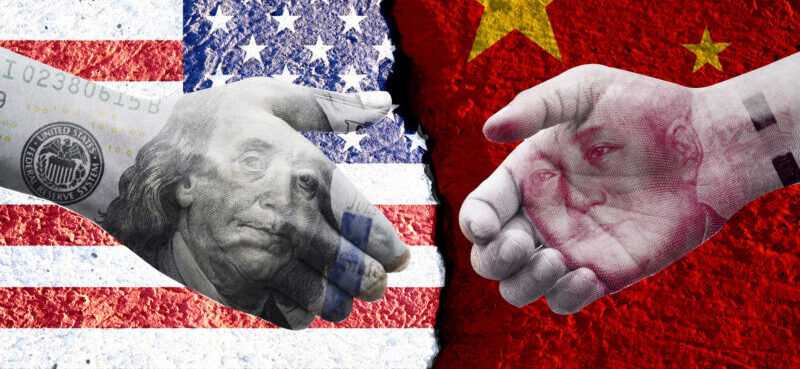
President Trump just walked out of Beijing after a 48-hour summit with China’s President Xi… And the first thing he told the world was that tariffs weren’t even discussed.
Let that sink in.
After one of the most bruising trade wars in modern history—with tariffs peaking around 145% on Chinese goods and 125% on U.S. products in 2025—the two leaders sat down together and apparently had bigger fish to fry.
That’s either a sign of real progress… or a sign that both sides have quietly decided the tariff standoff is just the new normal.
Either way, investors need to pay attention to what came out of this meeting… Because there were five signals buried in Trump’s post-summit comments, and most of them have direct implications for your money.
Let’s break it down.
1. Tariffs: Not discussed and unresolved
Trump said explicitly that tariffs “were not brought up” during talks with Xi.
That’s a striking admission after months of economic whiplash.
U.S.-China two-way goods trade shrank 29% from 2024 to 2025 (from $582 billion to $415 billion).
The trade war did real damage. Both sides know it. But skipping the topic in a high-stakes summit suggests neither party is ready to make the concessions needed for a full resolution.
The current effective U.S. tariff on most Chinese consumer goods sits around 35% after the Supreme Court invalidated some of the steeper rates earlier this year.
For investors, the key takeaway is that companies aren’t getting a clean reset. They still have to plan around higher import costs, supply-chain uncertainty, and the risk that tariff policy changes again with little warning.
And for companies with deep China supply chains—think Apple (AAPL) and dozens of consumer goods manufacturers—the uncertainty isn’t going away anytime soon.
2. Taiwan: Deliberately vague
Trump said he made “no commitment either way” on Taiwan. That might sound like standard diplomatic ambiguity, but it matters a lot for investors.
Taiwan is one of the biggest flashpoints in U.S.-China relations. It also sits at the center of the global semiconductor supply chain, largely because Taiwan Semiconductor Manufacturing Company (TSM) produces many of the world’s most advanced chips.
So when Trump avoids making a clear commitment on Taiwan, it means greater risk for AI, semiconductors, defense, and any company dependent on advanced chips.
The ambiguity may be intentional. It keeps Beijing guessing. (Xi warned Trump directly that mishandling Taiwan would put the U.S.-China relationship in “great jeopardy.”)
But it also keeps markets guessing… And that uncertainty could weigh on semiconductor stocks and other China/Taiwan-sensitive names.
3. Nvidia’s H200 chips: Approved but not purchased
Here’s where things get interesting.
Back in December 2025, the Trump administration granted Nvidia (NVDA) permission to ship its H200 AI chips to China, with a 25% surcharge on sales.
That was a meaningful shift because Washington has spent years restricting China’s access to advanced U.S. AI chips.
Investors initially saw the approval as a potential revenue boost for Nvidia.
But Trump just revealed that China hasn’t actually purchased any H200s yet.
That’s a notable gap between policy and reality. It’s possible Beijing is using the chip purchases as a future bargaining chip (no pun intended). Or Chinese tech giants are waiting for prices, logistics, or political clarity to fall into place.
Either way, the revenue upside that NVDA investors priced into that announcement is still sitting on the table, unrealized.
Investors should watch for actual deliveries, Chinese customer commitments, or any signs that Beijing is steering companies toward domestic alternatives instead.
4. Four meetings in 2026
Trump floated the idea of meeting Xi four times this year. That would be an unusually active schedule for one of the world’s most important—and most tense—geopolitical relationships.
Whether it happens or not, the signal is clear: This is an active diplomatic channel now.
More summits mean more opportunities for incremental deals… But they also mean more opportunities for headlines to whipsaw markets.
Companies with China exposure, from Qualcomm (QCOM) to Boeing (BA), should benefit from the reduced geopolitical temperature… but they also remain exposed to sudden reversals if any meeting goes sideways.
5. Iranian oil sanctions: The wildcard
This one flew under the radar, but it’s potentially the most explosive.
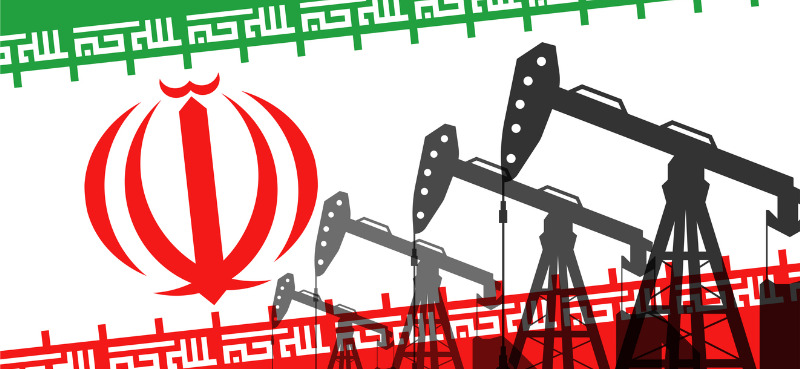
Just days before the summit, the U.S. sanctioned a dozen entities over the sale of Iranian oil to China.
China buys more than 80% of Iran’s oil exports, and the U.S. has been trying to pressure that trade to cut off Iran’s oil revenue.
Now, Trump says he and Xi discussed the possibility of easing those sanctions. That’s a major concession to dangle.
If Washington softens its Iran oil enforcement in exchange for something from Beijing—like rare earth access, H200 purchases, or cooperation on North Korea—that could ripple across oil prices, U.S.-Iran policy, and the broader U.S.-China bargaining table.
For energy investors, looser sanctions could mean more oil supply reaching the market, which may pressure crude prices. For geopolitics, it could signal that Trump is willing to trade Iran enforcement for cooperation from Beijing on bigger strategic issues.
Bottom line: This summit produced more questions than answers. Tariffs are on pause but unresolved. Taiwan is deliberately ambiguous. Nvidia’s China chip windfall is approved, but hasn’t materialized. And a potential easing of Iranian oil sanctions could reshape the energy landscape overnight.
The relationship between the world’s two largest economies is being managed… But it’s far from fixed.
Investors should watch the pressure points: tariff relief, Taiwan rhetoric, actual H200 orders from China, Chinese energy purchases, and any signs that sanction enforcement is being used as a bargaining chip.
We’ll continue to follow this story as it develops. Start your Wall Street Unplugged Premium membership today to stay informed on the latest news… and how to position your portfolio.
Curzio Research publishes market commentary for informational and educational purposes. The opinions expressed and market conditions when the content is published may change. It is not personalized investment advice or an offer to buy or sell securities. Investing involves risk, including possible loss of principal. Do your own research and consult a qualified investment professional before making investment decisions.