
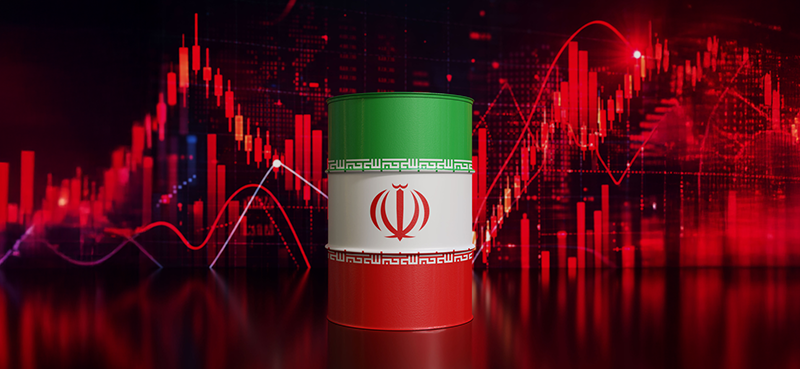
The market briefly thought the worst-case scenario was coming off the table.
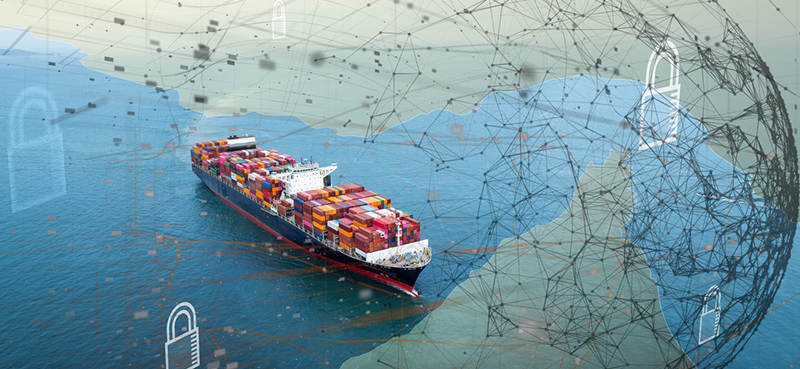
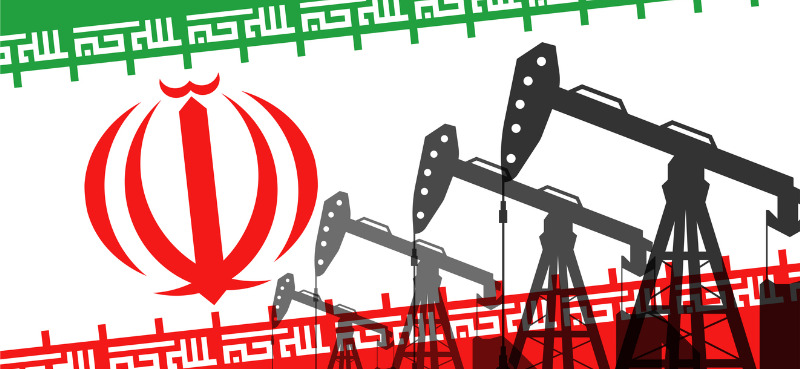
Last week, reports indicated the U.S. and Iran had tentatively agreed to extend their ceasefire by 60 days and possibly permit unrestricted shipping through the Strait of Hormuz.
Oil pulled back on that news.
But the optimism didn’t last.
Iran’s state-affiliated Tasnim news agency reported that Tehran is suspending indirect talks with the U.S. through mediators.
At the same time, Iran is threatening to “completely” block the Strait of Hormuz.
The market wants to believe this will blow over. It’s treated every Iran headline like a speed bump: a few days of volatility and then back to business.
But this time, the risk is more direct.
Let’s talk about why that single word—”completely”—should have every investor paying close attention.
The numbers are staggering
The Strait of Hormuz is, without question, the most critical energy chokepoint on the planet. Roughly 20% of the world’s daily oil supply and 20% of global LNG passes through it.
Meanwhile, global oil demand runs above 103 million barrels per day.
There is no real bypass. No pipeline system or alternative shipping lane capable of handling that volume.
When that strait gets disrupted, even partially, markets feel it immediately. For instance, when the conflict escalated in early March, Brent crude jumped as much as 13% intraday, briefly hitting $82 per barrel.
And after the latest developments, Brent is now trading in the mid-$90s.
Simply put, the risk premium that briefly came out of crude oil has to go back in… and then some.
What this means for your portfolio
Let’s break it down by sector.
Energy is the obvious first mover.
Companies with U.S.-based production (far from the Hormuz disruption zone) are in a strong position. Integrated majors like ExxonMobil (XOM) and Chevron (CVX) benefit from higher crude prices, while their U.S.-based production helps shield them from the direct supply-chain risks facing Middle Eastern producers.
Defense is the other side of this trade.
Any prolonged Hormuz standoff will increase U.S. naval presence in the Persian Gulf. That’s a tailwind for defense contractors with exposure to naval systems, like Lockheed Martin (LMT) and Huntington Ingalls Industries (HII).
The losers:
- Airlines and shipping companies with heavy exposure to fuel costs…
- Consumer discretionary names that rely on cheap gasoline to sustain spending…
- And any equity that thrives on a “soft landing” macro narrative, because $100+ oil quickly complicates that story.
The bigger picture
The market has been treating the Hormuz blockade as low-risk. But the IEA’s own assessment says this conflict has already produced “the largest supply disruption in the history of the global oil market.” This isn’t theoretical. The disruption is happening in real time.
A complete, formalized Hormuz blockade would put a floor under oil prices and a ceiling over growth assets for as long as it lasts.
And the longer the Strait remains restricted, the harder it becomes for markets to keep treating this as a short-term headline.
Here’s what to watch next: whether Iran resumes indirect talks, whether shipping and insurance costs keep rising, and whether Brent holds in the mid-$90s or breaks decisively above $100.
Those are the signals that will tell us whether this remains a volatile geopolitical scare… or turns into a much bigger inflation shock.
Bottom line
Anyone still positioned as if the Strait of Hormuz situation will resolve quietly in the next few weeks is taking on more risk than they probably realize.
This is a moment to own hard assets, domestic energy producers, and defense—not to hope the headlines go away.
Want more help navigating today’s tricky markets?
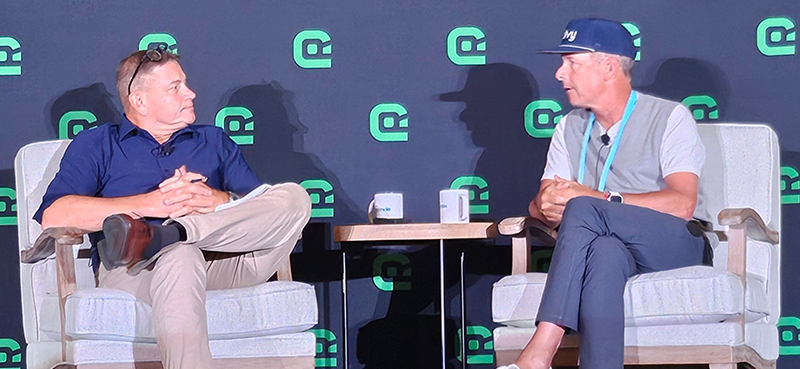
Each week on Wall Street Unplugged Premium, Frank and Daniel break down the latest financial headlines and stock moves… and share how to position your portfolio.
Curzio Research publishes market commentary for informational and educational purposes. The opinions expressed and market conditions when the content is published may change. It is not personalized investment advice or an offer to buy or sell securities. Investing involves risk, including possible loss of principal. Do your own research and consult a qualified investment professional before making investment decisions.