

The latest jobs data appeared to give Wall Street a reason to celebrate.
The U.S. economy added just 57,000 nonfarm payrolls in June, less than half the roughly 115,000 economists expected. And May’s payroll count was also revised down by 43,000 jobs.
The market’s first instinct was to treat the report as good news: the S&P 500 gained roughly 0.7% on the session.
On the surface, the reaction makes sense: A cooling labor market reduces pressure on the Fed to hike again.
But in reality, the data paints a more complicated picture.
Let’s break down what investors may be missing in the latest jobs report… what it really means for Fed policy… and what you should watch next.
The revision problem
On the surface, revisions to job data aren’t unusual. The Bureau of Labor Statistics (BLS) refines its estimates as more employer data comes in.
But this revision points to something bigger.
May payrolls were originally reported at 172,000. The latest report revised that down to 129,000—a 43,000-job haircut. April was also revised lower by 31,000 jobs.
Together, April and May employment was 74,000 jobs lower than previously reported.
That changes the story.
A single weak payroll number can be noise. But a weak payroll number following a downward revision suggests the labor market may have been softer heading into June than investors realized.
None of this means the labor market has broken. Job openings stood at 7.6 million in May, which is elevated by historical standards.
But it does point toward a labor market losing momentum. And that creates a headwind for the Fed.
The Fed’s balancing act
The Federal Reserve has been sitting in a difficult spot all year. Inflation is still running above the 2% target, which argues for keeping rates elevated.
But a slowing labor market argues for cuts to support growth before conditions deteriorate further.
That is why the revisions matter. Every policy decision is only as good as the data behind it. If the Fed is reacting to numbers that keep getting weaker after the fact, it risks staying tight for too long.
Investors also need to understand that rate cuts for different reasons can have different outcomes.
When rate cuts are driven by cooling inflation, it’s a soft-landing scenario: Inflation comes down, growth holds up, and the Fed gets room to ease.
But when rate cuts are driven by a weakening economy, corporate earnings can come under pressure as demand slows.
That limits how much the market can celebrate.
Why did jobs and unemployment both fall?The report also included one detail that could easily confuse investors: The unemployment rate ticked lower, from 4.3% to 4.2%. You might look at that and think, “Wait, isn’t falling unemployment a sign of a strengthening job market? Why would it drop alongside payrolls?” Here’s the context: The unemployment rate and the payroll count come from two different surveys. Payrolls come from a survey of employers, which tells us how many jobs businesses added or cut. The unemployment rate comes from a household survey and shows whether people are working, looking for work, or outside the labor force. The official unemployment rate only counts people as unemployed if they are jobless, available to work, and actively looking for a job. If someone stops looking for work, they are no longer counted as unemployed in the headline unemployment rate. So a lower unemployment rate can happen for two very different reasons: either more people have found jobs… or fewer people are looking for jobs. When it happens alongside a drop in payrolls, it usually suggests the latter. And a shrinking pool of job-seekers reflects discouragement, not recovery. |
What to watch from here
Three upcoming data points will tell us whether June was a blip—or the start of a more serious shift.
- The next CPI print
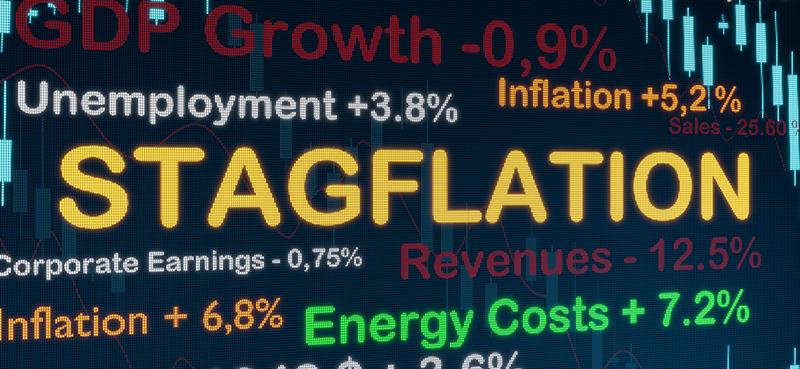
If inflation is also cooling, the soft jobs number becomes the Fed’s permission slip to cut. If inflation stays sticky while jobs weaken, we could be looking at stagflation—when growth slows and inflation stays high simultaneously.
And stagflation conditions put the Fed in a bind: Cutting rates could reignite inflation, while holding them steady could deepen the slowdown.
- Next month’s job revisions
If June’s 57,000 gets revised lower next month, it would suggest the slowdown is broader than the first report showed. One weak print can be noise… but a weak print followed by another downward revision starts to look like a trend.
- Consumer spending data
The labor market and consumer spending are two sides of the same coin. Fewer jobs and slower wage growth eventually show up in weaker retail sales, travel, and discretionary spending—the kind of slowdown that can compress earnings across the S&P 500.
How to position
A cooling labor market doesn’t automatically mean a recession… But it does shift the risk calculus.
In this environment, quality matters more than momentum. Companies with strong cash flows, manageable debt, and pricing power can absorb a softer demand environment than companies that depend on cheap capital, aggressive refinancing, or constant multiple expansion.
Income investors get a complicated picture: Short-term Treasury yields fell after the June report, as traders began pricing in a higher probability that the Fed will hold—or even cut—rates at upcoming meetings.
So locking in longer-duration yields today looks more attractive than it did a week ago.
Bottom line
The June jobs report gave investors exactly what they thought they wanted: a softer labor market and less pressure on the Fed to hike.
But the details are less comforting.
Payrolls badly missed expectations. May was revised lower. And the drop in unemployment looks less like a clean sign of strength once you account for people leaving the labor force.
That does not mean the labor market is in crisis. But it does mean the Fed’s path just got narrower.
If inflation keeps cooling, June’s jobs report could give the Fed room to ease. If inflation stays sticky, this becomes a much harder setup: slower growth, weaker labor momentum, and a Fed with limited room to respond.
That makes the next CPI print critical. It will help determine whether this jobs miss was a blip… or the beginning of a new chapter for Fed policy.
For more analysis on what the latest macro data means for the market—and specific recommendations to play the situation—check out our brand-new, all-in-one investing hub, Curzio Alpha.
Curzio Research publishes market commentary for informational and educational purposes. The opinions expressed and market conditions when the content is published may change. It is not personalized investment advice or an offer to buy or sell securities. Investing involves risk, including possible loss of principal. Do your own research and consult a qualified investment professional before making investment decisions.