
The word no investor wants to hear is back.
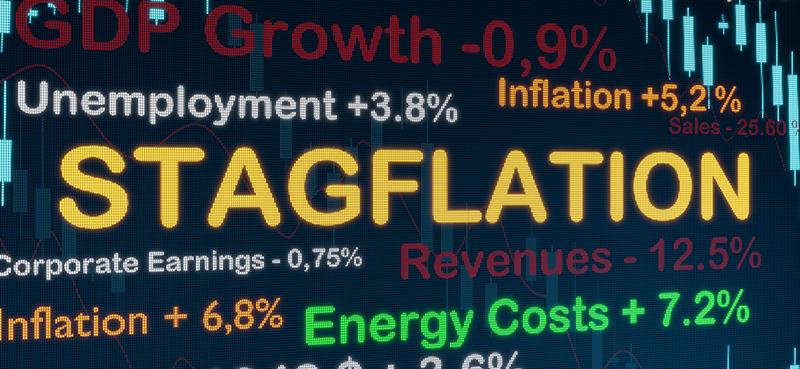
Stagflation.
That’s when economic growth slows while inflation stays stubbornly high. It’s a nasty combination because it puts the Federal Reserve in a bind.
When the economy weakens, the Fed usually wants to cut interest rates to support growth.
But when inflation is still running hot, cutting rates too quickly can make the inflation problem worse.
That’s why investors are paying close attention right now.
The latest data doesn’t show a broken economy. But it does show an uncomfortable one: Growth is slowing… inflation is moving in the wrong direction… and the Fed has fewer easy options.
Let’s break it down.
What the numbers actually say
The U.S. economy grew at a 1.6% annualized rate in the first quarter of 2026, according to the Bureau of Economic Analysis.
That’s still positive. So we’re not talking about an economy in outright contraction.
But the trend matters.
Growth was only 0.5% in Q4 2025. And while Q1 improved from that weak reading, it was still revised lower from the government’s initial estimate of ~2%.
In other words, the economy is still growing… but not exactly booming.
That matters because a slower economy gives households, businesses, and investors less room for error.
Now look at inflation.
The Personal Consumption Expenditures (PCE) Price Index—the Fed’s preferred inflation gauge—rose 3.8% year over year in April. Core PCE, which strips out food and energy, rose 3.3%.
That’s a problem.
The Fed wants inflation around 2%. We’re still well above that target.
And unlike a few months ago, inflation isn’t quietly drifting lower. It’s been moving higher again, helped by rising energy costs, ongoing tariff pressure, and supply chain uncertainty.
That’s where the stagflation fear is coming in.
Why this isn’t the 1970s
When people think of stagflation, they typically think of the 1970s. It was the classic stagflation setup: weak growth, soaring energy prices, double-digit inflation, and a Fed that struggled to regain control.
But today’s setup is different.
Inflation is elevated, but it’s nowhere near the double-digit levels investors saw back then. The labor market is not collapsing. Consumer spending has not fallen off a cliff. And the economy is still growing, even if that growth is weaker than investors would like.
So no, this is not a repeat of the 1970s…
But that doesn’t mean investors should ignore it.
The real risk of today’s economic backdrop
A better way to think about today’s environment is “stagflation-lite.”
While it’s not the worst-case version, it’s enough to create problems for the Fed, pressure corporate earnings, and keep market volatility elevated.
If growth continues to slow, the market will want rate cuts. But if the Fed cuts too soon, it risks reigniting inflation.
On the other hand, if the Fed keeps rates high for too long, it risks putting even more pressure on consumers, small businesses, housing, and heavily indebted companies.
Simply put, the Fed doesn’t have a clean choice. And markets hate that kind of uncertainty.
What investors should actually watch
1. Inflation
PCE and core PCE are the big ones because they’re the Fed’s preferred inflation measures. If those numbers keep moving higher, the Fed will have a hard time justifying rate cuts.
2. The labor market
A slowdown becomes much more dangerous if unemployment starts rising quickly. As long as people are working and earning, the economy can keep grinding forward. But if job losses accelerate, recession risk rises fast.
3. Consumer spending
Consumers drive a large share of the U.S. economy. If inflation keeps eating into household budgets, spending could weaken, putting pressure on corporate earnings.
4. Energy prices
Energy is one of the fastest ways inflation spreads through the economy. Higher oil and gas prices raise transportation costs, squeeze consumers, and hit companies across multiple sectors.
5. The Fed’s language
The exact timing of rate cuts matters less than the reason behind them. Rate cuts due to falling inflation would be bullish. Rate cuts because growth is breaking would be a very different story.
What this means for your portfolio
This is not a market where investors should mindlessly chase risk. But that doesn’t mean you should hide in fear, either.
The better strategy is to stay selective.
Companies with strong balance sheets, real cash flow, and pricing power should hold up better if inflation stays elevated. These are businesses that can absorb higher costs or pass them along without destroying demand.
Energy, commodities, and select industrials can also benefit in an environment where inflation remains sticky.
On the other side, rate-sensitive stocks may face a tougher road.
That includes deeply indebted companies, speculative growth names, and businesses that rely heavily on cheap capital. If rates stay higher for longer, those stocks could struggle even if the broader market holds up.
Cash also still has a role. Keeping some dry powder gives you flexibility if volatility creates better opportunities.
Bottom line
The stagflation scare is back.
Growth is slowing. Inflation is heating up. And the Fed is stuck between supporting the economy and keeping prices under control.
That’s a real risk… But it’s not a reason to panic.
The smarter move is to watch the right signals.
If inflation keeps rising while growth weakens further, the risk of stagflation becomes more serious. But if inflation cools and growth holds up, the market could move past this scare quickly.
For now, stay patient. Stay selective. And focus on quality.
The market rarely rewards panic. It rewards discipline.
Want more deep insights into what’s moving the market—and how to play it? Join Wall Street Unplugged Premium.
Curzio Research publishes market commentary for informational and educational purposes. The opinions expressed and market conditions when the content is published may change. It is not personalized investment advice or an offer to buy or sell securities. Investing involves risk, including possible loss of principal. Do your own research and consult a qualified investment professional before making investment decisions.