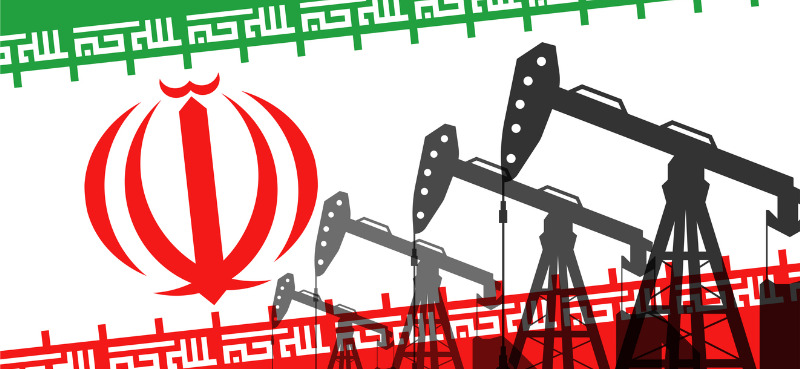

Governments across the Middle East are racing to build a way around the Strait of Hormuz… And one long-dormant route may be key.
The U.S. State Department confirmed this week that Washington supports efforts by Iraq and Syria to restore a western oil corridor to the Mediterranean. Those plans include potentially reviving portions of the Kirkuk-Baniyas pipeline—a roughly 500-mile route connecting northern Iraqi oil fields with Syria’s Mediterranean coast.
The Iraqi government recently authorized a preliminary agreement with a consortium that includes Chevron, U.S. investment firm Capital TI, and Qatar’s UCC to study several strategic export routes, including a proposed corridor through Haditha to Syria’s Mediterranean coast.
Feasibility studies must still be completed, final contracts must be negotiated, and major sections of the pipeline would likely need to be rebuilt.
But the direction is clear: Iraq, Syria, and the U.S. are laying the groundwork for an oil corridor that would completely bypass the Strait of Hormuz.
The route and why it went dark
The Kirkuk-Baniyas pipeline was built in 1952 to carry crude from northern Iraq to Syria’s Mediterranean coast.
At its peak, the line could transport roughly 300,000 barrels per day, but it was shut down in 1982 during the Iran-Iraq war. It suffered further damage during the 2003 U.S. invasion and remained sidelined throughout Syria’s civil war.
For years, the economics and politics of restoring it made little sense.
But the Hormuz crisis has completely changed that calculation.
Before the U.S.-Iran conflict, the Strait of Hormuz handled around 20 million barrels of petroleum every day—about a quarter of the world’s seaborne oil trade.
That concentration gives Tehran enormous influence over the global energy market.
And Iraq has experienced the danger firsthand.
Before the conflict, Iraq produced roughly 4.3 million barrels of oil per day and exported around 3.4 million barrels, primarily through terminals near Basra. A significant majority of those tankers must pass through the Strait of Hormuz to reach international buyers.
When traffic through the strait came to a halt, Iraq lost its primary export outlet. Storage tanks filled, forcing producers to sharply cut output.
A restored Kirkuk-Baniyas pipeline would hardly replace the millions of barrels Iraq normally ships through Basra.
But that overlooks the project’s strategic value.
Every barrel that travels west toward the Mediterranean is a barrel that avoids Hormuz. The route would give Iraq another source of export revenue during future disruptions.
It would also give European refiners more direct access to Middle Eastern crude without requiring tankers to sail through the Strait of Hormuz and around the Arabian Peninsula.
And the Kirkuk-Baniyas proposal is only one piece of a much larger infrastructure push.
Iraq is also studying expanded routes north toward Turkey’s Ceyhan terminal, a pipeline through Jordan to the Red Sea port of Aqaba, and a far more ambitious corridor reaching Oman’s port of Duqm.
Together, these projects reveal the broader shift underway: Middle Eastern producers are spending capital to reduce their dependence on Hormuz.
Why Syria is willing to participate
The pipeline would also give Syria a major economic opportunity as the country rebuilds after years of civil conflict.
A functioning energy corridor could generate transit fees, attract foreign investment, create construction and maintenance jobs, and supply Syrian refineries with crude.
Those economic benefits give Damascus a powerful incentive to protect the pipeline and maintain cooperative relationships with Iraq and the international companies involved.
For Washington, that creates an additional advantage. U.S.-backed infrastructure investment can pull Syria and Iraq toward commercial relationships with American and allied companies while reducing Iran’s influence over both countries.
Where investors should be looking
The Kirkuk-Baniyas project remains years away from carrying meaningful volumes, assuming it advances at all.
That makes this less of an immediate pipeline trade and more of a signal about where energy investment is heading.
Governments and producers are placing greater value on infrastructure that offers multiple routes to market for oil and gas. Pipelines, export terminals, storage facilities, and shipping corridors insulated from major geopolitical chokepoints should attract greater investment as countries prioritize energy security.
Investors seeking broader protection from Middle East instability can also look toward major producers with substantial output outside the Persian Gulf. Companies such as Exxon Mobil (XOM) and Occidental Petroleum (OXY) benefit when supply disruptions drive higher global oil prices, while their U.S. production avoids direct exposure to the Strait of Hormuz.
The larger investment lesson stretches beyond any single ticker.
Energy infrastructure that once looked redundant or uneconomic is becoming strategically essential. The world is beginning to pay a premium for multiple supply routes… and the companies capable of building, operating, and supplying those routes stand to benefit.
Bottom line
Iran’s influence over the Strait of Hormuz gives it leverage over the entire global market.
Reviving the Kirkuk-Baniyas pipeline would give Iraq an alternative western outlet and begin reducing that vulnerability.
The project remains preliminary, and restoring the route would require years of investment and cooperation across several politically complicated countries.
The market impact today comes from the investment signal, rather than any immediate increase in supply.
Washington and its regional partners are beginning to redesign the Middle East’s energy network around the possibility that Hormuz can no longer be treated as a reliable route to market.
That shift could reshape where billions of dollars in global energy infrastructure investment flow next.
We’ll continue to follow this story—and what it means for your portfolio—on Wall Street Unplugged. Make sure to tune in.
Curzio Research publishes market commentary for informational and educational purposes. The opinions expressed and market conditions when the content is published may change. It is not personalized investment advice or an offer to buy or sell securities. Investing involves risk, including possible loss of principal. Do your own research and consult a qualified investment professional before making investment decisions.