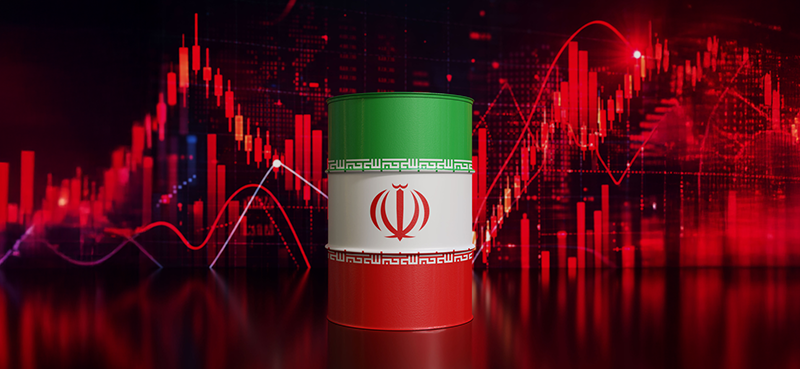
President Trump announced a U.S.-Iran peace deal on June 15 aimed at ending the conflict and reopening the Strait of Hormuz.
Markets reacted almost immediately. Crude crashed and Treasury yields slid as investors priced in expectations for cooling inflation and possibly lower interest rates.
But nothing is written in stone…
Let’s break down the market’s reaction to the deal… why it eases the path to rate cuts… who stands to benefit most… and the key signals you need to watch going forward.
Why the bond market cared about the Iran deal
The immediate reaction showed up in oil.
Before the deal was announced, Brent crude had surged as high as $93 a barrel as traders priced in months of disrupted supply. Gasoline prices also climbed sharply (~$1.50 a gallon nationally vs. pre-war levels), adding more pressure to consumers already dealing with sticky inflation.
So when Trump announced a U.S.-Iran deal aimed at ending the conflict and reopening the strait, crude sold off fast. Brent crude dropped nearly 5% to around $83 a barrel on the news.
But the bigger move was in bonds.
The 10-year yield fell as much as 8 basis points on Thursday after Trump called off plans for fresh strikes against Iran, and bond markets extended those gains as the deal took shape.
That’s because Treasury yields tend to fall when the market sees a clearer path to rate cuts…
And oil was one of the biggest obstacles to the Fed lowering rates.
Expensive crude isn’t contained in the energy market. It works its way through freight costs, manufacturing inputs, food prices, and consumer inflation expectations. The longer oil stays elevated, the harder it is for the Fed to argue that inflation is under control.
That’s why policymakers kept the Fed funds rate parked at 3.50%–3.75% through the first half of 2026. They needed sustained evidence that prices were cooling before cutting again—and high oil prices kept complicating that picture.
The Iran deal changes the setup.
If the Strait of Hormuz reopens and Gulf producers ramp supply back up, oil could move lower from here. And every sustained move lower in crude removes some inflation pressure from the economy.
That gives the Fed more breathing room.
In plain English: Lower oil makes inflation easier to control. Easier inflation gives the Fed more room to cut.
Meanwhile, the bond market doesn’t wait for the next CPI report. It tries to price where inflation and Fed policy are headed next.
And right now, it’s saying the oil shock may be easing.
Don’t get too far ahead of the data
A few things worth watching before declaring the all-clear on rate cuts.
First, the deal isn’t fully locked in yet. Iran and the U.S. were still working through differing versions of the memorandum of understanding as of June 14, covering everything from nuclear program limits to sanctions waivers on Iranian crude oil exports.
Until tankers are actually moving through the strait, the oil supply recovery is a projection, not a fact.
Second, even if oil drops another $10–$15 a barrel from here, the Fed has a track record of moving slowly and signaling carefully. It’s been burned before by declaring inflation dead only to watch it reignite.
And third, the bond market moves on expectations, which means if the deal unravels even partially, yields could snap right back. Treasury markets can give you whiplash when geopolitical headlines are driving the bus.
What to watch from here
The clearest signal will come from the oil market itself. Brent was trading below $84 a barrel as of the June 15 Asia-Pacific open. Watch whether it can hold below $85 as the deal details firm up.
A sustained move toward $75–$80 would meaningfully shift the Fed’s inflation math and put rate cuts back on the table before year-end.
For income investors, this is a critical juncture. If yields are heading lower—and the bond market is betting they are—locking in today’s rates on longer-duration bonds starts to look attractive. But that thesis depends entirely on oil staying down and the deal holding.
For equity investors, the energy sector faces the obvious headwind from cheaper crude… But lower rates and lower input costs are a tailwind for almost everything else, including industrials, consumer discretionary, and housing.
The bottom line
The geopolitical risk that dominated the first half of 2026 may be giving way to a new narrative. The bond market is already writing it. Whether the oil market confirms it over the next few weeks will tell us everything.
We’ll continue to cover this story as it develops—including how to position your portfolio. Make sure to stay tuned on Wall Street Unplugged.