- Welcome, John Stephenson, founder of Granite Point Research [5:32]
- A structural shift is taking place across the oil market [6:30]
- The risk/reward setup for deepwater drilling has changed [10:27]
- Why oil companies are flocking to Africa [19:28]
- A generational opportunity in offshore oil [21:20]
- How an unknown company beat the majors to a prolific reserve [26:51]
Wall Street Unplugged | 1358
A generational opportunity in offshore oil
Transcript was automatically generated.
Frank Curzio 00:00
Hey, what’s going on there? It’s Monday, June 8th, and welcome to this special edition of Wall Street Unplugged. Why is it special? Because we usually tape on Wednesdays, but we’re starting to do a lot of more interviews. And this interview coming up is very, very special. It’s with John Stephenson, who’s an oil analyst at Granite Point Research. He’s covered this industry for over a decade.
Frank Curzio 00:22
He’s a CFA, author, award-winning portfolio manager, lots of credibility. I saw John on Bloomberg talking about a trend that I’m now familiar with that is going to be explosive.
Frank Curzio 00:35
It’s going to see tremendous growth for many, many years to come, and it’s still completely under the radar where I think investors can make an absolute fortune on it. And this trend is offshore drilling. I’ve covered offshore drilling for a very, very long time. I covered it back in the days of Cramer and learned about Rig and their technology.
Frank Curzio 00:53
And it’s kind of fallen off a cliff because shale has taken its place. It’s been a lot easier. It’s cheaper to find oil. Oil prices have come down. It was really expensive, but the dynamics over the past 15 years, especially over the past three or four, have changed dramatically. And I feel like nobody’s really talking about it. You’re looking at offshore and you’re probably thinking,
Frank Curzio 01:14
“All right, it’s back in play because oil prices just surged,” and that could be temporary, which most people believe. I do believe it’s going to be temporary, these prices, this oil price surge where US, Iran, it looks like they’re starting to get along a little bit more.
Frank Curzio 01:29
However, even when prices come down, what you’re going to learn when John’s going to explain is offshore is on fire right now, and it’s been on fire even before the oil price spike because of the new technologies. And now you could drill offshore, listen to this, for under $50 a barrel. That is insane.
Frank Curzio 01:48
I mean, it used to be 90, 95, 100 when I was researching this. That’s why I was like, “Okay, you got to be very careful. Day rates are through the roof.” I mean, this new technology is unbelievable, which John’s going to go into. And every major oil company, like I say, even with AI, follow the money. These companies are spending hundreds of billions of dollars to build these AI systems, to spend on data centers, and there’s so many secondary plays on that.
Frank Curzio 02:10
Same with oil companies where you’re looking at Exxon, Chevron, Total, BP, Petrobras, Enite, Shell, lots of sovereign wealth oil companies in Al Ghola, Nigeria, in Algeria and Nigeria. They’re going all in right now, and they’re going all in specifically off the coast of Africa. And even more specifically, it’s West Africa.
Frank Curzio 02:31
And the reason why is national governments are much more friendly now. There’s good governments there. They understand that, “Hey, we have these majors coming in. They’re going to spend a lot of money. We get to share in this revenue.” And a lot of you might say, “Okay, that’s a risk.” Listen, the majors are the majors. They’ve been around for 100 years. They’re not going to invest in these areas unless they know,
Frank Curzio 02:49
because they’ve been burned over the past 100 years in some of these governments, and all of them are going all in right here. The economics make sense. It makes sense to all the countries, the geopolitics, the governments. Also, you don’t have to worry about political nonsense and climate change initiatives or politicians just trying to make it aim for themselves and rip you in public. You don’t have to deal with that as much if you’re going offshore,
Frank Curzio 03:10
maybe Gulf of Mexico. Most importantly, this area is unexplored to where estimates say that there’s over 125 billion barrels of undeveloped hydrocarbons. And this geology is among some of the best in terms of discovery potential to where Total and Shell have made billion-barrel discoveries. And look,
Frank Curzio 03:30
another thing, if you’re watching this on video, in the last 18 months, I’m showing you major oil companies have discovered more than 119 billion barrels of recoverable crude across West and Southern Africa deep-water basins. You could do the math on that. Even at $75, we’re talking close to $9 trillion. And yes, it’s going to cost $50, $60, whatever. So you’re going to make the difference in that, 119 billion barrels.
Frank Curzio 03:53
The major oil companies need to replenish their reserves. They’re running out of oil, especially over the next 20 years, and that’s how oil companies think. Where can we invest in the next 10, 20 years? Will we get these elephant fines? And it used to be shale, and now shale is getting much more expensive, and a lot of the shale has been basically discovered.
Frank Curzio 04:15
You’re looking at shale prices, and John’s going to talk about this in a minute, are going to go up to $80, $90 that you’re expecting over the next few years. So it’s becoming more expensive because they got to drill deeper, and it’s getting much harder to find because all the easy oil has been found, especially in the US and the Permian and the Eagle Ford and basins like that. So you’re looking at all these majors going in. There’s so many plays in this industry,
Frank Curzio 04:35
tons of ways to make money where you’re looking at Rig, Noble, nuts and bolts players like Technic. We have Technic in our portfolio. We’re up over 250%. I still see massive upside potential, but there’s this huge push from the biggest companies in the world to go into this area. And John’s going to break this down for you. After his interview, you’re going to learn a lot about this trend.
Frank Curzio 04:54
It’s not just him hyping something up. He’s going to go over facts. He’s going to go over numbers. He’s going to go over why it makes sense. And seeing him on Bloomberg, I’m like, “Man, I got to get this guy on the podcast. It’s really cool.” Because I started learning about this trend about six months ago, and now we’re really starting to push forward.
Frank Curzio 05:10
And in a world where everyone’s in AI, AI, everything, right now offshore is like this trend I feel like nobody’s talking about. When we were talking about AI four years ago and nuts and bolt players and Bitcoin miners and stuff that are transitioning from tier one to tier three, which we made a fortune on, this is a trend I think you could do the same. And you don’t have to take it from me.
Frank Curzio 05:29
You could take it from John. And here’s my interview with him right now. John, thanks so much for joining us on Wall Street Unplugged.
John Stephenson 05:36
Great to be here, Frank.
Frank Curzio 05:38
So you just wrote, just published an amazing report about the offshore oil and gas industry.
Frank Curzio 05:46
And I feel like as someone who’s an analyst for 30 years that covers all sectors, loves to find trends early on, I feel like this is a story that nobody is talking about because we see nobody really cared about oil prices not too long ago until the war. Now they’re a lot higher. I want you to talk about your report because quoting you from your reports,
Frank Curzio 06:07
you’re saying there’s a tectonic shift as exploration moves offshore. Talk about what’s going on in the oil industry because, again, everyone’s focusing on Iran, the war, oil prices are higher, and we could say, “Okay, eventually maybe it’s going to be shorter term or we’re going to figure that out.” But once we figure that out, oil trades at normal levels. Talk about what’s going on in the offshore industry because,
Frank Curzio 06:27
again, I don’t feel like anyone’s really telling the story.
John Stephenson 06:30
Yeah, sure, Frank. Look, this is a huge story, in my opinion, and it’s really a structural shift, meaning that this is something that is really going to define the industry going forward for the next decade, probably 20 years or more. And what it is, is we’ve seen the existing basins. The US is the number one oil supplier in the world,
John Stephenson 06:52
the number one producer, but those basins like the Permian, etc., are starting to roll over, meaning that they’re really running low and future production will just not be as much as current production. And that’s starting to happen now, and it’ll certainly accelerate in ’27 and beyond.
John Stephenson 07:09
And so energy companies around the world are looking for where are they going to find more energy to replace that? And reserve lives of the majors are abysmal, really. I mean, they’re below 10 years. And in the case of BP, Shell, and Chevron, they’re below eight, and they’re close to seven years, meaning that if they just stopped exploring today,
John Stephenson 07:31
they’d be out of business in a little over seven years. So that’s not an encouraging backdrop, but what they’re finding is one area that they really haven’t explored to any great extent that is really deep water, ultra deep water. And they’re starting to look.
John Stephenson 07:49
And one of the places that has the most prospectivity, really, is offshore Africa. And that’s because at one point in time, the continents were together before they split. And so the trends that you see in Brazil are things that appear from a geological standpoint to be exactly the same in Africa,
John Stephenson 08:10
and yet no one has been there until now. And this is what’s exciting, is people are going here with the potential for these huge discoveries, and some have been found already, but there’s many, many more left to be discovered. And this is holding out the promise for the industry.
John Stephenson 08:28
And I think what you’re going to see is that companies that have been spending and been successful in the Permian and other basins in the lower 48 in the US are going to increasingly de-emphasize those fields and use them maybe for short-cycle returns,
John Stephenson 08:49
but be focusing on these bigger discoveries that look like they’re very possible in the offshore. And that’s really where the industry is heading. And in fact, 60% of all new high-impact wells this year are going to be in offshore and deep water offshore.
Frank Curzio 09:09
So we’ve heard this story before, I feel like, where people say, “Well, peak oil.” And I always said, “Look, we could drill further and further down. We have so much oil.” But I feel like this story has been told already for many, many years and decades ago. What has changed today? Because if you’re looking at today, I’m talking about today, so we look at reports. This is one of the reports that we saw, Wood Mackenzie.
Frank Curzio 09:28
This is from February, just showing how they haven’t really been spending money on production. The Group of 30 has production shortfall the size of nearly two Permian basins. We’re hearing from our current administration and keeping the politics out of it that, “Hey, we’re going to drill more. We’re going to drill more. We’re going to drill more.” We’ve been drilling the Permian for 80, 100 years, whatever it is.
Frank Curzio 09:49
Why is this happening now? Could you explain that point? Why should people take it serious now? Because I feel like this is a conversation that people talk about, “Dollar’s going to lose its reserve currency.” And we talk about that since the ’70s, and people still say today. I mean, there’s a fundamental shift. The CEO of Technic has come out, which you cited in your report, and this is a company that we’re up 270% on.
Frank Curzio 10:08
And in your report, you actually quote him and say, “Period, full stop. It’s structural change. The most prolific reservoirs other than the Middle East are offshore.” Why is this happening now? Is it just like the underinvestment for so many years? Because I feel like people are going to look at this and say, “Yeah, I heard that story before, but this is much different now. I mean, it’s much more serious.”
John Stephenson 10:27
Well, I think it’s happening for a number of reasons. Among the war, this is more of a short-term catalyst, but even if it got resolved tomorrow, which I don’t think it will, but let’s say it did, you’d still have executives questioning whether or not they want to have all their eggs in, say, the Middle East production basket, or should they be looking somewhere else? So that’s one factor.
John Stephenson 10:46
The other factor is technological change.
John Stephenson 10:48
So what you’re seeing is cost for drilling in deep water has come down substantially. It’s almost halved in the last decade because of technological advances. So what you’re seeing is costs now are $35 to $45 a barrel to get oil off. Pardon?
Frank Curzio 11:09
Say that again.
John Stephenson 11:11
$35 to $45 a barrel. Now, you compare that.
Frank Curzio 11:16
How is that possible? Yeah, because we’re looking at $70, $80 not long ago, when I was researching this industry. $35 to $40, I think people will be really surprised hearing that number.
John Stephenson 11:25
Well, yeah, because what you’re looking at is, number one, technological improvement.
John Stephenson 11:31
In fact, if you look back over the history of, say, the shale revolution, that was, in fact, the technological change that allowed people and producers, rather, instead of drilling straight down, to drill down and go across and frack those reservoirs to get oil out of the ground.
John Stephenson 11:48
Well, the one thing about the oil and gas business is it is a non-renewable business. Once it’s been expanded, at least in that area, that’s it. So you’ve got a technological change that’s happened. You’ve got the scale of these offshore platforms and these reservoirs, if found, is absolutely massive.
John Stephenson 12:10
So that helps impact the economics. At the same time, what you have is rising costs in the existing shale place. It’s now $70 a barrel is the average cost. So at current levels, it’s great. Everyone’s happy. They’re making money. However, you get down to where we were, say, before Christmastime last year,
John Stephenson 12:31
in the high 50s, a lot of those fields get shut in, and the costs are expected to rise to $95 by ’35. That’s what the data show. And so you’ve got this very high-cost environment in the current producing basins. You’ve got lower costs because of technology and offshore.
John Stephenson 12:53
You’ve also got very different prospectivity there. It’s massive. These can be company-making fields for the industry. And you’ve got the fact that the players that are best, or the companies, rather, that are best suited for this change are the national oil companies and the super majors.
John Stephenson 13:15
And the super majors have a problem, which is their reserve life is very low, and they need to focus on the drill bit, whereas before they were focused on renewable projects and dividends and share buybacks and things that were fine, but they weren’t ultimately sustainable.
John Stephenson 13:31
So a lot of things have to change, but this is why it’s happening because a lot of activists are getting involved, financial activists like Elliott, and are saying, “This has to change. You have to focus on the drill bit.” So you’re seeing really a rallying cry for the super majors to go and explore at the same time that now it’s much more economic,
John Stephenson 13:51
and the alternative going to shale is looking less and less desirable.
Frank Curzio 13:56
Yeah, that is an amazing story in itself because what we hear is just shale and how much oil we’re going to be able to produce here. And like I said, people don’t realize how long we’ve been drilling the Permian, and people try to mimic that in shale. And it’s very hard. It’s easy for shale because they hit on almost every well because we’ve been drilling there for so long. It’s easier to find, and other countries can’t mimic it. But to me, this shift is more.
Frank Curzio 14:16
We’re going to get to Africa in the offshore part, but even onshore, because there’s so many companies that operate in the Permian. If you’re saying that those prices are going to go up for $70 a barrel, okay, that was a very big deal before the Iran war. Now you say $95, and you’re not talking about like, hey, 2050, 2060. You’re saying 2035, expect to rise to $95 a barrel. If we’re not at that level,
Frank Curzio 14:36
these guys can’t break even outside of hedges and whatever. We don’t want to talk about that.
Frank Curzio 14:40
But it’s almost that it puts the majors in such a great position because there’s so many companies that operate in the Permian and other places where if shale is that expensive, I guess the biggest players right here, like you said, the biggest winners are going to be the majors because they can afford to do this offshore and the day rates and everything. Because, I mean, this shift isn’t just like, okay, offshore.
Frank Curzio 15:00
I mean, this is major stuff that’s going to take place with all the companies that are drilling onshore, I think. I mean, how do they adjust their strategies?
John Stephenson 15:06
Well, I think they have to start looking for offshore properties, I think, or go further afield and look for more traditional places or apply the same techniques in other smaller shale basins around the world. But I think it’s very problematic. If you think about what’s happened in the industry, because it was relatively affordable to get into the shale place,
John Stephenson 15:28
and you could drill a well for maybe a million and a half or so dollars, you could have a pretty quick return on that investment, and that would keep you going. Of course, it resulted in a dramatic production boom. I mean, it wasn’t that long ago. The US was producing six or seven million barrels a day, and now it’s producing 15.
John Stephenson 15:48
So it’s had a dramatic impact where the whole production has essentially doubled. But again, as time has gone on and these existing basins, and the Permian being the largest and probably the most prolific, the most prolific, has started to wane a little bit, these costs have crept up.
John Stephenson 16:07
So once those areas have been drilled and produced, then you’re looking at more tertiary and secondary opportunities, even within that basin. So your costs continue to go up because you’re looking at more marginal reservoirs. And all of this starts to impact the overall economics.
John Stephenson 16:28
And I think you’ve had really a boom in the industry, a boom in the number of names and production, etc., and all of that has to essentially reverse itself over time. And the majors have that luxury of having relatively large capital budgets, not like they were,
John Stephenson 16:47
but definitely they are now refocusing on it because there is so much pressure on them to reverse this trend of declining production, declining exploration, boost their reserve lives, hedge against political instability around the world. And that is why I believe that this is happening at this time,
John Stephenson 17:07
is because all of these things are really happening at this point in time where you’ve got all this instability. The war certainly surfaced some of these issues and adds to it. But this trend was there in existence before.
John Stephenson 17:23
But I think now we’re just focusing so much more on it because it’s become a crisis for many parts of the world because it impacts not only oil and gas. It also impacts fertilizer, helium, other things. So it’s hugely impactful. And right now we’re releasing barrels from the Strategic Petroleum Reserve,
John Stephenson 17:43
but come July or early August, that’s run dry. And then what’s going to happen is you’re going to see the real price hit the marketplace, not the artificial futures price, which really doesn’t reflect it. I mean, you’ve got barrels of oil that are sometimes $250 in Singapore, where you have real demand.
John Stephenson 18:02
That physical price is much, much higher than the $100 or $98 or whatever you’re trading at currently because that just reflects optimism that this war will come to an end soon, which hopefully it does. But once the physical shortages begin, that’s a huge problem.
Frank Curzio 18:22
And it’s amazing, but you’re not just sounding the alarm here. I love the fact that you cite the RLIs, which is the Reserve Life Index, and showing that the RLIs have fallen below eight years. The situation must be addressed. Focus on exploration. Again, I don’t want to get too technical if people don’t know, but also what people probably heard is the reserve replacement ratio.
Frank Curzio 18:40
And you’re saying that six of the seven super majors is just 77%, meaning that they have to find ways to replace these reserves, and they can’t really do it right now because they just need so much oil. So let’s talk about Africa. Why Africa? When you hear offshore, you can go anywhere.
Frank Curzio 18:59
But for me, when I look at trends, one of the biggest validations, even when it comes to AI, even when it comes to Bitcoin or whatever it is, you want to follow the money. If the money is being spent just like in AI, there’s hundreds of billions of dollars being spent. You got to follow it. It’s not like people are just talking about Pipe Dream.
Frank Curzio 19:14
The Exxon Mobil CEO, the Exxon, actually said recently, he’s in the news saying oil prices are going to spike because of what you just said, because you’re depleting a lot of those extra reserves that we had. Why Africa? And what has changed with Africa? Because we recently found some huge elephant finds there. And now it seems like following the money, looking at the majors, this isn’t people just saying stuff.
Frank Curzio 19:36
They are pushing into these areas. Off Coast Africa is a very big place. Why Africa and what areas?
John Stephenson 19:45
Well, so Africa has really been overlooked. I think that’s the main reason. They haven’t really gone there until recently, in the last couple of years, that you’ve seen them go there, the majors and even a few juniors. So that’s one major reason. The other major reason is just the geology. It’s very similar to the geology of Western, South America,
John Stephenson 20:07
Gulf, etc., because these plates, these continental plates, were together at one point. So that geology spreads along and is very analogous. And you’ve seen huge discoveries in Guyana and Brazil and other places on the other side of the African transform margin. So that’s the other side.
John Stephenson 20:26
The geology is compelling. It hasn’t been explored. There is and has been in the past a little bit of instability in Africa.
John Stephenson 20:34
The other side of it is, I think they are now seeing what has happened when the oil majors have left because they focused on places like the Permian and other places that were easier at the time. So now what’s happening is the governments there are trying to offer excellent fiscal terms.
John Stephenson 20:54
They’re trying to court the industry. So that’s another factor. So you’ve got all of this convolution of factors coming to play. But the major reason is the prospect of large finds. We’re talking a billion barrels or more, which are for a large company very, very significant. And obviously, for a small company, they’re enormous.
John Stephenson 21:16
So I think it’s all of those things that are happening.
Frank Curzio 21:20
So I got introduced to you from a company that we’re working with, which is BluEnergies. And I knew it was taking place offshore, and we’re very selective with the companies that we do work with. I’ve talked to Greg Stenke. And then you also started covering this stock as well because they’re right in the middle of this.
Frank Curzio 21:39
I knew offshore. I didn’t know there was any smaller companies. You look at the majors. And again, like you said, a billion dollar find is big for them, a billion barrel find. But BluEnergies is a company that has an unbelievable management team. Antal Far is a co-founder as well. And they went in five years ago and said, listen, we believe this is going to be massive.
Frank Curzio 21:58
They went off to short Libya, and they bought a whole bunch of blocks. And now you’re looking at Liberia, which is right in this area, and you’re seeing more of these majors come in. Talk about BluEnergies and what attracted you to that. Because for me, when I talk to Craig and I mean due diligence, it’s how is this small company in the middle of all this?
Frank Curzio 22:19
And then all of a sudden you see Total, one of the biggest companies in the world in the oil space, sign a partnership with them, which is huge. And now you’ve just seen this grow even more. How did you find BluEnergies? How did you get in touch with that company to the point where you’re like, wow, how do these guys get this property? They’re sitting right in the middle of this. It feels like they’re sitting in Manhattan like 200 years ago.
John Stephenson 22:38
Yeah, pretty much. Well, I started looking around for companies I would be interested in covering. And this seemed like an incredible story to do research on. And my business is a relatively new business. I started about a year ago. And so I just called Craig out of the blue to say,
John Stephenson 22:57
hey, I would love to cover this company. And ever since that conversation and subsequent to that, I’ve watched and seen what they’ve done. And I, too, have been hugely impressed. It’s one thing to maybe have an interest in something and maybe a license and hold it as sort of an option.
John Stephenson 23:19
It’s quite a bit another, quite a different proposition once you start really partnering with the best in the business. And if you look at who’s drilled most of the wells in West Shore Africa, it’s Total Energies. So they’ve got the best players as a partner. I mean, the history of it was they were there in the Harper Basin,
John Stephenson 23:40
which is the core area where they have. They have 40% of the basin, three blocks. They got that in 2024 when no one was around, literally no one.
John Stephenson 23:51
And since then, we’ve seen just in that area, offshore Liberia, but its neighbors, Ivory Coast or Quat D’Oivoire and Sierra Leone are on either side of them. There’s been over in the last year, year or so,
John Stephenson 24:11
a 550% increase in activity in terms of the number of companies coming into this area. So it’s exploded. It’s growing over the last four and a half, five years at a CAGR of 117%. It’s enormous growth that’s happening because people are realizing that,
John Stephenson 24:32
number one, this geology is very similar to the ones that were huge finds were found in Guyana, Brazil, etc. Those same areas appear to be in West Shore Africa, more favorable fiscal terms from the governments, a huge need to replace reserves from the super majors,
John Stephenson 24:53
all of that. And really, when you look at it in terms of a pure play opportunity from a junior, I can’t find another one other than BluEnergies that’s there and to be able to partner.
John Stephenson 25:05
And prior to partnership with Total Energies, Total Energies came in and took the four blocks adjacent and contiguous with the three blocks that Blue had. So they already have four blocks plus their partner, 65% operating partner in Blue’s former blocks.
John Stephenson 25:25
So this is a huge vote of confidence, in our opinion, in my opinion, in both the basin and in BluEnergies itself. I mean, they were there, but this is not a first for this management team. They’ve found other things as well. And so this is a special group of people and a special skill set that they have.
Frank Curzio 25:46
So BluEnergies, when I looked at this company and I said, OK, if I recommend it, you’re looking at what I loved is, and this is pure speculation what I think, after they bought this property, I feel like Total probably wanted to buy the whole thing from them. And what I love about Craig is like, no, we want to see this through. We believe that this is going to happen. We believe it’s going to be much bigger.
Frank Curzio 26:05
You know what I mean? I love that because usually we see juniors and different management teams, not one with Craig and Antal Far where hey, we just want to put our stake in the ground, drill a couple of holes, show us something here, and sell the property. They want to see this through. And now how important is that deal with Total? Because without that deal, you’re saying, OK, they’re going to have to raise money.
Frank Curzio 26:24
It’s going to take a long time to discover something. Yes, they’re in the Harper Basin, which is one of the most promising basins right now and discovered. How important? Talk a little bit more about that Total deal because from a risk-reward perspective, and that’s why we invest in juniors, we want that massive upside, but we want to try to limit our risk as much as possible because a lot of these are risky. Talk about how important that deal was because to me,
Frank Curzio 26:45
that was the game changer in me saying, wow, this company is for real. This is a very big deal.
John Stephenson 26:51
Yeah, I couldn’t agree with you more, Frank. It is a game changer. The reality is, yes, they had these leases. Yes, they had very promising initial indications that they probably are onto something with multibillion barrel potential. So that itself is phenomenal.
John Stephenson 27:09
But to be able to convince the biggest and the best operator in this region that they really had something was something very special. Look, they set up two data rooms, one in London, England, or London, UK, and one in Houston. They had interest from five of the seven super majors.
John Stephenson 27:30
All five of those super majors signed non-disclosure agreements, which they never like to do. And then the process worked its way down, and they were hopeful. And Total Energies was interested, and they came out with the best partnership that’s possible.
John Stephenson 27:50
And I think to be able to retain a very healthy 35% interest in this is huge.
John Stephenson 27:56
It speaks to their conviction in this particular basin, this basin, and these particular blocks. It speaks to their experience that they know that they have something that’s special. And I think from an investment perspective, it should give people a lot of comfort that management’s all in financially.
John Stephenson 28:18
They’re all in in terms of effort and everything else. And they’re all in because they believe that long term, this is enormous.
John Stephenson 28:26
And as they start to explore more, as they have more seismic, and they better define what they’re dealing with in reservoirs and eventually get to drilling, which will be the next major catalyst, I think you’re going to see valuation continue to step higher and higher.
John Stephenson 28:41
Now, on the downside, I think it’s pretty limited because you’ve got this arrangement with Total Energies that I think de-risks that. You have a catalyst there. You might actually get another opportunity from another super major who says, I’d like to take 10% of Blue’s stake. And that would be a further validation,
John Stephenson 29:02
whether they would take it, whether the terms would be favorable. That’s something for them to decide should and if that happen. But that could be another reason why. And another sort of downside risk mitigation side of the story is they have enough that they can kind of trade away if necessary.
John Stephenson 29:20
They’re not strictly reliant on the capital markets to keep raising more money to fund this work commitment that they have with the Liberian Petroleum Authority. So I think this story is very exciting. And look, what I try and do as an analyst is sort of say, OK, this is great, but how have things progressed over time?
John Stephenson 29:43
And in this particular case, everything they said was going to happen did and bigger and better than I thought. And what I try and do is, and I’m sure you do something similar, is just triangulate and sort of separate noise from signal. And right now,
John Stephenson 30:02
I think, and since the beginning, they’ve been one and the same. In other words, the hype, if you will, is justified because they have done such a good job of executing. And they really find themselves in a really remarkable situation.
Frank Curzio 30:21
Yeah. And what I love is that you see whether it’s Petrobras or Shell taking out blocks that are in close proximity. I feel like this could also be a driver of the stock because very few people know about this company right now. I mean, they just got their listing, the OTC listing, which is, again, they’re in Canada. And every Canadian company wants this. So they have more liquidity. It makes sense.
Frank Curzio 30:40
It’s not like they’re just over the counter because they have to go through all the proper requirements with the regulatory authorities. So you’re seeing a lot of people, even the trading is not big on this. And I love covering stocks at this stage. What I liked about your report is a lot of times when I see people cover small caps,
Frank Curzio 31:00
they have these reports where they have these crazy outlandish price targets. And here’s a company that’s trading, and I could show you guys where Blue Energy is. So BLUGF is the symbol here, and it’s 210. You have a target like a little over 100% on this. But when I look at your report here, you say 475, but you talk about them.
Frank Curzio 31:20
And this is what you want. I mean, the massive upside of this commercially, a significant upside potential, a chance of commerciality where this could be I think that’s what you wanted in junior, this massive upside. But even without it, you’ve got the protection with Total saying, OK, we’re going to share some of these costs. I mean, how important is that?
Frank Curzio 31:39
Because when I see a price target come out and a price target, you could have put $20, $30, and it’s always like, OK, relax. You’re just like, it should easily be at 475, but it has a chance to really be blockbuster.
John Stephenson 31:50
Yeah, I wanted to show people the possibility for this stock. And I think, in fact, that may be conservative of what I put out in that table, the sensitivity table. But look, I think as an analyst, you want to be conservative. I mean, you don’t want to take the peak price. You want to take mid-cycle prices, et cetera.
John Stephenson 32:10
You want to risk things even more than you might normally because things can go wrong. But again, I think the consistency of the message, the consistency of the action, the fact that things just seem to be working really well. And I really believe that they will prove up that they have a very significant resource here.
John Stephenson 32:31
And they’ve got some of the smartest minds, the best technical people on this. I mean, their own technical people are phenomenal. And then they add in the partnership that really brings it to the next level. But yes, I think it’s a credibility issue for an analyst if they come out with too high a target price. I do believe there’s tremendous upside.
John Stephenson 32:50
But this is the unique thing about BluEnergies right now. They have enormous upside. But even where they are at, they still have good upside on a very conservative case. We don’t presume really that much in coming to that target price of 475 Canadian.
John Stephenson 33:11
So I think there’s still good money to be made here. But I think there’s even more money for people who are willing to wait a little while on this because it’s such a unique play. As I say, I don’t think there’s any other junior that is there as a pure play that you can get as much upside or leverage. Sure, you could play Total Energies,
John Stephenson 33:30
and you’d probably do OK as this is discovered. But you’re not going to get a 10-bagger or maybe a 20-bagger. So that’s what’s at stake here. And so this gives it an asymmetric opportunity for investors where you have a relatively low downside risk. I mean, obviously, oil prices could completely crash, and all kinds of other things could happen.
Frank Curzio 33:52
Lots of risk, yeah.
John Stephenson 33:52
But I think it’s unlikely. In fact, I think oil prices are likely to stay more elevated than they were because there’s going to be a risk premium because everybody now knows that if there’s a cessation of hostilities in the Mideast, in Iran, the Iranians could always close the trade of Hormuz at any point in time. And that will put a few dollars,
John Stephenson 34:11
at least probably 5 to 10, under that price. So I think you’re not going down to $60 anytime soon. You’re probably more likely to be 70 to 75 going forward. And that’s, again, at the break-even of Shell and well below what it is for offshore.
Frank Curzio 34:30
Yeah. And just to clear up, I put up that you have a target in Canadian, which you have the currency difference, guys. It’s the same price, but it’s a different price. But it’s the same valuation, basically. And like you said, one of the things I like about this is you don’t need this company to actually it’s not even the drilling results.
Frank Curzio 34:47
OK, fine, drilling and seismic data and all this stuff and just proving this asset. But the more you see the majors come in at, there’s a big discovery. That’s also going to be a driver of this stock. And that’s what I like, too.
John Stephenson 34:58
Absolutely. And I mean, E&I just picked up 15 blocks in the last month. And then Liberia was sort of the three of these guys, Liberia, Ivory Coast, and Sierra Leone, those have been sort of driving West Offshore Africa growth over the last four and a half, five years.
John Stephenson 35:19
We’re only five months through ’26, after all. But they’ve been the principal drivers, responsible for about 70% of all offshore block wars. But then you have Guinea coming along and offering up 15 blocks to E&I. And they have the reputation of being amongst the best explorers in the world consistently.
John Stephenson 35:40
So you’ve really got everyone starting to bracket this BluEnergies, Total Energies opportunity set in the Harper Basin and offshore Liberia. And that’s what you’re seeing. That’s a company map that they’re throwing up. But it shows what it’s like.
John Stephenson 35:59
And I think they also have another one where I put one in the report that shows what it was just a year and a half, two years ago when they first came. There’s no one around. And now look what’s happened. I mean, it’s been phenomenal in terms of growth, in terms of companies. And these are major companies. These are the most significant companies, for the most part, in the world doing this.
John Stephenson 36:20
So these are people who do bet big. They do have the technical skills. And they see what Blue sees and what I see and what you guys see, which is this has tremendous prospectivity. It has tremendous geology. It has to be proven out, yes. But that’s where the opportunity lies.
John Stephenson 36:40
And you’re not going to get this kind of return if you’re not in relatively early. But I think there’s huge upside from here. And I think that continues for many years. And eventually, maybe there is a sale of their interests down the road or a partial sale. But that’s for another day.
John Stephenson 37:00
And I think right now, this on a balance of risk and reward looks incredibly attractive. I personally have never seen an opportunity like this, at least not in the resource space.
Frank Curzio 37:13
Interesting. I’m pulling up too, if you guys are watching the video of this, you do a good job. 2024, you have a map there, Liberia, Sierra Leone. And you don’t see a lot of people, a lot of companies there. And then the next map that you see, so this is all taking place now. You look at all the majors. You’re looking at the money gain pushed in there. And people might say, OK, Africa could be dangerous.
Frank Curzio 37:33
The majors, I mean, they’ve been doing this for hundreds of years. They’re not going to go into areas unless they’re very secure with the government, understand what they need because they’ve been hurt before. They’ve been through this. So these are the smartest guys in the room. When they’re spending that money and they’re going there just to see this map where credits to Craig Stankey, being there four years ago, over four years ago,
Frank Curzio 37:53
and now look at everybody following, you don’t really see that either. So this is an exciting opportunity. I love reading your report. And even the part where you’re putting the price points in and doing the research and the reserve ratio and how the majors have no choice. They have to find these big, they have to replace them. They have to find big fines. And this is the area that they’re doing in.
Frank Curzio 38:13
And it’s nice. Not just BluEnergies, but you’re just seeing this major shift. I’m sure there’s going to be more plays that you’ll recommend.
John Stephenson 38:18
Oh, you are.
Frank Curzio 38:19
And it’s exciting.
John Stephenson 38:21
Absolutely exciting. I mean, Liberia has a licensing round this month. So you’re going to see probably more activity. This is just the start. I mean, it’s accelerating the growth in this area.
Frank Curzio 38:31
See, I didn’t even know that. That’s great to know. So there’s going to be more news of who else is going to go in there.
John Stephenson 38:36
More news.
Frank Curzio 38:37
I didn’t even know.
John Stephenson 38:39
So that map will probably have to be revised in three or four weeks.
Frank Curzio 38:42
That’s crazy.
John Stephenson 38:43
Pretty soon, you won’t have any blank space there. That’s the rate it’s going at. It’s exponential.
Frank Curzio 38:51
Well, Jen, thanks so much for coming on. I love talking to analysts and just shooting the breeze. And it was really cool just to read your report. And it was awesome. And I just said, you know what? This is really good. I saw you on TV as well. It was Bloomberg. And I was like, wow. It was a really good interview. It had all facts and stuff. It wasn’t fluff. And I really love your research report. And it’s nice. It’s nice getting to trends early.
Frank Curzio 39:09
And this is really big. I feel like we’re early here. No one’s really talking about it, especially with BluEnergies. So I just want to thank you for coming on and hopefully join us again soon.
John Stephenson 39:16
Oh, absolutely. My pleasure, Frank. Thanks so much.
Frank Curzio 39:20
Hey, great stuff from John. Just provided so many great stats of reserve replacement ratio, how the majors are in dire need of replacing these oil reserves. And they’re actively going to Africa right now. And they’re spending boatloads and boatloads of money. They have great progress so far, lots of barrels being explored, billions.
Frank Curzio 39:40
And the past 18 months has been pretty crazy. I know Petrobras, there was news out that they just actually I think the blocks that they purchased are really right next to BluEnergies. And he mentioned BluEnergies because BluEnergies is really exciting. And this is a company that we’re working with, a consulting and marketing, and very selective of companies we work with. And when I had the opportunity to work with this company when I first heard about it, I was like, eh, I don’t think it’s going to work.
Frank Curzio 39:59
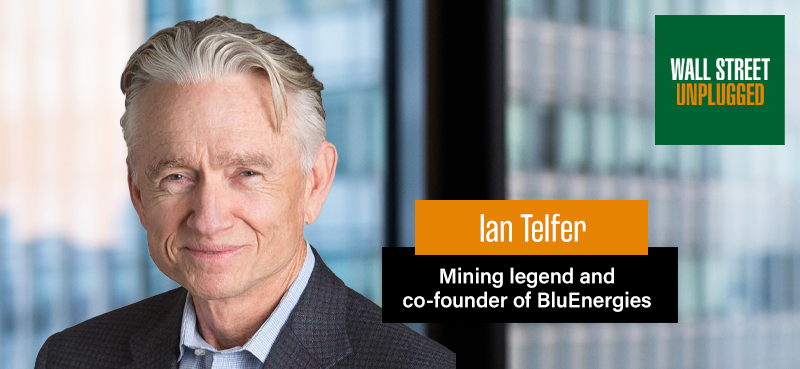
Offshore driller and tiny company. Then I realized Ian Telfer is involved. And I realized I got to know Craig Stankey very, very well. And he was just incredible.
Frank Curzio 40:11
Being to this market five years before a lot of these majors came in and being able to buy those blocks in the Harper Basin and for Total and now Total came in and signed that deal with them is just incredible. And just learning and seeing. And I have Technic been a bit of a portfolio for two years, which is a play on this.
Frank Curzio 40:28
And so I’ve seen it by covering that stock of how much they talk about offshore. And now it’s getting bigger and bigger and bigger because shell oil is just getting very, very expensive. So this is a remarkable company that I like, BluEnergies, as you know. One of the select few that we do work with now in our consulting marketing division. So I’m very excited with them. And I love what they’re doing. And I think this stock’s going to be on everyone’s radar.
Frank Curzio 40:48
And once they get that volume up, which they’re doing right now, you’re going to see a lot of analysts cover this stock because it’s very, very rare to see a major partner with such a big company like this, especially in offshore and drilling and stuff like that. You normally don’t see that. So this is really exciting, really exciting stuff. And I think this is a stock that could follow DGXX. I know the DGXX got in a little bit last week but still up tremendously.
Frank Curzio 41:08
Vivo is another one. I don’t know if you saw Telescope Innovations. It’s a company that we’re working with. Just incredible news and selling their self-driving labs with AI and electronics. So again, I love this part of the business, working with smaller companies that have great management teams that just want to make a name for themselves and are doing the right thing and all in. And that’s BluEnergies. So really exciting.
Frank Curzio 41:27
Hopefully, you liked the interview. I thought John was fantastic. I glad he came on. If you’re looking to play this trend, not just through BluEnergies, you have RIG. Paulson just took a big stake in Transocean. That’s RIG. Nobles is another one. Sdrl, Technic, which I mentioned, is FTI. So I’m going to be looking at more names to give to you throughout our newsletter and podcast and stuff like that.
Frank Curzio 41:49
But very, very early on this trend, now a lot of people are talking about it. That’s going to change pretty soon, I think. And I think all these companies that I mentioned, especially BluEnergies, are going to benefit tremendously. So questions or comments, I’m here for you. Feel free to email Frank@curzioresearch.com. And I’ll see you guys on Wednesday. Take care.
Announcer 41:48
Wall Street Unplugged is produced by Curzio Research, one of the most respected financial media companies in the industry. The information presented on Wall Street Unplugged is the opinion of its host and guests. You should not base your investment decisions solely on this broadcast. Remember, it’s your money, and your responsibility.
MARKETING DISCLOSURE: BluEnergies Ltd pays Curzio Research Inc for marketing services. Access the full disclosure here.
Curzio Research publishes market commentary for informational and educational purposes. The opinions expressed and market conditions when the content is published may change. It is not personalized investment advice or an offer to buy or sell securities. Investing involves risk, including possible loss of principal. Do your own research and consult a qualified investment professional before making investment decisions.