
The global oil market may be approaching a point it has never reached before.
According to JPMorgan, worldwide oil inventories are getting dangerously close to the minimum amount needed simply to keep the system functioning.
Bear in mind, some oil always has to remain in the system: Pipelines need oil inside them to maintain pressure… Refineries need minimum working inventories to operate… Storage tanks can’t be drained completely… And millions of barrels are constantly tied up moving between producers, refineries, and consumers.
JPMorgan estimates that a minimum of roughly 6.8 billion barrels are required to keep the system running smoothly.
And it says global inventories could reach that physical floor this month.
That would be concerning on its own. But several developments over the past few days are putting additional pressure on an already tight system.
That makes one question increasingly important:
Can the world actually produce, refine, and deliver enough usable barrels to avoid that threshold?
The answer to that question depends on several factors: whether Middle Eastern barrels can make it through critical shipping lanes… whether refineries can turn crude into gasoline and diesel… and whether those fuels can reach the markets that need them.
And right now, pressure is building at several of those points at once…
The Middle East could face another escalation
The biggest immediate risk is another disruption to Middle Eastern supply.
Over the weekend, President Trump signaled the war with Iran could be approaching a “major turning point.” Iran’s Revolutionary Guard responded by warning that further U.S. escalation would lead it to change its tactics, weapons, and targets.
At the same time, another important oil chokepoint is coming under pressure.
Iran-aligned Houthi forces in Yemen have expanded their control around the Bab el-Mandeb Strait—the narrow waterway connecting the Red Sea with the Gulf of Aden. Earlier this month, the group seized strategic territory overlooking the strait, increasing its ability to threaten shipping through the region.
Simply put, two of the region’s most important escape valves are under pressure at the same time: Hormuz remains impaired, while the Red Sea route has become less secure.
Every barrel delayed or removed from those routes has to be replaced somewhere else. And the closer global inventories move toward JPMorgan’s estimated physical floor, the less spare supply the system has available to fill those gaps.
Russia just lost a major refinery
Over the weekend, Ukraine launched one of its largest attacks on Russia since the war between the two countries began.
Russian officials said more than 1,600 drones were intercepted across the country, including roughly 450 targeting Moscow. One of the targets was the Moscow Oil Refinery, where several major processing units were damaged.
Reuters reported that crude processing at the facility has stopped, and repairs could take several weeks.
This isn’t a small facility. The refinery processed about 11.6 million metric tons of crude in 2024 and produces millions of tons of gasoline and diesel annually. It supplies roughly 40% of Moscow’s fuel market.
And that highlights an important part of JPMorgan’s physical floor estimate…
Global supply depends on the entire chain: production, transportation, refining, and distribution. In other words, it’s not just about how much crude is sitting underground… It’s about how much can actually make its way through the system and become usable fuel.
The Moscow refinery attack puts pressure on another link in that chain.
Europe is already feeling the squeeze
We’re beginning to see the consequences at the consumer level.
Across Europe, gasoline and diesel prices have climbed sharply as Middle East supply disruptions ripple through the market.
In France, diesel recently reached about €2.38 per liter, just below its record high. President Emmanuel Macron convened an emergency meeting over the energy situation, and France is pushing for greater G7 coordination on inventories and supply.
And the impact goes well beyond rising prices. As of September 18, 11% of French service stations were out of either gasoline or diesel.
The situation illustrates why usable supply matters so much: The world doesn’t need to literally run out of crude for shortages to appear. If enough oil gets held up at refineries, pipelines, ports, or shipping lanes, particular markets can run short even while billions of barrels remain elsewhere in the global system.
Hormuz is improving—but flows remain constrained
There is one important source of relief.
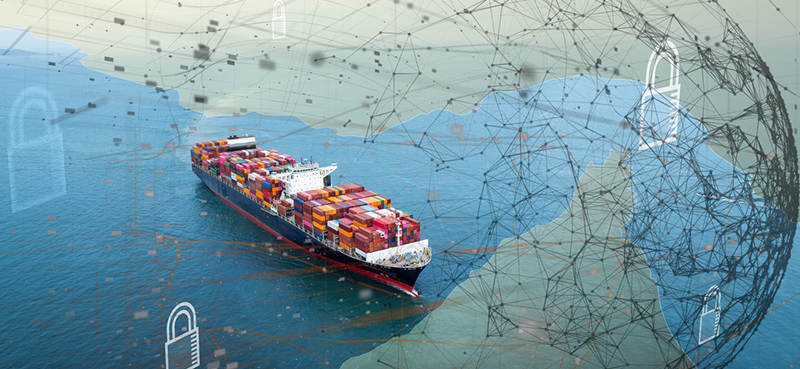
U.S. Central Command says oil and liquefied natural gas shipments through the Strait of Hormuz recently reached their highest level in six months, helped by military protection and mine-clearance operations.
CENTCOM Commander Adm. Brad Cooper said the strait’s primary transit lanes had been cleared of mines and that Gulf countries had moved more than 1 billion barrels of crude through the area over the past couple of months.
That’s meaningful because Hormuz remains one of the most important routes for getting Middle Eastern oil into the global market.
But underneath the six-month high headline, flows are still far from their pre-war norms.
Over the weekend, only 17 commodity vessels were recorded transiting the strait, compared with a pre-war average of roughly 125 per day. Some vessels may be traveling with their tracking systems switched off, so that comparison may not capture every shipment, but the fact remains that traffic remains heavily disrupted.
It’s worth noting that Middle Eastern producers are adapting to the disruption in other ways. For instance, producers are using smaller or regional tankers to move crude through dangerous or constrained areas and transferring it offshore to vessels handling the longer journey.
Ship-to-ship transfers near Oman reached roughly 2.5 million barrels per day in September, up from 1.4 million in August.
For the inventory picture, both developments could help slow the drawdown in global inventories. But with flows through major routes still below normal, neither has restored the supply cushion the market had before the war.
The bottom line
Global inventories don’t fall because of any single headline. They fall when the world consistently consumes more usable oil than the system can replace.
And several parts of that replacement system are currently under pressure.
- Global oil inventories: If they continue toward JPMorgan’s estimated physical floor, the system will have less capacity to absorb another outage.
- The Middle East: Further escalation involving Iran, Yemen, Saudi infrastructure, Hormuz, or the Bab el-Mandeb could reduce the number of barrels reaching the global market.
- Russia and Ukraine: The Moscow refinery attack has already removed processing capacity. Further attacks on energy infrastructure could reduce supplies of gasoline, diesel, and other refined products.
All of those factors are drawing on the shrinking oil supply. And if JPMorgan is right about how close global inventories are to their physical minimum, that cushion could become the most important number in the oil market.
Energy, infrastructure, commodities, and other critical bottlenecks can move fast when supply gets tight—and the biggest opportunities often show up before the broader market catches on.
Inside Curzio Alpha, we’re tracking those pressure points in real time and positioning around the companies best placed to benefit.
Curzio Research publishes market commentary for informational and educational purposes. The opinions expressed and market conditions when the content is published may change. It is not personalized investment advice or an offer to buy or sell securities. Investing involves risk, including possible loss of principal. Do your own research and consult a qualified investment professional before making investment decisions.