Today’s episode is brought to you by Savvy, the smarter way to book a vacation rental.
Travelers save an average of $400 versus Airbnb and VRBO.
Your unforgettable family vacation is waiting—and thanks to Savvy, you’ll get the rental you want, at the prices you deserve!
Savvy.com: Stay smarter.
- What an amazing time at Saratoga! [0:30]
- Penn State in the news for the wrong reasons [1:22]
- A confusing market is historically good for stocks, here’s why [5:10]
- Why the latest move by the U.S. Treasury should scare the sh*t out of you [11:02]
- Government’s same old playbook right before mid-term elections… [22:43]
- These assets and sectors will benefit from higher interest rates [31:44]
- The battle of AI: Anthropic vs OpenAI, who’s really in the lead? [37:24]
- This Magnificent 7 stock is in trouble [44:51]
- 13F moves that caught our attention [48:56]
Wall Street Unplugged | 1383
The Treasury's latest move is a warning sign
Announcer 00:00
Today’s episode is brought to you by Savvy, the smarter way to book a vacation rental. Travelers save $400 on average. Always check Savvy.com first.
Frank Curzio 00:11
What’s going on out there? It’s Wednesday, August 19th. I’m Frank Curzio, this is the Wall Street Unplugged podcast where we break down the headlines and tell you what’s really moving these markets. Mr. Daniel Creech. What’s going on, buddy? How’s everything?
Daniel Creech 00:26
Happy Wednesday, sir. Welcome back. I hardly recognize you.
Frank Curzio 00:29
I know, I know. I feel great. Had a nice week. Went to Saratoga with my friends, also upstate to see my family, which was really cool. Saratoga was awesome, man. It was really awesome. It’s the first time we stayed on Sunday. Usually we leave on Sunday, and Sunday was fantastic. Won a little bit of money. Betting, you know, 4 straight days. That’s not easy to do. Lots of drinking, lots of fun with friends that I’ve known. One of them is since I’m 3 years old. Holy cow, that’s insane. Imagine knowing someone since you’re 3. You know every single thing about that person. There’s no surprises. There’s never any surprises. So, it was a lot of fun. We just— great dinners, great time, lots, lots of laughs. And you need that. You need to get away when, you know, everybody does. You’re busy at work and craziness and stuff like that. You just need it to break away a little bit. And it’s very healthy. Feel great, recharged, and enjoying this market. So thanks for covering for me last week.
Daniel Creech 01:21
Not a problem.
Frank Curzio 01:21
Thank you.
Daniel Creech 01:22
Last thing is, you know football season’s right around the corner.
Frank Curzio 01:24
Very close.
Daniel Creech 01:25
Are you more excited about college or pro?
Frank Curzio 01:27
Yep.
Daniel Creech 01:27
Do you know where I’m going with this? Your Penn State Lions?
Frank Curzio 01:30
Penn State! Listen, now you’re jealous of them now, right? Penn State! We are! Cokeheads! That is— what a story. Yeah, I read it. It’s—
Daniel Creech 01:43
The Penn State whiteout is the best meme I’ve seen so far on the internet.
Frank Curzio 01:46
The Penn State whiteout? That is great.
Daniel Creech 01:49
Go ahead, defend your boys.
Frank Curzio 01:50
Oh, I’m going to defend them because—
Daniel Creech 01:53
Look at this ring leader.
Frank Curzio 01:54
You know, the one thing I hope I’m not going to defend is— is this the ring leader? This kid? I know one of the dads was there too, but I thought it was funny where— two things. One is someone needs to tell these guys cocaine is a cash business. So they decided to take Venmo payments in their own name, which is how they got caught.
Daniel Creech 02:09
Oh.
Frank Curzio 02:09
Yeah, Venmo. Oh, here comes the— yeah, could I pay you Venmo of, yeah, $375 for the eight ball and then constant— and imagine there’s only— how many students are there? You know how many students are in Penn State? It’s freaking insane. To all these kids, however it is, Penn State makes so much freaking money. You have no idea. You have no idea. I mean, you’re talking about, you know, tens of thousands of these kids. My best friend actually— all three of his kids go to Penn State. So one just graduated, the other one’s going in. $50,000 a year each. So when you see these guys have game day—
Daniel Creech 02:43
Does that include cocaine? Or is that just booked fees, tuition?
Frank Curzio 02:45
You know what? They may throw cocaine in there, I think. I don’t know. That’s a good incentive. But when— it’s crazy when you see— and every year they have, you know, game day. Pat McAfee and everybody. They’ll have it at, you know, whatever big game that is. And usually it’s going to be Ohio State, Penn State, or whatever. And they have it at Penn State. You just look around at those kids. Because when they have these big schools, when you see these thousands and thousands of kids, each one of those kids average revenue per unit of 50 grand. Average revenue per user. 50 grand, 50 grand, 50 grand. So, I mean, they have the money. It’s a good market because you have a lot of people that do coke that have a lot of money.
Daniel Creech 03:20
It’s not exactly a poor man’s drug.
Frank Curzio 03:22
No. And what’s crazier is when the cops came in to arrest this kid, he— he resisted because he thought his frat brothers were playing a joke on him.
Daniel Creech 03:32
Oh, I didn’t see that.
Frank Curzio 03:34
Which is awesome. So this guy is definitely getting nailed. And, you know, they have— he’s trying to get to the fraternity. I mean, imagine that. They actually said some of the pledges were forced to cut and package cocaine as part of their indoctrination. And I’m just thinking out loud, which I know is when— this story’s just beginning. There’s going to be so much that comes out. This story’s going to be fantastic. But I’m sure they had cameras. They had these guys storing cocaine and, you know, making sure that they’re on camera doing all this and getting the tape while they’re doing all this stuff just to say, “Hey, if you guys get caught, we have all this information on you.” So.
Daniel Creech 04:07
If the nickname Pablo Pledge Scobar is accurate, that’s— I’m sorry, I’m a child. That’s funny. That— that cracks me up. And he was on the dean’s list for accounting, right?
Frank Curzio 04:19
I mean.
Daniel Creech 04:19
Again, don’t believe everything you read, but I’ve just been breezing through this and I was— I was chuckling.
Frank Curzio 04:24
I mean, look, there’s drug deals at every school. There’s drug deals at every bar. There’s drugs at every college. You know, it’s just— you know.
Daniel Creech 04:31
I love you, Frank. Defend your Lions.
Frank Curzio 04:33
No, I’m not even defending the Lions. I’m defending kids in general. I mean, if you think there’s not drugs on every campus, these kids are going out and going crazy and letting off steam and stuff like that. And, you know, the craziness there. But just think of, yes, they got the ring there and that’s fine. That’s usually what happens. But there’s still probably thousands and thousands of kids that are like, “Holy shit, where are we going to get our coke from right now?” So.
Daniel Creech 04:56
Oh, look at you. Look out for the other end.
Frank Curzio 04:58
That doesn’t stop. That doesn’t stop. So, and some kids party in different ways and I don’t judge or whatever. And hopefully they’re careful. But, yeah, what a story. What a story. Penn State is how to happen to. Whiteout. Love it. Love it. Love it. Anyway, let’s get to the markets here. So it’s a crazy market where— confusing as hell. You know, we have positive economic data for two months regarding the CPI, PPI, unemployment showing inflation moderating, which you wouldn’t want to see. We’re worried about the Fed raising rates, right? And all of a sudden, now those odds went down tremendously, especially after last week. CPI, PPI, again, unemployment showed moderation. Yet we have yields continuing to rise. And that was until 9 a.m. this morning. I’ll get to that big story in a minute. Big story right now. Traders are sitting on record short positions at the same time where insiders, they’re buying activities at a 15-year high. Right? Confusing. If you read the news, depends on what site, what paper, whatever you read, AI is either in a massive bubble or seeing the strongest growth based on actual sales and earnings than any trend that’s ever seen.
Frank Curzio 05:59
You look at the housing market, frozen. Home Depot came out and said that. Yeah, you have Toll Brothers earnings. And yes, they beat analysts’ estimates. But revenue is down 10% year over year. 10%. Showing you that that’s not good. Even though, okay, when you look on TV and you say, “Oh, you know, they beat their estimates.” Those estimates were for a 10% decline year over year. The delivery of homes were 2,660 compared to nearly 3,000, right? So that was down. And yet you saw Toll Brothers say that its average price per house increased to close to a million from 973,000. Back and forth, back and forth. Home Depot again, numbers were solid. 4% earnings growth, 3% revenue growth. Pretty solid for the industry. Yet, again, they came out and said the market is frozen. And then you look at trading for today since 1990. Great, great stat. And this is from BTIG. The average midterm election year has seen the equal weight S&P 500 peak around August 18th, which was yesterday, before entering a much rougher stretch into mid-October.
Frank Curzio 07:07
The callous isn’t always the election itself. Something usually finds a way to upset the calm. The important part, we’re entering a historically vulnerable window with equities at all-time highs and the VIX near year-date lows. Back and forth, back and forth. Which is it? Are we, you know, is the economy looking bad? Is it, you know, is it looking good? I mean, we have people on both sides. So these— one thing I would say, when you have this kind of confusion, Daniel, in the markets where you’re like, “What is it? Is it good? Is it bad? What’s going on? Are we going to crash? We’re not going to crash? Recession, non-recession, economy?” The Goldilocks conditions, what we call them, when nothing is clear, it’s usually very, very good for stocks. Usually. And that’s why we’re seeing most of the major indices near all-time highs. Even though you have these risks, but yet you have things pulling back where people aren’t super aggressive, the irrational exuberance and nonsense like, “Just buy everything no matter what.” You’re seeing some names get nailed during earnings season, especially if they don’t raise their guidance.
Frank Curzio 07:56
And some names that really raise their guidance tremendously have done well. Companies coming off of lows, three-month lows, are doing well. So the back and forth, I know it’s confusing, but usually this is a good sign for stocks and they perform well. But again, I understand because we’re getting lots of emails and the back and forth, “What is it? I’m worried. I’m worried. I’m not worried. Let’s buy this, buy that, not buy it, short.” It is pretty crazy right now.
Daniel Creech 08:17
Absolutely. And I think it all starts with the fears over AI spending and then you couple that with higher yields. So as yields are rising, that by itself is not horrible because, as you’ve talked about, Frank, in the past, now people have an option to park some of this cash and earn a decent yield or return on their money. And what’s wild about that is when you think about the K-shaped economy and such, you know, you have one section of the economy doing well with wealth, access to wealth, the other not so much. Who’s earning all this interest payments? What’s the wealthy? No offense to poor people like me, Frank, on this side of the desk. We don’t have all this parked in bonds and earning, you know, a small percentage on a huge amount. And that is a— that is just a huge ingredient in this, you know, whole pie that we’re cooking here on the economy. Now, Frank, I don’t know if you saw while you were gone some headlines around AI and stuff like that, but just yesterday, did you see Nvidia’s announcement on its Portsmouth site in Pike County, Ohio?
Daniel Creech 09:15
Okay. So they’re looking at backstopping over $100 billion, give or take. It could potentially be the largest data center. They’re looking at 10 gigawatts. Now, this is between SoftBank and SB Energy. SB Energy is a company of SoftBank looking to go pro. It’s just more of this financing around this big compute AI trade absorbing and taking over a lot of parts of our economy. The key here, though, is for me, all these data figures and money throwing around here, you know, now you have to worry about Nvidia’s cost, balance sheet, off-balance sheet, this kind of thing. This power isn’t even until 2028 to 2030. And I think that’s one of the big hangups because we’ve seen this nice ride in stocks and AI, but now the market’s kind of realizing, “Hey, if you’re— when are you going to show me?” type deal. And so these deals continue to get announced. The remaining performance obligations continue to get announced. And this is all well and good, but right now, that’s in the future. Hope it’ll be a return on equity, return on investment.
Daniel Creech 10:17
But right now, you have higher yields, which is really pressuring all of this debt and this spending and ability— easy for me to say. Thank you— to borrow and keep financing all this. And then you get into the circular stuff. I like what your point about the market topping out and stuff. We have been pounding the table. If you’re not expecting volatility to the elections, I just agree to disagree. And we can get into some moves here that I think are extremely political. But any comments on the Nvidia? Does that— OpenAI and Nvidia, does that do anything for you right now? Or is it just kind of par for the course?
Frank Curzio 10:53
I don’t know if it’s par for the course. I mean, you’re seeing AI, the trade roll over a little bit. We do have good news today out of Marvell, Anthropic numbers. I’ll cover them in a second. But I will say the bigger news, which a lot of this is being fueled by AI and this factor’s in, at 9 a.m., there was very, very, very big news today. I was surprised it turned the markets around. Turned the markets around considerably. What’s the— the Dow’s up almost 300 points, right? I mean, it was up like 50 points. Before we go further, Savvy is a vacation rental disruptor. So you might remember my interview with CEO Eric Goldrier. And this is a person that had two huge exits in the vacation rental space, bedandbreakfast.com and Turkey Vacation Rentals, and has been in this industry for over 30 years before Airbnb and Vrbo even existed. Now he’s come off the sidelines to create Savvy. And this is after he booked a trip for his family through another vacation rental platform and getting blindsided by the huge markups and fees.
Frank Curzio 11:42
You know exactly what he’s talking about. Now at Savvy, it’s an online direct booking marketplace without those massive fees, which travelers save on average $500 from professional hosts dealing exactly with them and exclusively with them on every single listing. And the best part about savvy.com is when you book your vacation rental, you’re going to see these savings in real time as you’ll see the exact same listings on competitors’ sites and the discount you’ll get from booking through Savvy. So if you’re going to go on vacation this summer with the family, check out savvy.com. And when you book, use the link savvy.com/wsu. That’s S-A-V-V-Y dot C-O-M backslash W-S-U, which stands for Wall Street Unplugged, which will get you an additional $50 in savings when you book. Think about it. What would you do with an extra $500 when you’re on vacation? So the Treasury decided they’re going to double some of the liquidity support in their buyback operations. And that’s used for longer-dated Treasuries from 10 to 30 years.
Frank Curzio 12:37
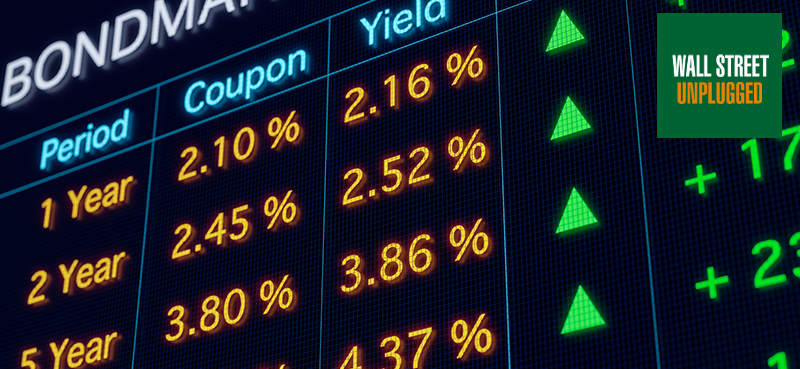
So they’re going to like double their buying of that, which is very, very good because you need more buying, right? This is how you get yields down because, you know, you have the Treasury here increasing that liquidity in long-term bonds. And why are they doing that? Because rates continue to surge, right? They’re close to 20-year highs when you’re looking at the 30-year. I mean, that program’s going to start September 9th and it’s going to go through November 4th, but it’s doubling the amount that they were expected to purchase, which provides more liquidity, which is great. So of course, yields fell on this news. And what we know about the markets, when yields were going up the past few days, right, we saw the markets get crushed. Now yields immediately fell on this news. Again, it came out at 9 a.m. and stocks popped, right? All the major indices definitely pushed higher. And I’m going to tell you something. This news— this news should really scare the shit out of you. And I’ll tell you why.
Frank Curzio 13:25
Because what are we learning here? There’s several things that we learn when we see this news. And this is how you should analyze the markets, right? What are we learning? You’re just like, “Oh, the market’s rough.” What do we learn here? Higher yields are definitely the biggest risk to this bull market. I mean, this is a major reversal. The past three days, yields rose, right? And you have all these— everybody worried. And the markets ended lower. High-risk stocks, AI stocks ended much lower of, you know, just that three-day route. And today, what do we have? We have yields fall on this news and stocks surge with a 15-minute period after the news release. So that higher yields is dominating this market. If you want this bull market to continue, it is yields. We need to see yields lower. And the government knows this. And they’re doing it right at the perfect time, right in between when, Daniel? When midterm elections are coming, right? Get the marks out. Believe me, that factor’s in. We’re going to see lots of checks, tax checks coming too.
Frank Curzio 14:16
That announcement’s going to be made probably, I would say, towards the end of September, maybe right before midterm elections. Look how much money we’re giving back to everybody, right? This is going to be big in terms of voting because we’re very close on both. We’re very close. Each one of those, the House and the Senate, could swing either way. It’s going to be very, very close. We also learned that the Fed— and this is big here, guys— the Fed doesn’t have the power to bring down long-term rates. So they needed help from the Treasury. And that’s been clear since July. What do we learn since July? The past two months, we learned inflation numbers, jobs, CPI, PPI, showed inflation moderating the past two months. And that signal that the Fed does not need to raise rates, which is a positive for the markets. If you look and you want to know factual why that happened or, you know, what I’m talking about, you can look at the Fed Funds Futures. Those rates of increase in September are down tremendously.
Frank Curzio 15:05
So most are saying there’s not going to be a hike in September. And now they’re predicting probably not a hike this year because of the data we saw for two straight months. Despite that, what happened? Long-term rates, 30-year bond, continue moving higher. It’s near 20-year highs. And there’s reasons for that. You’re seeing massive issuance of bonds, investment-grade bonds from AI companies. I mean, the numbers are absolutely insane. It’s— it’s— what is it? What did they go up to? It’s a 27% year-over-year increase in U.S. investment-grade corporate bond issuance, which is massive. This is just during the first half of the year, right? This is led by hyperscalers. And you look at AI CapEx. This is how much CapEx increased. I remember when this number two years ago hit. It was supposed to be $130 billion and it hit $200 billion. Okay, this is like two years ago. AI CapEx are expected to increase 36% next year to $1.3 trillion. We’ve never seen anything close to this.
Frank Curzio 16:09
Not even half of this. I mean, you’re looking at $250, $250 billion for the CapEx for oil companies usually, maybe $300 billion, a little bit more. You know, is that— is that got higher? I mean, $1.3 trillion, right? So, and that comes on a potential 100% increase in 2026 in CapEx. So these guys are not slowing down. And again, our job and your job should be to find out where is that $1.3 trillion going because there’s lots of companies that are going to make an absolute fortune. We’ve seen it. We’ve seen major moves in a lot of AI companies. But when I see what’s happening with the higher yields and the Fed doesn’t have the power to bring down long-term rates and you need help from Treasury, that’s one thing that scares the shit out of me. And that’s a big deal because as you’re looking at these long-term rates go up, the 10-year is the biggest. It’s not the short-term rates. It’s the 10-year. The whole economy revolves around a 10-year. Mortgage rates are based on business loans, borrowing money for factories, equipment to build data centers.
Frank Curzio 17:01
All this revolves around long-term rates. And they’re going higher, which is crushing the housing market. It’s crushing the, you know, the AI build right now. And plus you’re seeing a lot of the political front. That’s a huge, major, major topic where even Republicans are now switching and saying, “Listen, we’re not in favor of building AI plants within our state because people don’t want to see them.” And you have an election year coming. The biggest thing that scares the shit out of me, Daniel, is what happens when we see— and I’m saying this is a crisis. This isn’t a crisis, okay? It’s not like the, like, you know, the credit crisis, COVID, stuff like that. But whenever we see conditions like this, the government’s first call is to the private equity markets. And this is why private equity companies are amazing because they get the calls. And if you notice, if you look back at every crisis, what do they get? They always get the opportunity to buy distressed assets. Now, why would the government do that?
Frank Curzio 17:47
Because they don’t want to highlight that the government needs to come in to backstop anything because it’s highly publicized. It’s a controversial event. This is the big story we’re talking about. Why are they— so you have to ask yourself, why are they— why did the government— why did the government need to do this? The Fed couldn’t do it, right? That’s scary shit in and of itself. The Fed’s saying, “Hey, you know what? We’re seeing inflation moderating. Why are long-term rates going higher? We’re seeing more bond issuance, AI, more spending.” I get it. But when I see the private equity market not able to come in here at all, that should tell you that this market is a lot worse than what people believe. And we’ve been highlighting this for the last three years, saying because of our contacts and one of the companies we invested in and someone’s in the private equity market told us that we’re starting this company to buy a whole bunch of these assets in a specific industry, which happens to be sugarcane, if you guys know.
Frank Curzio 18:34
And they said that it’s a frozen market. They can’t do anything. They’re going to have to shed these assets because they need dry powder. You’re going to see massive redemptions. And they called it three years ago, and it’s worse now probably than they first said it was going to be. But for private equity not to come into this market at all, and you need Bessent and you need the Treasury to say, “Hey, you know, we need to get these rates lower,” that’s a warning sign. That’s a warning when the government has to come in to bail out something. And not to say this is going to be called a bailout, but to come in and basically influence the markets at a time when stocks are at all-time highs and nobody really knows what’s going on with the economy. There’s something bigger going on under the hood here. Things are a lot worse than I think people believe. And if we see rates continue to go higher, which is possible, we’re going to see a lot of shit hit the fan in this market. This news should be taken as a warning sign, not as a benefit where, “Oh, look at stocks going up and rates coming.” This is a temporary measure.
Frank Curzio 19:29
You have to ask yourself, why does the Treasury have to step in when conditions are like this? We’re not talking about a credit crisis when all the banks are going to fail. They’ll leverage themselves 30 to 1. We’re not talking about COVID when the whole economy was shut and no one’s generating revenue. We’re talking about an economy that everyone’s telling us is great. The stock market’s at all-time highs, but yet we needed the Treasury to come in and do this to get that long-term rate lower. That’s something— that’s a question you should be asking yourself because I don’t know why they had to come in with the— let the market take care of itself. This is going to automatically curb spending and AI by itself, right? This is how the market conditions do this, right? The market conditions, it’s like nature taking care of itself here. And for the Treasury to step in, that has me worried. That’s a big takeaway.
Daniel Creech 20:09
Well, I agree on that, on the big— the worriness here. Now, I’ll have some fun with you, Frank. Now, I’m going to defend Treasury Secretary Bessent for a moment here, a little bit, because they didn’t start or create the problem that we have. And Joe, if you would pull up the deficit tracker there that I like to point at, one of the big reasons here that we’re having runaway yields is because we have runaway spending, debt deficits. Frank, we’re closing in on a new record, $40 trillion in debt. We ought to have a hat tip to that. That’s— that can’t be difficult or that can’t be easy to run up that kind of deficit.
Frank Curzio 20:44
Nobody cares.
Daniel Creech 20:45
Now, well, the bond— but I would argue we have to have some fun with that. The bond market does care. And that’s why you’re seeing this. So the red line on that chart is our current year, 2026. Notice that is above every line except the green line for 2021 on deficits. That’s massive. That is one reason. So you have a drunken sailor on the federal side, and now you have this unhinged AI appetite throwing money around and causing yields to go up.
Frank Curzio 21:12
Hold that thought because what you are looking at is unprecedented, right? Because we usually see deficits rise when we have a recession. The government’s spending more to inflate the economy. We’re at all-time highs. Our economy’s chugging along good, and our spending is increasing dramatically, right? Which is crazy because we should be bringing in higher receipts for taxes, right? More money coming into the economy that’s doing well. Higher profits, higher taxes, higher everything, right? We should be bringing in more money, and yet our deficit’s going higher, meaning that if the economy slows, what the hell? The economy growing usually— not that it gets us out of deficit— is very, very good. It’s the easiest way to cure a deficit is having our economy growing or doubling the amount because that’s going to bring in more tech. That’s how you solve this problem. The fact that we’re growing, the economy’s chugging along, and that number continues to surge at record pace. Go ahead. It is pretty crazy.
Daniel Creech 22:00
Oh, it’s ridiculous. I mean, I’m not trying to justify that. I totally agree with you. This is the biggest— I understand there’s a war going on between the U.S. and Iran, but outside of war times, the amount of spending, any way you look at it, is just beyond absurd. And to your point, that’s why they don’t let the markets actually find the correct price in yield because, I mean, take a guess. Yield, the 10-year and the 30-year would be well over 5 and 6, in my opinion, if the market demanded that. So what you have here is a Band-Aid on a bullet wound, essentially. Now, Bessent, I think, is doing what he’s supposed to do. He’s trying to calm markets. This guy is like the greatest Treasury investor ever. So like him or hate him, I mean, he is. You can look at his track record. First off, Frank, I got a question for you. This is going to be temporary. I’ll take the over on temporary. Let’s say you. They’re going to come out with new updates and news in November when they do this. But this is essentially a clear runway to do at least the $2 to $4 billion until November, and then they’re going to update us some more.
Daniel Creech 23:00
The point is, the temporary language leads you to believe that this could end in November. There’s no Florida way that happens, in my opinion. We’ll wait until November. But are you on the temporary camp, or are you in this long-term war?
Frank Curzio 23:13
It depends what temporary means. I mean, if temporary means nine years, just like, you know, what was the word they use with.
Daniel Creech 23:22
I thought you were going to go curtains.
Frank Curzio 23:23
Rates are temporary. Yeah. Rates, yeah. High rates are just going to be temporary. Inflation is going higher. It’s just going to be— it’s going to be transitory. I love that big word. Transitory. That’s my favorite word. It’s going to be transitory. It’s transitory. Well, transitory is two years, and you’re right. If you tell me that, “Hey, we’re lowering the rates to 0% after the credit crisis to temporarily do it,” and you waited eight years and that’s your timeframe for temporary, you’re right. So, you know, I think you’re right. You know, I’m poking fun at it here, but nothing’s really temporary when it works because the government is all about short-term. It’s all about getting elected for that term. That’s what they do. That’s what the entire focus is on. None of this shit is long-term. None of it is, right? They’re just like, “Okay, what do we need to do right now to make sure that we get— and once it works, we’re happy.” That’s why we kept interest rates low for so long. Hey, it’s working. Look at this. The economy’s going great. Stocks are doing great. Everybody’s happy.
Frank Curzio 24:08
Rates are low. And that leads to another crisis. And now we have a government where, since the credit crisis, the worst thing that fucking happened during the credit crisis is that the government made a fortune off of it. That was the worst thing that could have happened because now they are bailing out every single thing that happens. Just like something like this. Oh, just get the government involved. The government used to never get involved. When we had the dot-com crash from 2000, 2003, we saw a huge recession, and we saw the Nasdaq just decline for three straight years, right? Now, you’re lucky if you have— and that’s the next point of this. If we do happen to pull back and rates start rising a lot and you see the AI trade unwind, which we’re seeing a lot of A stocks getting hit today, believe it or not, even though the Nasdaq is up. A lot of Marvell’s kicking ass. A great deal. We’ll talk about that in a minute. We have Anthropic. The valuation is surging and revenue’s through the roof.
Daniel Creech 24:53
Dell’s down 6.5%.
Frank Curzio 24:54
Yeah. So you’re looking at all these companies with the AI trade unwinding, but when it unwinds, here’s what people make the biggest, biggest, biggest mistake, especially they start listening to the bears because all the bears start coming out because they’ve been wrong for 18 straight years. And they all start coming out, “God, I told you the market’s going to crash.” And the Peter Schiff’s like, “I told you, I told you.” Be careful because these downturns only last for 30 days. You get annihilated. It’s 10, 12, 15% pullback. And what happens? You have the government that’s going to come in there and do even more. And you know what? That sucks. I hate it. I get it. I understand it. However, what is your job as an investor? Your job is to make as much money, to make your family secure, to make sure your kids have a better life than you. That is the goal. The goal isn’t, “Oh, I hate Biden and he’s an asshole. Oh, Trump is a prick. Look at him. He’s such an asshole. I hate him.” You could hate whoever the hell you want.
Frank Curzio 25:45
But when the government gets behind something, and this is why they say, “Don’t fight the Fed. Don’t fight the Fed.” Well, don’t fight the Treasury now either, right? I mean, you’re going to see a pullback, I think. I don’t think they’re going to be able to stop interest rates. But when you see a lot of this stuff re-rate and go down, remember, we still have that earnings power. Earnings had a monster quarter, right? 20% earnings growth is insane. We’re usually growing like 8%, 9%. 20% is insane. And it’s real earnings growth driven by spending. And that’s something we haven’t had. Our valuation is actually cheaper now than it was three years ago. People don’t talk about that, even though the market’s at all-time highs because the E is growing just as fast as the P. The price is in the S&P 500. And when you see this during a credit crisis, I mean, I would have loved to see some of these banks go under, take on 30 to 1 leverage, deserve to go bankrupt. CEOs got deserved to get thrown in jail. But what happened?
Frank Curzio 26:32
The entire financial system would have collapsed. We would have had another Great Depression, 30% unemployment. The government was forced to do this. And once they put that money into the banks, it was one of the greatest buying opportunities in the history of the markets. I mean, the government said, “Well, these banks are too big to fail.” Well, you think they’re too big to fail then? They’re three to five times larger today than they were. So I hate this. I hate the fact that the government is there, but you need to go beyond the hate, beyond the ethics, and realize the real reason why you invest in stocks. It’s to make money to provide you and your family with a better future. And if you keep that in mind, you’re going to ignore the rising deficit and ignore the news because it’s never been a factor for 40 years. It hasn’t. The day it’ll be a factor, you’ll see it coming. You see the bond market blow up. You’ll see that they can’t pay the bills. As long as they can pay it, it’s fine.
Frank Curzio 27:21
And that’s what’s going on because people said it’s 30 billion. It’s 30. It’s 33 billion. It’s 40 billion. The market’s at all-time highs. Okay? You’re going to learn to ignore administrations who are in office, whether it’s Biden, right? So you’re going to say, “I hate Biden. Everything that he’s doing. I hate Alternative Energy and all this bullshit.” But yet, Alternative Energy did well. I hate Trump and Trump’s allowing the government, right, to take personal stakes in stocks like Intel, AI companies, rare earth companies, which surge in value. And we’ve been on that trade for two years telling you, if you invest in it, don’t think, “I don’t care if you hate them. You could buy 1,000 signs and create your own little, you know, party to go and go in front of the White House and yell and be part of those, you know, structured, organized, you know, to fund the—yeah, like this, spontaneous. You’ll have these perfect signs that are exactly the same. Thousands of them already made, and they all come in trucks.
Frank Curzio 28:08
They all stay in the same hotel from different countries. I love that. Anyway, you could be one of those people. But we all have those personal feelings of being a Democrat, Republican, a liberal who hates huge deficits. You know, maybe you hate rich people. You hate big companies. You need to remember your goal is to provide for you and your family, to pay your children’s college. Hopefully, they’re not going to Penn State, but to make sure that they’re going to have a much better life than you. And if you keep that goal in mind, I’m going to be honest, it’s not that difficult to make money in the stock market because you just take a lot of emotions out. So what I’m saying here is we’re probably going to see rates go higher. I don’t like what the Treasury did today, even though it’s been, you know, signals as a positive. The market’s going up temporary. I don’t think this is a good sign. I don’t know why they came in. Maybe it’s for the election. I hope that’s what it’s for, for the Republicans, because if it’s something deeper going on under the hood and doing this with the markets at all-time high, to me, that worries me.
Frank Curzio 29:00
But when if we happen to be right on this and you see a 10, 15% correction, which we predicted on SpaceX, and we also told you where to buy it, and you should be up a lot because we almost bottom ticked that baby, saying that all the risks are factored into the stock and that things like through the roof now from its lows. There’s times to buy, there’s times to sell. I wouldn’t be an aggressive buyer. We have our Alpha portfolio that we launched a couple of months ago. We haven’t added a stock. We have a lot of stocks. We combine all the stocks in all of our portfolios into one portfolio. Sold off, took some profits in a lot of AI names and taken more profits at other names, but we’re very hesitant to add companies unless we see something that’s just a blockbuster, which we’re looking at three or four names right now that might make their way into the portfolio. But just be careful here. And if we’re right and you see a pullback, don’t people become ultra-panic. “Oh my God, it’s going to crash.
Frank Curzio 29:46
It’s going to crash even more.” No, calm down. It’s usually a time to buy. Because right now, I feel like sentiment is stronger than ever. People are buying. The AI trade kind of came back a little bit, still down. But when you see the market fall, everyone gets so nervous and get crazy. You usually fall a lot more than you think that you’re going to fall. And then you’re going to get a chance to buy a lot of these companies that have very good fundamentals at cheaper prices. That’s how you invest in this market.
Daniel Creech 30:11
I agree with you. The only thing I will say, and I’m not saying you have to panic about this, so don’t misunderstand. I love your rant on debt and deficits and such. I will say the one thing that is different this time. Hey, what’s different this time? The expense on our debt is now higher. What did CNB say earlier? It’s higher for several months in a row than defense. And there’s a lot of great economic history about when a superpower passes that line of interest spending on debt versus anything else and how that superpower doesn’t remain a superpower.
Frank Curzio 30:44
That’s why they’re increasing spending on defense and healthcare.
Daniel Creech 30:47
Exactly. But think about that. Yes, this is a huge problem. And I agree. You know, you can push water uphill a lot longer than, you know, I thought. However, the one caveat that investors need to pay attention to is the interest on the debt. And I think that that’s what’s forcing Bessent’s hand here. We’ll see. I think he’s going to be able to maneuver it as well as anybody could just because of his relationship and the way he’ll communicate. I do think that there’ll be extreme volatility around this as we’re going to continue to see. But I do think that this is going to be a buy the dip market into the election, no doubt. And Frank, last thing I want to say is, am I crazy to think, or what is your opinion on both gold and Bitcoin up over 2% today after this Treasury news?
Frank Curzio 31:32
Government interference. That’s gold government interference and central bank buying. Those are two things that, I mean, but the government coming in now with stocks at all-time highs. You usually don’t see that, right? So gold is pushing higher tremendously, you know, and that’s great. And same with Bitcoin. These are alternatives to the dollar. And what you said about interest rates is the function of what you said about, you know, payments and interest rate payments is a function of higher interest rates. That’s what they care, right? The higher interest rate, the higher the payments, right, which are over a trillion dollars in interest payments annually. Over a trillion.
Daniel Creech 32:05
Hey, this is all literally Willy Wonka and Wizard of Oz.
Frank Curzio 32:08
We have to try to get rates lower, and that’s not happening in a long while. And it’s, I mean, the housing market is, I feel like nobody’s telling this story about the housing market, which is absolutely horrible right now. It’s frozen to the point where you’re not really seeing prices come down because you still have, you know, not a ton of inventory on the market. So no one’s really lowering their prices. They could afford to keep their houses a little bit longer. You can’t move sideways because you’re almost doubling your mortgage payment because interest rates have doubled. So you can’t sell your house, which many, many people, I would say, if I had to put a percentage on it, I would say 85%, 80 to 85%. If I had to put a percentage, I need to sell the house before buying another house. And you can’t sell your house in this market right now unless you lower your price incredibly. So you have this market that’s kind of frozen because rates are much, much higher. Now, with that said, if we do see yields resume and start going higher, there’s ways to play this.
Frank Curzio 32:56
The banks are going to make an absolute fortune. And we look at the banks and we said, well, the banks’ net interest income, two years ago, they were forecasting that number to come down. Now, you had JP Morgan say that just the net interest income they’re going to generate over the next 12 months, $100 billion just off of the net interest income because, you know, great job paying everyone shit interest on the, you know, checking accounts and trillions of dollars on the, you know, again, it’s all about effing the, you know, the regular people and pretending you care. Yeah. Okay. You care so much, right? And, you know, lending that money out at much, much higher rates and good for them. So energy as well. Since energy, you know, when you look at higher inflation or higher rates, it usually comes with higher energy prices. And energy right now, these guys are in great position. Not only that, they’re able to hedge these prices and these prices are much higher. And, you know, hedging your price at 60, 65 over a year is incredible compared to where prices were in oil.
Frank Curzio 33:54
So, I mean, you’re making huge now it costs less. This is an amazing, amazing stat. To me, it was amazing. It costs less to drill offshore than it does to drill in the Permian on average. Isn’t that crazy? That is a crazy, crazy stat. I remember when it was like 27, 28,000. Not everywhere in the Permian, but I visited all these areas. I also visited Eagle Ford, you know, almost all the major shale areas I visited across the US when I was, you know, just learning about this technology as an analyst and, you know, going through, you know, traveling with people who just been in the oil industry for decades and explaining this industry to me very, very well, learning so much about fracking and horizontal drilling back then, how fracking doesn’t cause, you know, anything crazy, right? I mean, it’s supposed to destroy a country with billions of earthquakes and, you know, all environmental damage and stuff like that. It’s crazy when you’re really going to the industry and you learn that there’s a whole bunch of shit behind all the media and paid media, what’s going on, and you just, you get blown away.
Frank Curzio 34:49
Even when I went to Brazil for the World Cup, I went to Brazil. I thought it was going to be like just body parts. They were saying in the ocean, you’re going to get robbed. You’re going to get it was the nicest place ever. It was beautiful. It was great. It was unbelievable, right? You listen to the media, you go crazy. Now, that’s what happened to a lot of people in the World Cup this year. They came here. They’re like, “Oh, we heard the US is dangerous. It’s terrible. This is the greatest place ever. The food’s great.” You hear all through social media how great the US is. They’ve been, you know, it’s, again, people get paid to tell certain stories or whatever. But if you’re looking at banks, you’re looking at energy, very, very good. You’re looking at gold right now as well as years go higher. You know, gold’s been beneficiary. Defense company, healthcares, I like, you know, these are usually, you look at these names and a lot of people put them in cyclical camps, which, you know, they do good when the economy does good, and then they do bad when the economy’s doing bad. These defense companies and the amount of money that we’re spending and drones and everything and how we have to replenish so much of our ammo.
Frank Curzio 35:42
I mean, you know, you’re going to see, you’re seeing now, I think it’s, I don’t know when the budget is, but you’re seeing now tons of companies with services that we have, whether it’s Blueberg or Briefing. You’re seeing all the contracts coming up from the Department of Defense. They’re coming up like crazy. 100 million, you know, Lockheed Martin, all these companies get awarded, you know, and healthcare as well. Money coming to healthcare. I think healthcare has just been a beaten-up sector for such a long time. Now you’re just seeing really good news. AI is going to impact this sector by far more than any other sector. And you’re seeing that. You’re seeing that. I think the Merck is up tremendously today. Moderna, I think, just, you know, showing positive results on one of the vaccines in, what was it? In stage three, right? Phase three trials. So I like healthcare, defense, banks, energy, gold, right? Companies that are not borrowing money to grow, meaning that a lot of AI companies that are stretching themselves out are going to get hurt, right?
Frank Curzio 36:36
They’re going to have to hedge. You’re going to see the CDSs, which are the credit default swaps, which is like an insurance against their bonds in the company. As they go higher, those stocks get hit. And that’s what you saw with Oracle. That’s what you saw with SpaceX at the beginning. So if you see this reverse, it doesn’t mean get out of the markets. It means there’s going to be a lot of money. Remember, that money has to go someplace. Otherwise, those guys don’t make fees, right? Investment managers don’t make fees. It’s going to go someplace. And that’s where you need to find where’s it going to go. And then when the market comes down enough, which I think is going to happen, we could get easily a 10, 15% pullback over the next couple of months. When we have that, I think there’s going to be lots of things that open up. You see a lot of names going into the Alpha portfolio, which I’m excited about.
Daniel Creech 37:12
Agreed. Absolutely. Volatility is the new norm, just like high oil prices and damn near everything else.
Frank Curzio 37:17
Yeah. With that said, I mean, you can’t say all AI companies are the same because massive news coming out here. You’re looking at Anthropic and OpenAI just released their numbers for the quarter, their revenue numbers. Anthropic numbers are freaking insane. That’s Claude. The whole world’s using it where revenue doubled to $11.6 billion. Did you see OpenAI’s numbers?
Daniel Creech 37:40
Both of them are insane. I mean, one is clearly leading, but I mean, any, I like how the Wall Street Journal credit to them because I’m a when I should be to them. Any private company would love generating that amount of revenue in a quarter. But these guys’ expectations are so high, take it. Yeah, you’re right. I mean, but both of them are incredible.
Frank Curzio 37:56
Moderna’s up 120%. Holy shit. I didn’t even know that. 120%.
Daniel Creech 37:59
Yeah.
Frank Curzio 38:00
Put a long-term chart in that, baby.
Daniel Creech 38:03
These scoundrels.
Frank Curzio 38:04
Go even longer through COVID. Where’s that stock, Joe? What was the number? Where is it? 300? Before and then before COVID. Then COVID, what? 400?
Daniel Creech 38:16
Yeah, something like that.
Frank Curzio 38:19
- And now it went all the way down to the 70s and now it’s up 125% in a day. I’m going to tell this story. Hopefully, it doesn’t get me in trouble. Actually, maybe I shouldn’t tell it. Yeah, I’m going to tell it.
Daniel Creech 38:30
Oh boy.
Frank Curzio 38:30
Maybe I shouldn’t tell it. I got to tell it now. All right. So damn, I shouldn’t have did this. So.
Daniel Creech 38:40
This is the one where you’re at the party and you heard a comment.
Frank Curzio 38:41
I’m at a party.
Daniel Creech 38:42
You already told that.
Frank Curzio 38:43
Did I tell it?
Daniel Creech 38:44
So we didn’t get kicked off the first time.
Frank Curzio 38:46
Yeah. I mean, we won’t anymore because, you know, COVID, you know, we saw what it is now, right? I mean, if you said this earlier, then you would have got killed. But let’s just say relative of this company, a very strong relative, was pregnant and the CEO said, “Don’t even think about taking our vaccine.” And this was in the heart of COVID. Just goes to show you that they were like, “Everybody has to take it no matter what. I don’t care what you are, what you do, you’re taking it. If you don’t take it, you’re getting fired with throwing you out of your freaking industry, whatever it is. We’re going to find your companies in New York City and California. We’re going to kill you. You got to take it. You’re an asshole. You’re spreading the disease. You’re an idiot. Even if you’re pregnant, take it.” This is the guy who created the number one vaccine next to Pfizer and told his daughter or relative not to take it. So just, you know, think about that. But I’m glad. Good for them. Up 120%.
Daniel Creech 39:32
All right.
Frank Curzio 39:33
Getting back to OpenAI.
Daniel Creech 39:34
On our door.
Frank Curzio 39:34
The number, the number for OpenAI is amazing on the surface. So we’re looking at Anthropic 11.6 billion in revenue. OpenAI was 6.7 billion in revenue. Now, here’s where shit gets a little crazy. Both of these companies are coming out with an IPO whenever. They were supposed to come out now. Maybe they wait till the end of the year. Maybe they wait till early next year. They’re all coming out with IPOs. Going to do what SpaceX said, right? At the top of the market, get everyone in. This way, they raise a whole bunch of money for themselves. And the stock’s probably going to fall just like they would SpaceX. Getting to my point here, when you’re looking at these numbers, Anthropic revenue is 73% higher than OpenAI. And these companies were supposed to come out at trillion-dollar valuations. Now, OpenAI’s valuation, this is based on the last cap raise in March. Whenever they raise money, that’s they’re raising on a valuation. Last time OpenAI raised money, whatever it was, Series GEF, whatever it is, in March, that valuation was 852 billion.
Frank Curzio 40:29
And that’s on 6.7 billion in sales right now. Anthropic’s valuation is close to a trillion. The exact valuation is 960 billion. And that’s based on their last cap raise, which is in May. That’s a 13% difference in valuation. While Anthropic’s revenue is 73% higher and growing much faster. So something has to break here with these IPOs. I mean, you’re looking at Anthropic valuation will be well, well, well above $1 trillion or OpenAI, that IPO could come in lower than their last cap raise at maybe $800 billion, maybe $750 billion. Because right now, the last cap raise was $852 billion. They’re growing their sales at only 13% right now. And that’s compared to Anthropic’s doubling their sales and 73% higher. These IPOs, remember, were like, all right, SpaceX, trillion-dollar valuation, Anthropic, trillion-dollar valuation. Then we have OpenAI, and I’m telling you right now, OpenAI’s valuation is not going to come out of a trillion unless you get enough stupid retail investors to buy into that and say, “Okay, here’s enough stupid people that they’re going to buy this thing at incredibly high prices, just like they did with SPACs,” right?
Frank Curzio 41:35
And SEC never did anything and had all these poor people buy these freaking SPACs with companies that were literally trading at $300 million valuations in their last capital raise. And when they went through the SPAC route and went public, they were like $2 billion valuations, right? And these guys had cheap paper that they could sell right away, warrants they didn’t have to disclose. The biggest scam in the history that nobody got punished. And again, hedge funds insiders, PIP investors made an absolute fortune while regulated investors got annihilated. Again, nobody wants to ever talk about that. That’s okay. I don’t even think that’s a story. Nobody even cares. But anyway, let’s see what happens with OpenAI. That was a really big story.
Daniel Creech 42:09
It is. Couple things for me on this. This, the Wall Street Journal article said that Open or Anthropic actually shifted to a operating profit, small operating profit. Now, let’s go out on a limb here and assume that’s probably not including stock-based compensation, all that. Well, OpenAI went from a significant, it increased losses dramatically while growing revenue 18%. I’ll just simply say this is interesting to me. OpenAI subsidizes hundreds of million users who don’t pay for ChatGPT. This is according to the Wall Street Journal. And they also cut prices for two of its largest models because big companies were complaining about token costs and all that kind of stuff. And then you hear these rumors of this speaker and devices coming out. I clearly, Anthropic is winning this race, head and shoulders between OpenAI right now and stuff. I don’t know how this all plays out other than the fact that, Frank, it’s okay to acknowledge that OpenAI and Anthropic are basically your base here on this pyramid of AI.
Daniel Creech 43:13
But when you look at some projections and data, do you have any idea how much OpenAI and Anthropic make up of the cloud business for Amazon, Google’s?
Frank Curzio 43:25
A ton of it.
Daniel Creech 43:25
A ton of those.
Frank Curzio 43:26
And it’s going to continue to grow. I mean, that’s not slowing anytime soon.
Daniel Creech 43:28
Well.
Frank Curzio 43:29
Ever. They’ll never stop.
Daniel Creech 43:30
Ever.
Frank Curzio 43:31
They’ll never, as long as people are having queries and they’re asking these systems to do stuff, which is going to increase dramatically with agentic AI, they’re going to, because AI, their AI models are going to be learning off of their own AI models, which is going to produce, you know, 10, 50, 100 times the queries, even more. So that’s going to result in more cloud usage. That’s not slowing down anytime soon.
Daniel Creech 43:51
It depends on if you break it down between current AI revenue and then remaining performance obligations and such. But Yahoo Finance, different, there’s a lot of data out there that show Anthropic and OpenAI basically are somewhere between 50 and 70% of certain cloud providers’ revenue in the cloud. Again, it’s okay to point that out and you can even say, “Oh, well, you know, that’s really heavy on two companies.” Yes, it is. But if those keep plugging along, if, as you said, this keeps growing, that’s still okay. But it is something to pay attention to because I wouldn’t have guessed that those numbers were that high until kind of digging into that a little bit. The only other thing on the comment from the Wall Street Journal article is, to your point, Frank, Anthropic is clearly in the lead. I don’t know how they don’t go IPO first. We’ll see about that. But that’s just going to add to volatility with that money has to come from somewhere. And that is just like the SpaceX thing, which you hit, but just expect this is good news in general.
Daniel Creech 44:49
However, you know, you got to take this with some grain of salt.
Frank Curzio 44:51
It’s going to be interesting to see when they do this, but I’m going to give you some really good analysis, I think, that a few people are talking about because out of all, you’re looking at Microsoft, Amazon, Meta, Google. And if you focus on those four, I think Meta’s going to be in a lot of trouble here. And I’ll tell you why. Because you mentioned cloud. Cloud has, if you look at the numbers, this is why Microsoft surge, it’s why Amazon surge, it’s why Google, again, didn’t get annihilated. And again, Google’s been on fire. Of course, Google, AI, Gemini, they kicked ass with Gemini, but now Gemini’s falling behind a little bit. But here’s what I think people need to understand about OpenAI and Anthropic. If you look at Google and you look, the biggest thing is search. So for 20 years, everyone, they have every piece of data that everyone ever searched for in their entire life. They know everything about everyone, right? And that factors into Facebook as well because everyone on Facebook says, “I’m right here.
Frank Curzio 45:44
This is what I like. I’m liking, you know, here’s where I go on vacation. Here’s my pictures,” right? So they take all of that and they have, you throw it in AI, you have all this information. The more information you have a person, the more easy it is to create ad sales. However, if you notice about Google and Meta, I’ve pulled back a little bit, and you’re looking at their core businesses where Google’s done a great job with AI and Gemini, right? I was worried about Google, then we recommended Google. We did fantastic on it. And they have a massive cloud operation. Meta not really into the cloud. And this cloud is going to constantly get bigger, this revenue stream. Again, nobody anticipated another leg up where the percentage of growth is increasing again, right? These are growing like 20, 25%, 30%. Now we saw, you know, Microsoft come out, blow out cloud numbers, Amazon come out, blow out cloud numbers, Google, three large provider cloud. Meta, I feel like it’s caught in the middle of this where you have OpenAI and Anthropic.
Frank Curzio 46:33
I love what they did, especially OpenAI. They said, “We’re going to give away a model for free.” So basically what they did is they said, “We have all this AI. We’re going to give it away for free. Let’s give it away to billions of people who are just going to type every single thing they want. They think about every single day how to run their business.” And now all this information is being logged at, you know, and filtered through their own AI systems. And they know everything about everyone. Kind of infringing or going, not infringing, but it’s cutting into the turf of Meta and Google. Google’s done a good job getting into cloud and AI, but Meta, I feel like, is by itself. And now what did Meta just announce? “Oh, we’re going to create our own model that knows how to code.” A little bit late there, buddy. A little bit late. Okay. So Meta, I think, is at serious risk. Google, I think, has run its course. And you also have, maybe we’ll get to some 13Fs in a minute, but we had, you know, a lot of people selling Google.
Frank Curzio 47:20
I think, who was Ackman, had a big position in Google, did fantastic, and it sold his whole position. Lobe is exiting Google as well, Meta as well. But for me, Amazon, huge winner. Microsoft with that cloud, right, saving them. You have, you know, Google, Amazon, Microsoft, I think, are the much three better plays. I love Amazon the most. I’d be worried about Meta here. I really would be worried about Meta here because I think they could see, you know, further downturn. I know that stock is close to its 52-week range. If you look at any of the other hyperscalers, they’re well off that range. But I could see why Meta’s getting hit now because you’re looking at this moat that they have, and now you have OpenAI and Anthropic having all these billion-plus people over these platforms that are basically telling every single thing that now you could have your own advertising business. Now you could have your own digital advertising business, which is Meta’s bread and butter and Google’s bread and butter, but Google also has AI and cloud to also help them out, which are huge growth models.
Frank Curzio 48:18
So Meta needs to do something. They need to do something right away. And, you know, I’d be a little bit worried about Meta, also a little bit worried about Apple having to raise their prices on all the products because of memory. And that stock has really had an unbelievable year. I love Amazon here. I love Microsoft and Google. I kind of, we made our money in Google, but I would worry about Meta especially just because of the cloud and what you said. And you have OpenAI and Anthropic having all this information that’s, you know, what Meta always had and had this moat, and now they don’t really have that moat anymore. So it’s going to be really interesting to see how they go forward.
Daniel Creech 48:52
Yeah. Betting against Zuck for the short term. Not betting against him, but I get what you’re saying.
Frank Curzio 48:56
Yeah. So, all right, let’s get to 13Fs. I think we got a little bit more time here. We talked about gold already, just up $100 an ounce. So we have 13Fs. Go ahead, Daniel, start it off. 13Fs, what are 13Fs?
Daniel Creech 49:08
13Fs, money managers over $100 million have to disclose their positions. Comes a month and a couple of weeks after the quarter end. I’m only going to talk about one guy, the only guy that matters, Stanley Druckenmiller. My favorite hedge fund guy. A couple of things that caught my eye. Frank, are you surprised? And now these are, so some of these guys are real traders. Some of these guys, you can look at the new positions, the ones they added to is what I find value in. But just skimming through here, Riot, if you would, Joe, Riot, R-I-O-T. Also, Hut, H-U-T. Frank, he took new positions in Bitcoin miners slash AI power suppliers. I thought that was interesting to me. BTDR, Joe, if you would pull that up. This, he bought a little over 4 million shares, Bitdeer Technology Group. Now this is out of Singapore. And these guys are the same thing. You have cryptocurrency mining slash AI data center. Not a huge power player, if memory serves me correct, they have like 200 megawatts or something like that.
Daniel Creech 50:12
But after you have this buy by Stanley, I’ve seen this name pop up in a couple other 13Fs, which got my attention. But then you had an insider buy, just yes, two days ago on the 17th, Chief Strategy Officer bought 25,000 shares, about 220K. And then this morning, they released this news on power coming online in the first quarter of 2028. And the reason I want to highlight this quickly is the 2028 sticks out to me because Mike Novogratz of Galaxy Digital, who is a huge AI data center player in Galaxy Digital, plus the crypto side, was on the conference call. And he talked about how nobody wants power for 2028. Everybody wants power for right now, but we’ve talked about that supply demand. There’s really no more power to be able to connect it right away to the grid and such. This is the same concept where Bitdeer announced, and they didn’t name it who. They just said it’s a high credit, you know, good client. They were lack on details. But they did say that first quarter of 2028 is when this power would come online.
Daniel Creech 51:17
It represents about 9.5 megawatts of the 350 megawatts it’s targeting. However, Frank, I think that what they’re trying to do is signal, I think this is a good idea on communicating with the street. And they talk about how they try to keep the structure for its cloud contracts so that customer prepayments are expected to cover more than 50% of the associated capital expenditure. What’s that saying in Daniel Kreach’s language? They’re trying to make the street calm about the fact that, say, listen, we’re not just going out and spending like crazy. We are waiting for contracts, we’re waiting for demand, and then we’re going to lay out the capital required to bring this to fruition. I think that that’s key because, Frank, if you rewind a year or so ago, you didn’t have to do that. All you had to do is announce, you had some new tenant coming in to get power at some time in the future, and your stock popped 10, 15, 20%. Now you have to give the street a little bit more. And this is no difference.
Daniel Creech 52:09
Obviously, it’s a big difference in companies, but it’s the same communication that Jassy did from Amazon, which we highlighted where he talked about the shelf life of GPUs, how they build data centers two years in advance, and then they wait for all this demand before they start filling these data centers and such like that and get a quick payback. I say all this because Bitdeer was actually down earlier today after this news, which surprised me. Now it’s up 4 or 5%. But anytime you see a major hedge fund guy create, start a new position, excuse me, or add to one that the stock is still down. Again, you don’t know if they’re still in it, but that’s something that gets my attention. Frank, you got anything you want to.
Frank Curzio 52:48
I put up Riot really quick, Joe, because Aerosol invested in Riot.
Daniel Creech 52:51
Yep. And Hut, he took new positions.
Frank Curzio 52:53
Riot had really good news. I’ll put it in like a three-month try of Riot. Yeah, that pop right there, like the 14th, 15th over there, that came all the way down. I wonder, I mean, you probably add to a position, but they had a really, really big contract they announced right. These names are getting cheap if you really believe that the day is that they’re signing. And we’re very high into this industry. We did very well in Vivo. We’ve done very well in DGXX. Both of them are off their highs, but we’ve got them very, very early on both of those names. Riot is much better. It’s not terrible. These guys have tons and tons of power that they’re switching, right? What’s the other one that I destroy all the time? Not Riot. The other one’s just terrible.
Daniel Creech 53:30
Oh, Marrow.
Frank Curzio 53:31
Yeah, Marrow. Oh my God. That’s the worst run company in the history of companies. The way they diluted people. Oh my God. It should have been a great play on Bitcoin. Bitcoin went up like a million percent. That went down 90%. Just what a, but they do have a lot of power. I mean, it’s going to be a level where you’re going to say, okay, this makes sense. Put in like, I mean, try a year chart still. And now put in, put in like five-year and all. Just, I think no matter what you put, it’s just garbage.
Daniel Creech 53:55
Garbage.
Frank Curzio 53:55
Whatever you want. I mean, if you look at where Bitcoin was, I mean, even Bitcoin, even at where it is today, it’s still, you know, high. It’s just people like, oh, it’s off of 120, but I mean, this company should have benefited tremendously, and they didn’t. They didn’t. So, you know, a couple of things I’ll highlight is, you know, great stuff that you pointed out there with Bitdeer. I haven’t looked at that one in a while. I just thought a lot of these names are overvalued, but they’ve come down so much, it might, you know, hit our radar. I will say a couple of things that I noticed here is Peter Thiel. Peter Thiel’s first, I’m pretty sure it’s his first 13F disclosure, first fund. Owns 100% energy names and AI names. So it isn’t on that many, but it was Vista Energy, First Energy, Amazon, Vistra, American Electric Power, DTE Energy, XE Energy, which is X Energy. So XE is a symbol, it’s called X Energy, which is a $19.
Daniel Creech 54:43
That’s fairly new. That IPO’d recently.
Frank Curzio 54:45
Yeah. So that’s a $19 stock. All energy 100%. All right. We talked about the energy crisis for three years, two years. There’s going to be blackouts. There’s a lot of trouble coming, and it’s definitely coming. So a lot of these names, they’re investing in the smartest people. Peter Thiel’s almost never wrong in this guy. That’s why I don’t like him too much. He’s never been wrong ever. I admire him. He’s just incredibly smart and early to so many things. That Lobe exiting, a lot of people actually exiting some of these big names, exiting, right? Not lowering their position, exiting Meta, Nvidia, GLD, and Vargo. Ackman taking a big position in Netflix. I love that play because it’s down so much. Ackman’s very smart. Ackman’s been on fire. Another guy that people are not too crazy about and.
Daniel Creech 55:26
Because he cried on TV during COVID while he was short in the market. That’s why everybody’s upset with him.
Frank Curzio 55:30
What are you saying? Guys can’t have emotions? Is that what you’re saying? He did. He cried like a baby on there. I’m just busting your shots.
Daniel Creech 55:36
Because he was short.
Frank Curzio 55:37
It was terrible. Yeah. Yeah. But anyway, took a big position in Netflix and also exited Google, which he killed it and decreased his position in Amazon, right? So you see money flow out and go into other things in AI and outside some of the hyperscalers and stuff, which is really cool. And the last thing I’ll highlight with this before we go is, you know, it’s been going on with Buffett and Gates.
Daniel Creech 56:00
Well, they don’t talk.
Frank Curzio 56:01
Well, now they don’t talk. I think Buffett’s pissed about the Epstein stuff and everything. So, you know, with Gates and I think he, for two decades, every year, Buffett would donate shares, a multi-billion dollars worth of stock donations to the Melinda Gates Foundation. And this is the first year they didn’t do it. He didn’t do it. He’s like, I’m not going to do it. And, you know, so there’s always, it’s always entertaining to see like people don’t like, billionaires don’t like each other. They have fights, right? With Ackman and ICON and stuff like that. It’s always fun to see these guys. And like, oh, what’d you do? I only made, what did ICON say? We’re talking about 200 million here, which is nothing. I was like, these guys are insane. People are going to hate these guys. It was entertaining as hell. But when I look at Berkshire, you know, Berkshire filed and then you have Gates Foundation, right? So they filed and what Gates do is he decreases position in Berkshire. And they say, well, he always decreases it a little bit to have a 40% ownership.
Frank Curzio 56:57
This was like selling 3 million shares. That was a big, pretty big sell. So, yeah, 17 million shares, 14.6 now. So I wonder if that’s going to go lower and lower and put a little pressure. That’s a lot of shares because, you know, what’s the price of Berkshire, Joe? BRK? The A shares, what are they? And I think he has, actually, I think he owns the B shares.
Daniel Creech 57:19
Yeah, that’s what I’m saying. It’s got to be.
Frank Curzio 57:21
Yeah, I think he owns it. It’s only 754,000. That’s crazy. Yeah, I think when one of the greatest, if not the greatest investor of all time, but split is not the worst thing in the world. So you’re looking at $500 a share and that had a, you know, it was really good. It was up a lot. Now you’ve seen this thing pull back a little bit. So you might see shares, you know, they might just constantly, you have Gates Foundation. I wouldn’t be surprised if they’re going to start, you know, lowering that share position because it was very public when Buffett, you know, on CNBC and looking at what Buffett, you know, basically pledged to with charities. And the first thing CNBC, oh, Gates isn’t on this list. Gates isn’t on this list. Gates isn’t on this list. So, yeah, I was highlighting Epstein and all this stuff. So, you know, again, you know, these are people who are more sensitive, believe it or not, than anyone else in the world. So you might see Berkshire come over a little pressure. Just a couple of things.
Frank Curzio 58:13
We’ll cover some more of this tomorrow. Again, be sure to ask your questions. You can go to askkersio.com, put in your question. So our Thursday podcast is going to be Q&A. It’s about you. It’s awesome. Daniel, I just on the fly, any questions that you have about anything, we answer. We used to have a podcast called Frankly Speaking that was only dedicated to people who were paid subscribers. And then we stopped getting some questions in and same people kind of, you know, were asking questions over and over again. I said, I forget. It stopped about four or five years ago. But getting so many questions in. So, you know, keep them coming in. Don’t put it at curzioresearch.com. Just, you know, go to askcurzio.com. We get all those questions. And who knows, we may say your name and only your first name, of course, and answer your question. I’m sure the question you’re asking is a question a lot of people have. So again, we’re there for you. That’s going to be a great podcast. There’s not too many where you have a Q&A.
Frank Curzio 59:04
You can go anywhere you want. I saw that with Kramer in the Lightning round. If you noticed, Kramer had about 100 different segments from the time he started day one. I was there when he started day one and picking out the buttons and stuff like that and buy, buy, buy, sell, sell, sell, all that stuff. If you’re looking at that Q&A segment, the Lightning round, still today, biggest segment. People love that the most. And we’re going to be there for you to answer your questions. So again, that’s what the Thursday podcast for free is going to be about, the Q&A. So askkersio.com, ask your question and we’ll answer it. So that’s it for us. Daniel, anyone wants to go after you and get pissed off at all your political commentary and everything else that you said about the Treasury and investing today, what’s your email?
Daniel Creech 59:42
Daniel@curzioresearch.com.
Frank Curzio 59:44
Okay, that’s great. My email is frank@curzioresearch.com. Guys, we’ll see you tomorrow. Take care.
Announcer 59:49
Wall Street Unplugged is produced by Curzio Research, one of the most respected financial media companies in the industry. The information presented on Wall Street Unplugged is the opinion of its host and guests. You should not base your investment decisions solely on this broadcast. Remember, it’s your money, and your responsibility.
Curzio Research publishes market commentary for informational and educational purposes. The opinions expressed and market conditions when the content is published may change. It is not personalized investment advice or an offer to buy or sell securities. Investing involves risk, including possible loss of principal. Do your own research and consult a qualified investment professional before making investment decisions.