

Stocks are starting to look reasonably priced again.
The S&P 500 trades at about 18.7 times forward earnings, slightly below its 10-year average of 19.1.
Meanwhile, earnings are expected to grow about 17% over the next year.
Normally, a combination of reasonable valuations and strong earnings growth would be a recipe for a rally.
Yet we’re seeing the opposite reaction. Stocks are getting hammered when companies miss expectations… and even strong earnings reports are triggering selloffs.
So what’s going on?
The problem is that the earnings forecasts making stocks look reasonably priced today could be increasingly difficult for companies to achieve.
And right now, several major forces are threatening those forecasts.
Here’s why we’re approaching this market with extreme caution… and what investors should watch next.
Higher oil prices are threatening corporate profits
The war in Iran has sent energy prices soaring, including diesel.
That creates a problem for companies across nearly every sector of the economy. Diesel powers the trucks, ships, and heavy machinery that move goods and raw materials. When diesel prices rise, transportation and production become more expensive.
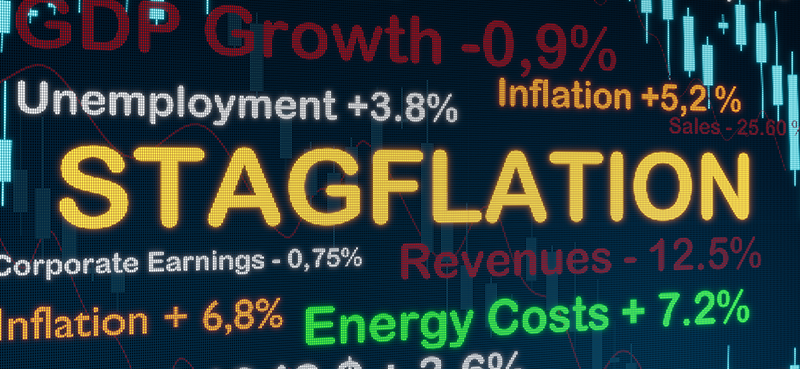
Companies then face a difficult choice: Absorb those higher costs and sacrifice profit margins… or pass them along to customers who are already feeling squeezed. Either way, earnings could suffer.
And there’s little clarity on when those pressures might ease.
Oil prices fell sharply on Monday after Secretary of State Marco Rubio said President Trump wants a diplomatic resolution to the war. But with no clear path to a lasting agreement, prices remain vulnerable to sudden swings.
That makes it especially difficult for companies to forecast their future expenses. And when management can’t confidently predict costs, investors become less confident in Wall Street’s earnings estimates.
High interest rates are creating a second squeeze
Energy is only part of the problem.
The 10-year Treasury yield is around 4.93%, after spending much of October above 5%. Bear in mind, the 10-year yield influences borrowing costs throughout the economy, particularly mortgages and business loans.
Consider housing. According to Freddie Mac, the average 30-year mortgage rate is 7.24%, up from 6.17% a year ago. Those higher payments make it harder for families to afford homes, which hurts demand for everything from construction materials to appliances and furniture.
Businesses face similar pressures. Companies looking to expand, build factories, or refinance existing debt are confronting much higher financing costs. And those additional interest expenses eat directly into profits.
The Federal Reserve faces a difficult balancing act. Inflation remains a concern, especially with energy prices elevated. But keeping rates high or raising them further risks putting even more pressure on economic growth. The longer borrowing costs remain elevated, the greater the potential damage to corporate earnings.
Political uncertainty makes the outlook even harder to predict
Today, voters are heading to the polls for the midterm elections.
A change in control of Congress could create new fights over spending, taxes, regulation, and the administration’s economic priorities.
Of course, markets have navigated divided governments before. But in an environment where investors are already struggling to predict energy prices, interest rates, and corporate earnings, Washington adds another source of uncertainty.
And uncertainty makes it harder for stocks to command higher valuations.
Why the 4% alternative changes everything
Here’s the other major problem for stocks: Investors have an attractive alternative.
Short-term U.S. Treasuries are offering yields around 4%, giving investors a relatively safe place to park their money while they wait for the economic picture to improve.
So if stocks look vulnerable to another 10% or 20% decline, why rush to buy?
That helps explain why investors aren’t enthusiastically buying stocks just because valuations have come down. The potential reward has to justify the additional risk.
And right now, with oil prices elevated, borrowing costs high, and earnings forecasts increasingly uncertain, that calculation looks less attractive than it did a few months ago.
The bottom line
The S&P 500’s valuation has come down, and corporate earnings are still growing. But the market is looking ahead.
Investors are worried that higher energy costs, elevated interest rates, and slowing economic activity could eventually undermine those strong earnings forecasts. And with relatively safe investments offering yields around 4%, there’s less pressure to jump into stocks before the outlook improves.
That doesn’t mean every stock should be sold. Many companies still have strong businesses, growing demand, and attractive long-term opportunities. But it does mean investors need to be more selective.
Pay close attention to earnings guidance, debt levels, and companies’ ability to protect their profit margins. And don’t be afraid to hold extra cash while waiting for better opportunities.
For more on how we’re navigating this market and the stocks we’re watching, stay tuned to Wall Street Unplugged.
Curzio Research publishes market commentary for informational and educational purposes. The opinions expressed and market conditions when the content is published may change. It is not personalized investment advice or an offer to buy or sell securities. Investing involves risk, including possible loss of principal. Do your own research and consult a qualified investment professional before making investment decisions.