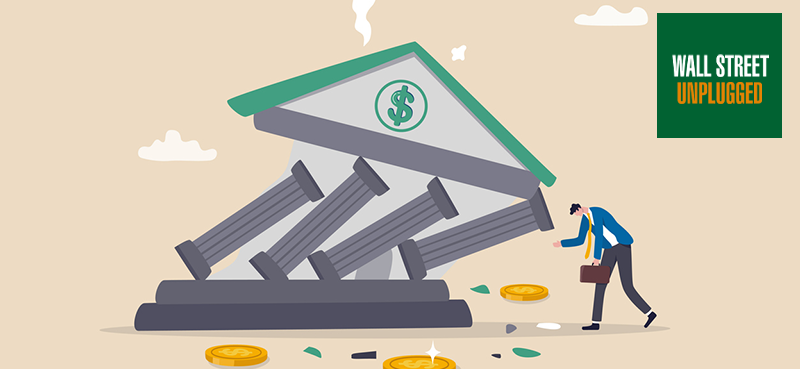

It was the most frightening day on Wall Street in years.
I’m not talking about October 19, 1987, when the Dow Jones Index crashed 508 points… or September 29, 2008, when it plunged 777 points.
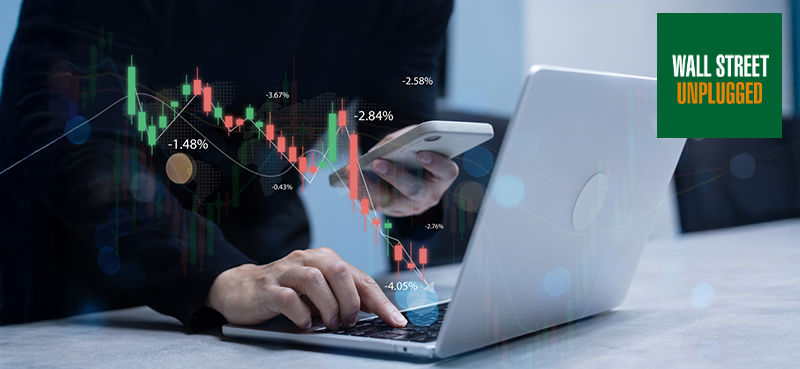
No, I’m talking about February 5, 2018… when the Dow crashed nearly 1,600 points—the largest point decline for the major index in history.
I’m sure most investors have forgotten about this event. The market bounced back sharply over the next few weeks, recouping most of its losses.
Some experts speculate the February 2018 crash happened because valuations were stretched. Others believe investors were concerned with inflation after the recent economic data was released. … This is B.S.
If valuations were stretched… the market would not have bounced back so quickly. And inflation—while rising—was still close to historical lows. The reason the Dow fell by its biggest point total in history was due to algorithmic trading.
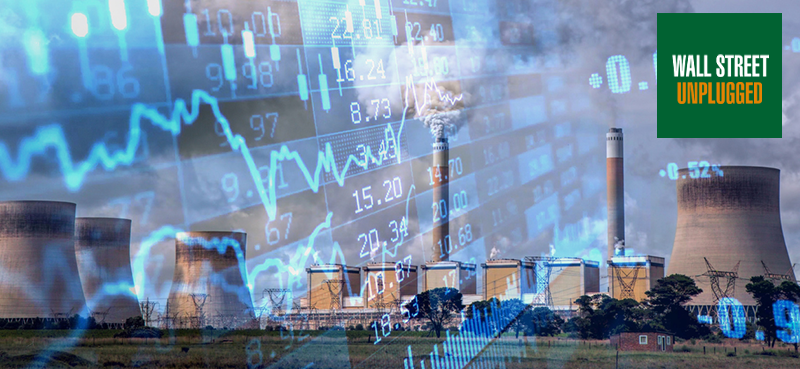
Algorithm trading (algos) is the process of using super high-speed machines (called Black Boxes) to identify high-probability trades. These systems have become so advanced… they’re able to predict price movements with stunning accuracy.
These trading systems don’t care about who runs the company, how much money it earns, how much cash flow it generates, or how fast sales are expected to grow.
They’re designed to make profits buying and selling stocks based on movement.
You’ve probably heard the phrase “high-frequency trading.”
The fastest algos can place millions of trades in less than a half a millionth of a second—more than a million times faster than the human mind can make a decision.
But that’s just the back half of this equation.
The real key is that these Black Boxes are able to identify the likely direction of any number of individual stocks – and indeed the entire market – based on finely tuned, proprietary equations that can spit out a single command in the blink of an eye: BUY or SELL.
As former head of the New York Stock Exchange, William Donaldson says:
“[This] is where all the money is getting made. If an individual investor doesn’t have the means to keep up, they’re at a huge disadvantage.”
That’s a huge understatement.
Bridgewater Associates and Two Sigma are two of the largest algo trading hedge funds in the world.
These firms rarely lose money… ever.
In fact, Two Sigma hasn’t had a single losing year since its inception in 2001.
That’s why they have over $200 billion in combined assets under management as every institution is dying to have their money managed by these guys.
JP Morgan, Morgan Stanley and Goldman Sachs are spending hundreds of millions to upgrade their trading platforms to better compete with Bridgewater and Two Sigma. These old-school investment banks know they must adapt to the new age of machine trading… or die.
Individual investors need to be thinking the same way.
That’s why, tomorrow, we’re launching our new weekly, algo-based trading service: 2-Second Trader.
The veteran trader (once the highest-paid agency trader on Wall Street) who’s running it, has invented an incredible Black Box trading machine.
There’s absolutely nothing like it in the world that I know of.
If this sounds like something you’re interested in learning more about, enter your email below and we’ll send you an email when we launch.
Good Investing,

 | Frank X. Curzio Founder and CEO, Curzio Research |
–
Curzio Research publishes market commentary for informational and educational purposes. The opinions expressed and market conditions when the content is published may change. It is not personalized investment advice or an offer to buy or sell securities. Investing involves risk, including possible loss of principal. Do your own research and consult a qualified investment professional before making investment decisions.