Over the past year, I’ve encouraged you to take profits on Apple (AAPL).
Apple is one of the greatest companies in the world. Its signature products include the iPhone, iPad, Mac computers and the Apple Watch.
These tech gadgets are among the top-selling products in their respective categories. And many investors generated huge profits owning Apple ahead of these product launches.
However, as I predicted here, Apple was about to see a dramatic slowdown in growth (in earnings and sales) in the years ahead.In fact, this trend began in July. This was after the company reported earnings (for its fiscal third quarter) that fell short of consensus estimates. Apple reported weaker than expected iPhone sales again in October (in its fourth quarter).
Apple is down 25% since my call. This is much more than the S&P 500 — which is down 10% in the same time frame.Back in July, I recommended not buying the pullback. And based on all my newest research, I continue to stand by my call not to add shares here in the near term. In fact, the stock could fall another 10% to 15%, as the next six months will be incredibly challenging for the tech giant.Let me explain …
On Tuesday, Apple reported first-quarter earnings.
During the company’s conference call, CEO Tim Cook highlighted several records. For example, Apple generated $75.9 billion in sales last quarter.This was the strongest quarter in the company’s history.The company generated more than $5 billion from its services division. This includes sales from its Apple Pay, iTunes, iCloud and Apple Care segments.This was also a record for the company.Apple said it generated $18.4 billion in net profit.This was the most-profitable quarter in U.S. corporate history!These numbers are nothing short of impressive. However, Apple is about to set another record.And this record should be the most important factor for any investor looking to buy Apple right now…Next quarter, Apple will report its first decline in iPhone unit sales in the company’s history. This means Apple will sell fewer iPhone units next quarter compared to the year before.To put this in perspective, the iPhone accounts for nearly 70% of Apple’s total sales. This is also the most-profitable product the company sells. And unit sales are slowing much faster than the company — and analysts — expected.
Apple began selling its latest iPhone (called the 6s) in September.
Sales were strong during the product launch. But there were not enough “exciting” changes to the new handset to warrant massive upgrades from customers.
In fact, some of the most widely-followed publications in technology — including Tech Insider and re/code — found little reason for Apple customers to upgrade their older handsets to the newer 6s version.Most Apple bulls see this as a positive …Apple is expected to release its new iPhone 7 later this year. This means existing customers — who did not upgrade to the 6s — are likely to upgrade to the iPhone 7. That could result in Apple reporting one of its strongest quarters ever to end 2016.However, the new iPhone 7 will not be released until September.Remember, Apple receives more than two-thirds of its revenue from iPhone sales. And iPhone sales are slowing much faster than expected. With eight months left until the iPhone 7 release, Apple is likely to report terrible iPhone sales numbers over the next two quarters. Of course, Apple sells other products like iPads and Macs. However, unit sales for these major brands are also declining. For example, iPad unit sales are down 24% year-over-year. Mac unit sales are down 4% year-over-year.
Apple generated over $5 billion from its services division. The company also generated $4.3 billion in sales from its division that includes the Apple Watch, iPod, Beats headphones, Apple TV and accessories. This amounts to nearly $10 billion in sales for both divisions.
This $10 billion is a huge number for most companies. Yet, it only amounts to just 4% of the $230 billion in total sales Apple is projected to generate for 2016.In other words, investors should stop focusing on exciting headlines relating to the Apple Watch or Apple TV. Apple is clearly an iPhone company. And over the next six months, sales of the iPhone are likely to slow much further.
Turning to the fundamentals, Apple is currently trading at 10 times earnings. That’s incredibly cheap compared to the average company in the S&P 500 — which trades for 15 times earnings.
Apple is also sitting on $213 billion in cash. To put this in perspective, that’s more cash than the entire market cap of JPMorgan (JPM). It also amounts to almost $40 a share in cash, or 41% of Apple’s market cap.However, more than 90% of this cash is held overseas. If it is brought back to the U.S., this cash could be taxed at 38%. To put this in perspective, this could cut Apple’s cash by roughly $70 billion.
Again, Apple is one of the greatest companies in the world. The fundamentals also look attractive at these levels (even after the potential tax on its cash hoard).
However, the company is likely to see more pressure over the next six months as iPhone sales continue to slow. This could push the stock down another 10% from current levels.
If I’m right, this would be a much better entry point for investors to buy Apple.
Read the signs. Beat the market.
The market intelligence you need to invest one step ahead. Go beyond the headlines. Invest with an insider’s edge.
Books are a big part of Wall Street culture. Luke shares his favorite book of all time… and the simple lesson that helped him find the path to big, long-term investment gains.
Learn why Chinese property manager Evergrande rocked the market this week… why it poses a threat to the global economy… and why U.S. investors should invest in China with caution.
It’s time to put on our rally hats… As we near the end of the year, we’re about to enter the mega green zone for stocks. And Luke’s spotted two ETFs primed for huge gains...
OpenAI's HuggingFace debacle: Is AI a cybersecurity risk? Plus, SuperMicro's (SMCI) margins… Open-source vs. closed-source AI models… 2 no-brainer AI power winners… The sector with the most AI risk… China's market manipulation… And stay cautious on SpaceX (SPCX).
DigiPower X (DGXX) CEO Michel Amar breaks down the company's milestone contract with Cerebras (CBRS)… its AI stack roadmap, from real estate to GPU-as-a-service… key catalysts through 2026… and why DigiPower X is in a league of its own.
IBM's (IBM) worst day in 58 years—is it a buying opportunity? Plus, Fed Chair Warsh's testimony… The odds of a rate hike dropped significantly… Two AI buys… The perfect backdrop for big banks… And Wrap's (WRAP) growing TAM.
Meb Faber, cofounder and chief investment officer of Cambria Investment Management, breaks down his new book on the rise of the 250-year bull market… and how much longer it can last. Plus, why U.S. investors should look abroad.
Savvy CEO Eric Goldreyer breaks down the secret to the company's success—and its next growth phase… how AI is helping unlock customer savings… and his exit plan for this hospitality disruptor.
These tech stocks are buys on the pullback. Plus, is it still a "buy-the-dip" market? … What's driving the outperformance in small caps? … Steer clear of this SPAC… Accenture's (ACN) management should be fired… And the broken housing market.
Iran reportedly suspended indirect talks with the U.S. and is threatening to completely block the Strait of Hormuz. That matters because roughly 20% of the world's oil flows through this narrow chokepoint. Here's what it means for oil prices, energy…
The U.S. is tightening sanctions on Iran's oil network. But Iranian barrels are still moving through China and a shadow fleet of tankers, shell companies, and middlemen. Here's why that fragile workaround system matters for crude prices—and energy stocks.
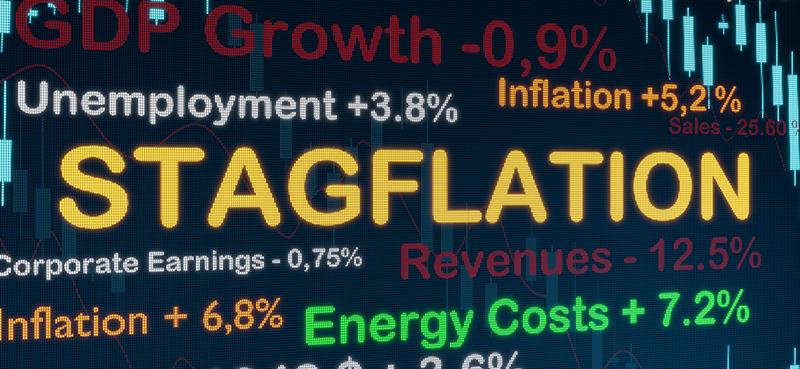
The latest economic data has revived fears of stagflation—a painful mix of weak growth and stubborn inflation. But today's economy isn't the 1970s. Here's what the numbers actually say… and what investors should watch next.
AI is this century's gold rush—and the biggest fortunes will once again go to the companies selling the "shovels." These seven sectors are providing the energy and infrastructure to power the AI boom.
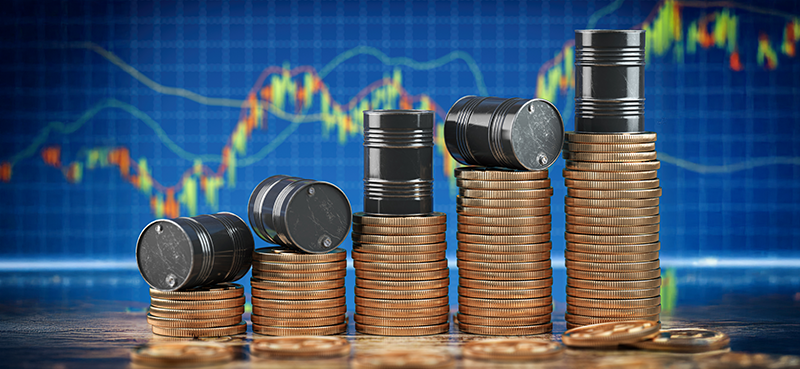
Oil’s sustained price is a major indicator that few are watching. If crude stays elevated, it could keep inflation sticky, limit the Fed’s flexibility, squeeze corporate margins, and shift market leadership. Here’s how to position your portfolio.
War-risk insurance premiums on Strait of Hormuz transits have surged from pre-war levels, and shipping traffic has collapsed by roughly 95%. Here's how insurers are controlling oil transit… and what it means for your portfolio.
The Trump administration plans to drop $2 billion on nine quantum computing companies in exchange for equity stakes. IBM (IBM) gets the biggest slice, but the pure-play names are seeing the real upside. Here's what this signal means for investors.

 Over the past year, I’ve encouraged you to take profits on Apple (AAPL).
Apple is one of the greatest companies in the world. Its signature products include the iPhone, iPad, Mac computers and the Apple Watch.
These tech gadgets are among the top-selling products in their respective categories. And many investors generated huge profits owning Apple ahead of these product launches.
However, as I predicted here, Apple was about to see a dramatic slowdown in growth (in earnings and sales) in the years ahead.In fact, this trend began in July. This was after the company reported earnings (for its fiscal third quarter) that fell short of consensus estimates. Apple reported weaker than expected iPhone sales again in October (in its fourth quarter).
Apple is down 25% since my call. This is much more than the S&P 500 — which is down 10% in the same time frame.
Over the past year, I’ve encouraged you to take profits on Apple (AAPL).
Apple is one of the greatest companies in the world. Its signature products include the iPhone, iPad, Mac computers and the Apple Watch.
These tech gadgets are among the top-selling products in their respective categories. And many investors generated huge profits owning Apple ahead of these product launches.
However, as I predicted here, Apple was about to see a dramatic slowdown in growth (in earnings and sales) in the years ahead.In fact, this trend began in July. This was after the company reported earnings (for its fiscal third quarter) that fell short of consensus estimates. Apple reported weaker than expected iPhone sales again in October (in its fourth quarter).
Apple is down 25% since my call. This is much more than the S&P 500 — which is down 10% in the same time frame. Back in July, I recommended not buying the pullback. And based on all my newest research, I continue to stand by my call not to add shares here in the near term. In fact, the stock could fall another 10% to 15%, as the next six months will be incredibly challenging for the tech giant.Let me explain …
On Tuesday, Apple reported first-quarter earnings.
During the company’s conference call, CEO Tim Cook highlighted several records. For example, Apple generated $75.9 billion in sales last quarter.This was the strongest quarter in the company’s history.The company generated more than $5 billion from its services division. This includes sales from its Apple Pay, iTunes, iCloud and Apple Care segments.This was also a record for the company.Apple said it generated $18.4 billion in net profit.This was the most-profitable quarter in U.S. corporate history!These numbers are nothing short of impressive. However, Apple is about to set another record.And this record should be the most important factor for any investor looking to buy Apple right now…Next quarter, Apple will report its first decline in iPhone unit sales in the company’s history. This means Apple will sell fewer iPhone units next quarter compared to the year before.To put this in perspective, the iPhone accounts for nearly 70% of Apple’s total sales. This is also the most-profitable product the company sells. And unit sales are slowing much faster than the company — and analysts — expected.
Apple began selling its latest iPhone (called the 6s) in September.
Sales were strong during the product launch. But there were not enough “exciting” changes to the new handset to warrant massive upgrades from customers.
In fact, some of the most widely-followed publications in technology — including Tech Insider and re/code — found little reason for Apple customers to upgrade their older handsets to the newer 6s version.Most Apple bulls see this as a positive …
Back in July, I recommended not buying the pullback. And based on all my newest research, I continue to stand by my call not to add shares here in the near term. In fact, the stock could fall another 10% to 15%, as the next six months will be incredibly challenging for the tech giant.Let me explain …
On Tuesday, Apple reported first-quarter earnings.
During the company’s conference call, CEO Tim Cook highlighted several records. For example, Apple generated $75.9 billion in sales last quarter.This was the strongest quarter in the company’s history.The company generated more than $5 billion from its services division. This includes sales from its Apple Pay, iTunes, iCloud and Apple Care segments.This was also a record for the company.Apple said it generated $18.4 billion in net profit.This was the most-profitable quarter in U.S. corporate history!These numbers are nothing short of impressive. However, Apple is about to set another record.And this record should be the most important factor for any investor looking to buy Apple right now…Next quarter, Apple will report its first decline in iPhone unit sales in the company’s history. This means Apple will sell fewer iPhone units next quarter compared to the year before.To put this in perspective, the iPhone accounts for nearly 70% of Apple’s total sales. This is also the most-profitable product the company sells. And unit sales are slowing much faster than the company — and analysts — expected.
Apple began selling its latest iPhone (called the 6s) in September.
Sales were strong during the product launch. But there were not enough “exciting” changes to the new handset to warrant massive upgrades from customers.
In fact, some of the most widely-followed publications in technology — including Tech Insider and re/code — found little reason for Apple customers to upgrade their older handsets to the newer 6s version.Most Apple bulls see this as a positive … Apple is expected to release its new iPhone 7 later this year. This means existing customers — who did not upgrade to the 6s — are likely to upgrade to the iPhone 7. That could result in Apple reporting one of its strongest quarters ever to end 2016.However, the new iPhone 7 will not be released until September.Remember, Apple receives more than two-thirds of its revenue from iPhone sales. And iPhone sales are slowing much faster than expected. With eight months left until the iPhone 7 release, Apple is likely to report terrible iPhone sales numbers over the next two quarters. Of course, Apple sells other products like iPads and Macs. However, unit sales for these major brands are also declining. For example, iPad unit sales are down 24% year-over-year. Mac unit sales are down 4% year-over-year.
Apple generated over $5 billion from its services division. The company also generated $4.3 billion in sales from its division that includes the Apple Watch, iPod, Beats headphones, Apple TV and accessories. This amounts to nearly $10 billion in sales for both divisions.
This $10 billion is a huge number for most companies. Yet, it only amounts to just 4% of the $230 billion in total sales Apple is projected to generate for 2016.In other words, investors should stop focusing on exciting headlines relating to the Apple Watch or Apple TV. Apple is clearly an iPhone company. And over the next six months, sales of the iPhone are likely to slow much further.
Turning to the fundamentals, Apple is currently trading at 10 times earnings. That’s incredibly cheap compared to the average company in the S&P 500 — which trades for 15 times earnings.
Apple is also sitting on $213 billion in cash. To put this in perspective, that’s more cash than the entire market cap of JPMorgan (JPM). It also amounts to almost $40 a share in cash, or 41% of Apple’s market cap.However, more than 90% of this cash is held overseas. If it is brought back to the U.S., this cash could be taxed at 38%. To put this in perspective, this could cut Apple’s cash by roughly $70 billion.
Again, Apple is one of the greatest companies in the world. The fundamentals also look attractive at these levels (even after the potential tax on its cash hoard).
However, the company is likely to see more pressure over the next six months as iPhone sales continue to slow. This could push the stock down another 10% from current levels.
If I’m right, this would be a much better entry point for investors to buy Apple.
Apple is expected to release its new iPhone 7 later this year. This means existing customers — who did not upgrade to the 6s — are likely to upgrade to the iPhone 7. That could result in Apple reporting one of its strongest quarters ever to end 2016.However, the new iPhone 7 will not be released until September.Remember, Apple receives more than two-thirds of its revenue from iPhone sales. And iPhone sales are slowing much faster than expected. With eight months left until the iPhone 7 release, Apple is likely to report terrible iPhone sales numbers over the next two quarters. Of course, Apple sells other products like iPads and Macs. However, unit sales for these major brands are also declining. For example, iPad unit sales are down 24% year-over-year. Mac unit sales are down 4% year-over-year.
Apple generated over $5 billion from its services division. The company also generated $4.3 billion in sales from its division that includes the Apple Watch, iPod, Beats headphones, Apple TV and accessories. This amounts to nearly $10 billion in sales for both divisions.
This $10 billion is a huge number for most companies. Yet, it only amounts to just 4% of the $230 billion in total sales Apple is projected to generate for 2016.In other words, investors should stop focusing on exciting headlines relating to the Apple Watch or Apple TV. Apple is clearly an iPhone company. And over the next six months, sales of the iPhone are likely to slow much further.
Turning to the fundamentals, Apple is currently trading at 10 times earnings. That’s incredibly cheap compared to the average company in the S&P 500 — which trades for 15 times earnings.
Apple is also sitting on $213 billion in cash. To put this in perspective, that’s more cash than the entire market cap of JPMorgan (JPM). It also amounts to almost $40 a share in cash, or 41% of Apple’s market cap.However, more than 90% of this cash is held overseas. If it is brought back to the U.S., this cash could be taxed at 38%. To put this in perspective, this could cut Apple’s cash by roughly $70 billion.
Again, Apple is one of the greatest companies in the world. The fundamentals also look attractive at these levels (even after the potential tax on its cash hoard).
However, the company is likely to see more pressure over the next six months as iPhone sales continue to slow. This could push the stock down another 10% from current levels.
If I’m right, this would be a much better entry point for investors to buy Apple.