Nike (NKE) could do no wrong in 2015.
The sports apparel giant is coming off one of its best years ever. Sales surged to an all-time high, earnings jumped over 20% and the company grew its market cap by more than $30 billion.
Nike was also the best-performing stock in the Dow Jones index. Shares rose 31% while the S&P 500 reported a slight loss on the year.Wall Street is still super-bullish on the stock. For example, there are 30 institutional firms, like JPMorgan and Goldman Sachs, who provide research on Nike.Yet, not one of these analysts has a sell rating on the stock!My suggestion is, if you’re sitting on big gains in this stock, to ignore these bullish reports and grab those gains right now. The stock is trading at its highest valuation in 10 years. Plus, several headwinds could push shares down 15% to 20% in 2016.
Let me explain …
Nike’s run over the past 12 months is nothing short of impressive. The company increased sales by double-digits in every geography. It also generated $2.3 billion in free cash flow and is sitting on more than $6 billion in cash on its balance sheet.
Management is using this cash to increase its dividend. They recently raised their annual payout by 14%. They also plan on buying back $12 billion of its stock by 2020. This amounts to 11% of the company’s total shares outstanding.
Based on these facts, I understand why just about every analyst covering Nike remains bullish on the stock. However, there is much more to this story …For example, Nike’s shares have run up by more than 30% over the past 12 months. The stock now trades at 27 times forward earnings.
To put this in perspective, Nike is trading at a 60% premium to the S&P 500. At 27 times earnings, Nike is also trading at its highest valuation in more than 10 years.Valuation should not be the sole reason to sell any stock.After all, some of the best-performing stocks like Facebook ($FB) and Netflix ($NFLX) are extremely expensive based on their price-to-earnings ratios. However, these companies deserve these premiums since they are growing much faster than the overall market.
Nike is also growing earnings much faster than the market. Last quarter, earnings grew by 21%. That’s much higher than the average company in the S&P 500 — which is growing earnings in the single-digits.But my research tells me Nike’s latest earnings report is deceiving …For example, Nike earned 90 cents a share in the quarter. This was 4 cents higher than consensus estimates. But roughly 7 cents in earnings was due to a lower tax rate (tax rate fell from 25% to 19%) and share buybacks.
If we take out the favorable tax rate and buybacks, Nike would have missed earnings by 3 cents. Revenue also came in below consensus estimates.
These details were overshadowed by Nike’s huge 20% growth in global future orders. These are orders the company expects to book over the next 12 months.Nike’s future orders number was impressive. But a lot of this growth is coming from China. In fact, future orders in the emerging market grew by 35%.
This could be a problem for Nike.
China is off to a rough start this year. Recent economic data shows the country is slowing at a much faster rate than expected. That’s why China’s market plunged this week.
The unexpected slowdown in China could impact future orders going forward. For example, future orders are not guaranteed orders. The company points this out in their annual report by saying:“Exchange-rate fluctuations as well as differing levels of order cancelations, discounts and returns can cause differences in the comparisons between future orders and actual revenues.”This may explain why Nike did not raise its full-year sales guidance — despite reporting one of the biggest jumps in future orders in the company’s history.Another negative that’s being overlooked is inventory. Nike’s inventory in North America rose by 11%. North America accounts for almost half of the company’s revenue.
Management downplayed this risk on the conference call. But this will likely result in lower margins at least over the next three to six months. With Nike trading at 27 times forward earnings, this risk is not priced in to the stock.
On a final note …
Nike projects it will generate $50 billion in sales by 2020. That’s a 66% increase in revenue, or more than 10% annually over the next five years. This is a big number for a company that’s already a major player in just about every global market.
Yet, Nike only expects sales to increase by 5% in 2016. That’s a significantly low number considering the “tremendous opportunity” management is anticipating from the Olympics and the UEFA Euro Championships. These are not annual events, or catalysts that will benefit Nike in 2017.In other words … if Nike can’t grow sales by double-digits in 2016 … how will the company generate double-digit sales growth each year until 2020?
Nike is one of the all-time great companies. They are a world dominator in sports apparel and sneakers. But even world-dominating stocks become overvalued at times. A good example of this is Wal-Mart (WMT) and Caterpillar (CAT). These stocks fell by more than 25% in 2015 — after hitting new highs the previous year.
I expect Nike to follow in the same footsteps.
Analysts’ estimates are too optimistic … there are inventory concerns in the company’s largest market … and the stock is trading at its highest valuation in more than 10 years.
My suggestion is to ignore the Street’s bullish forecasts, and sell Nike.
Read the signs. Beat the market.
The market intelligence you need to invest one step ahead. Go beyond the headlines. Invest with an insider’s edge.
Books are a big part of Wall Street culture. Luke shares his favorite book of all time… and the simple lesson that helped him find the path to big, long-term investment gains.
Learn why Chinese property manager Evergrande rocked the market this week… why it poses a threat to the global economy… and why U.S. investors should invest in China with caution.
It’s time to put on our rally hats… As we near the end of the year, we’re about to enter the mega green zone for stocks. And Luke’s spotted two ETFs primed for huge gains...
OpenAI's HuggingFace debacle: Is AI a cybersecurity risk? Plus, SuperMicro's (SMCI) margins… Open-source vs. closed-source AI models… 2 no-brainer AI power winners… The sector with the most AI risk… China's market manipulation… And stay cautious on SpaceX (SPCX).
DigiPower X (DGXX) CEO Michel Amar breaks down the company's milestone contract with Cerebras (CBRS)… its AI stack roadmap, from real estate to GPU-as-a-service… key catalysts through 2026… and why DigiPower X is in a league of its own.
IBM's (IBM) worst day in 58 years—is it a buying opportunity? Plus, Fed Chair Warsh's testimony… The odds of a rate hike dropped significantly… Two AI buys… The perfect backdrop for big banks… And Wrap's (WRAP) growing TAM.
Meb Faber, cofounder and chief investment officer of Cambria Investment Management, breaks down his new book on the rise of the 250-year bull market… and how much longer it can last. Plus, why U.S. investors should look abroad.
Savvy CEO Eric Goldreyer breaks down the secret to the company's success—and its next growth phase… how AI is helping unlock customer savings… and his exit plan for this hospitality disruptor.
These tech stocks are buys on the pullback. Plus, is it still a "buy-the-dip" market? … What's driving the outperformance in small caps? … Steer clear of this SPAC… Accenture's (ACN) management should be fired… And the broken housing market.
Iran reportedly suspended indirect talks with the U.S. and is threatening to completely block the Strait of Hormuz. That matters because roughly 20% of the world's oil flows through this narrow chokepoint. Here's what it means for oil prices, energy…
The U.S. is tightening sanctions on Iran's oil network. But Iranian barrels are still moving through China and a shadow fleet of tankers, shell companies, and middlemen. Here's why that fragile workaround system matters for crude prices—and energy stocks.
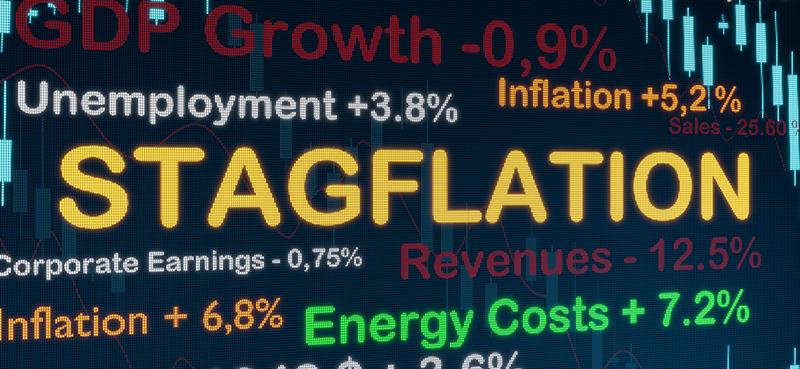
The latest economic data has revived fears of stagflation—a painful mix of weak growth and stubborn inflation. But today's economy isn't the 1970s. Here's what the numbers actually say… and what investors should watch next.
AI is this century's gold rush—and the biggest fortunes will once again go to the companies selling the "shovels." These seven sectors are providing the energy and infrastructure to power the AI boom.
Oil’s sustained price is a major indicator that few are watching. If crude stays elevated, it could keep inflation sticky, limit the Fed’s flexibility, squeeze corporate margins, and shift market leadership. Here’s how to position your portfolio.
War-risk insurance premiums on Strait of Hormuz transits have surged from pre-war levels, and shipping traffic has collapsed by roughly 95%. Here's how insurers are controlling oil transit… and what it means for your portfolio.
The Trump administration plans to drop $2 billion on nine quantum computing companies in exchange for equity stakes. IBM (IBM) gets the biggest slice, but the pure-play names are seeing the real upside. Here's what this signal means for investors.

 Wall Street is still super-bullish on the stock. For example, there are 30 institutional firms, like JPMorgan and Goldman Sachs, who provide research on Nike.Yet, not one of these analysts has a sell rating on the stock!My suggestion is, if you’re sitting on big gains in this stock, to ignore these bullish reports and grab those gains right now. The stock is trading at its highest valuation in 10 years. Plus, several headwinds could push shares down 15% to 20% in 2016.
Let me explain …
Nike’s run over the past 12 months is nothing short of impressive. The company increased sales by double-digits in every geography. It also generated $2.3 billion in free cash flow and is sitting on more than $6 billion in cash on its balance sheet.
Management is using this cash to increase its dividend. They recently raised their annual payout by 14%. They also plan on buying back $12 billion of its stock by 2020. This amounts to 11% of the company’s total shares outstanding.
Based on these facts, I understand why just about every analyst covering Nike remains bullish on the stock. However, there is much more to this story …For example, Nike’s shares have run up by more than 30% over the past 12 months. The stock now trades at 27 times forward earnings.
To put this in perspective, Nike is trading at a 60% premium to the S&P 500. At 27 times earnings, Nike is also trading at its highest valuation in more than 10 years.
Wall Street is still super-bullish on the stock. For example, there are 30 institutional firms, like JPMorgan and Goldman Sachs, who provide research on Nike.Yet, not one of these analysts has a sell rating on the stock!My suggestion is, if you’re sitting on big gains in this stock, to ignore these bullish reports and grab those gains right now. The stock is trading at its highest valuation in 10 years. Plus, several headwinds could push shares down 15% to 20% in 2016.
Let me explain …
Nike’s run over the past 12 months is nothing short of impressive. The company increased sales by double-digits in every geography. It also generated $2.3 billion in free cash flow and is sitting on more than $6 billion in cash on its balance sheet.
Management is using this cash to increase its dividend. They recently raised their annual payout by 14%. They also plan on buying back $12 billion of its stock by 2020. This amounts to 11% of the company’s total shares outstanding.
Based on these facts, I understand why just about every analyst covering Nike remains bullish on the stock. However, there is much more to this story …For example, Nike’s shares have run up by more than 30% over the past 12 months. The stock now trades at 27 times forward earnings.
To put this in perspective, Nike is trading at a 60% premium to the S&P 500. At 27 times earnings, Nike is also trading at its highest valuation in more than 10 years. Valuation should not be the sole reason to sell any stock.After all, some of the best-performing stocks like Facebook ($FB) and Netflix ($NFLX) are extremely expensive based on their price-to-earnings ratios. However, these companies deserve these premiums since they are growing much faster than the overall market.
Nike is also growing earnings much faster than the market. Last quarter, earnings grew by 21%. That’s much higher than the average company in the S&P 500 — which is growing earnings in the single-digits.But my research tells me Nike’s latest earnings report is deceiving …For example, Nike earned 90 cents a share in the quarter. This was 4 cents higher than consensus estimates. But roughly 7 cents in earnings was due to a lower tax rate (tax rate fell from 25% to 19%) and share buybacks.
If we take out the favorable tax rate and buybacks, Nike would have missed earnings by 3 cents. Revenue also came in below consensus estimates.
These details were overshadowed by Nike’s huge 20% growth in global future orders. These are orders the company expects to book over the next 12 months.Nike’s future orders number was impressive. But a lot of this growth is coming from China. In fact, future orders in the emerging market grew by 35%.
This could be a problem for Nike.
China is off to a rough start this year. Recent economic data shows the country is slowing at a much faster rate than expected. That’s why China’s market plunged this week.
The unexpected slowdown in China could impact future orders going forward. For example, future orders are not guaranteed orders. The company points this out in their annual report by saying:“Exchange-rate fluctuations as well as differing levels of order cancelations, discounts and returns can cause differences in the comparisons between future orders and actual revenues.”This may explain why Nike did not raise its full-year sales guidance — despite reporting one of the biggest jumps in future orders in the company’s history.Another negative that’s being overlooked is inventory. Nike’s inventory in North America rose by 11%. North America accounts for almost half of the company’s revenue.
Management downplayed this risk on the conference call. But this will likely result in lower margins at least over the next three to six months. With Nike trading at 27 times forward earnings, this risk is not priced in to the stock.
On a final note …
Nike projects it will generate $50 billion in sales by 2020. That’s a 66% increase in revenue, or more than 10% annually over the next five years. This is a big number for a company that’s already a major player in just about every global market.
Yet, Nike only expects sales to increase by 5% in 2016. That’s a significantly low number considering the “tremendous opportunity” management is anticipating from the Olympics and the UEFA Euro Championships. These are not annual events, or catalysts that will benefit Nike in 2017.In other words … if Nike can’t grow sales by double-digits in 2016 … how will the company generate double-digit sales growth each year until 2020?
Nike is one of the all-time great companies. They are a world dominator in sports apparel and sneakers. But even world-dominating stocks become overvalued at times. A good example of this is Wal-Mart (WMT) and Caterpillar (CAT). These stocks fell by more than 25% in 2015 — after hitting new highs the previous year.
I expect Nike to follow in the same footsteps.
Analysts’ estimates are too optimistic … there are inventory concerns in the company’s largest market … and the stock is trading at its highest valuation in more than 10 years.
My suggestion is to ignore the Street’s bullish forecasts, and sell Nike.
Valuation should not be the sole reason to sell any stock.After all, some of the best-performing stocks like Facebook ($FB) and Netflix ($NFLX) are extremely expensive based on their price-to-earnings ratios. However, these companies deserve these premiums since they are growing much faster than the overall market.
Nike is also growing earnings much faster than the market. Last quarter, earnings grew by 21%. That’s much higher than the average company in the S&P 500 — which is growing earnings in the single-digits.But my research tells me Nike’s latest earnings report is deceiving …For example, Nike earned 90 cents a share in the quarter. This was 4 cents higher than consensus estimates. But roughly 7 cents in earnings was due to a lower tax rate (tax rate fell from 25% to 19%) and share buybacks.
If we take out the favorable tax rate and buybacks, Nike would have missed earnings by 3 cents. Revenue also came in below consensus estimates.
These details were overshadowed by Nike’s huge 20% growth in global future orders. These are orders the company expects to book over the next 12 months.Nike’s future orders number was impressive. But a lot of this growth is coming from China. In fact, future orders in the emerging market grew by 35%.
This could be a problem for Nike.
China is off to a rough start this year. Recent economic data shows the country is slowing at a much faster rate than expected. That’s why China’s market plunged this week.
The unexpected slowdown in China could impact future orders going forward. For example, future orders are not guaranteed orders. The company points this out in their annual report by saying:“Exchange-rate fluctuations as well as differing levels of order cancelations, discounts and returns can cause differences in the comparisons between future orders and actual revenues.”This may explain why Nike did not raise its full-year sales guidance — despite reporting one of the biggest jumps in future orders in the company’s history.Another negative that’s being overlooked is inventory. Nike’s inventory in North America rose by 11%. North America accounts for almost half of the company’s revenue.
Management downplayed this risk on the conference call. But this will likely result in lower margins at least over the next three to six months. With Nike trading at 27 times forward earnings, this risk is not priced in to the stock.
On a final note …
Nike projects it will generate $50 billion in sales by 2020. That’s a 66% increase in revenue, or more than 10% annually over the next five years. This is a big number for a company that’s already a major player in just about every global market.
Yet, Nike only expects sales to increase by 5% in 2016. That’s a significantly low number considering the “tremendous opportunity” management is anticipating from the Olympics and the UEFA Euro Championships. These are not annual events, or catalysts that will benefit Nike in 2017.In other words … if Nike can’t grow sales by double-digits in 2016 … how will the company generate double-digit sales growth each year until 2020?
Nike is one of the all-time great companies. They are a world dominator in sports apparel and sneakers. But even world-dominating stocks become overvalued at times. A good example of this is Wal-Mart (WMT) and Caterpillar (CAT). These stocks fell by more than 25% in 2015 — after hitting new highs the previous year.
I expect Nike to follow in the same footsteps.
Analysts’ estimates are too optimistic … there are inventory concerns in the company’s largest market … and the stock is trading at its highest valuation in more than 10 years.
My suggestion is to ignore the Street’s bullish forecasts, and sell Nike.