You could almost never go wrong buying elite businesses …
This includes some of the world’s greatest companies like Procter & Gamble (PG) or Coke (KO).Buying and holding these names over the past few decades resulted in huge returns for investors.
These elite companies can be fantastic companies to own. They are legendarily profitable businesses with world-famous brand names. When professional investors gather to discuss great businesses, these names always come up.
But if investors focus solely on the world’s biggest companies, they miss out on large group of stocks that can help them grow wealthy.This often presents a problem with the biggest blue-chip names. When everyone wants to buy something, it almost always commands a premium price. An investor can end up waiting a long time to get a chance to buy these premium businesses for bargain prices.That’s why I encourage investors to learn about the class of elite, small-cap dividend-payers that also have great brand names … competitive moats … stable cash flows… and long histories of uninterrupted dividend growth.They just happen to be much smaller than giants like P&G and Coke. And while some of these elite firms provide brand-name products and services you might use every month, most people have never heard of them.
Their small size makes them fly under the radar of institutional investors. Plus, many pension funds, mutual funds and hedge funds are just too big to buy these small-cap dividend-payers.
For example, there is a list of over 100 small-cap, dividend-paying stocks that Wall Street has largely ignored. These small caps have a lot in common with companies like Coke and McDonald’s (MCD).
They are safe companies. Plus, all the names on this list have been raising their dividends annually for more than 10 years. Most have been around for more than 25 years.
Like many large-cap, dividend-paying stocks, these companies generate tons of cash flow. They have competitive advantages in their respective industries. They also have solid management teams.How to Bag a Gain — Literally!Take Bemis (BMS) for example. The company was founded in 1858. They are one of the largest packaging companies in America. And the company pays a 2.6% dividend that has been raised annually for 31 consecutive years. That’s a longer streak than industry giants McDonald’s and Chevron (CVX).
You probably don’t even realize how many bags and packages you use each day. Your cereal box has a bag in it. Your freshly ground coffee likely comes in a bag. When it’s time to feed the dog, you probably reach for a bag. Every time you tear open a package, you’re opening a bag.
And there’s a good chance that bag is made by Bemis. Millions of products — from food and customer goods to medical devices — go to market each day in Bemis packaging.
Below is a 30-year chart of Bemis. As you can see, the company has had its ups and downs. But the stock has steadily moved higher. This is exactly the kind of business that’s great for long-term investors seeking steady and safe income.Ordinary Items, Remarkable GainsBrady Corp. (BRC) is another example on an elite small-cap dividend company that few people ever heard of.
Brady was founded over 100 years ago. The company makes signs, labels, badges and ID cards. This includes everything from the “high voltage” signs you might find in factories and storefront windows … to the tiny barcode stickers you see on thousands — even millions — of items.
These items fall into the category of “things you see everywhere but never notice.”
They now operate on six continents and employ over 6,400 people. The company also pays a huge 3.9% dividend that has been raised annually for 30 consecutive years.Below is a 30-year chat of Brady. This is another small dividend elite company that’s steadily moved higher over the past few decades while increasing their payout to shareholders.However, Brady has been in a rough patch over the past few years. Growth has slowed, which resulted in the stock trading sideways over the past few years.I suggest using this weakness to buy shares right now.Over the past two years, Brady has restructured its business. This included closing underperforming factories and adding new leadership teams to support and train employees.
Brady is already seeing strong results from this restructuring. The company generated $40 million in operating cash flow last quarter. This compares to just $17 million in last year’s comparable quarter.
Today, Brady trades at just 14 times forward earnings. This is much cheaper than McDonald’s or Coke — which are trading at 18 times forward earnings. Plus, the company expects to grow its earnings by more than 15% from 2015 to 2016.
Bemis and Brady are just two examples of the many excellent small-cap dividend-payers out there you can confidently hold a long-term position in.
Keep in mind: These stocks aren’t going to soar 100% overnight … but they can form the “core” of a safe retirement account. And because of their small size, we have less “buying competition,” which means we can often buy them for bargain prices.
If you are a long-term investor seeking safe and steady income, these are two names that could make a great addition to your portfolio.
Read the signs. Beat the market.
The market intelligence you need to invest one step ahead. Go beyond the headlines. Invest with an insider’s edge.
Books are a big part of Wall Street culture. Luke shares his favorite book of all time… and the simple lesson that helped him find the path to big, long-term investment gains.
Learn why Chinese property manager Evergrande rocked the market this week… why it poses a threat to the global economy… and why U.S. investors should invest in China with caution.
It’s time to put on our rally hats… As we near the end of the year, we’re about to enter the mega green zone for stocks. And Luke’s spotted two ETFs primed for huge gains...
OpenAI's HuggingFace debacle: Is AI a cybersecurity risk? Plus, SuperMicro's (SMCI) margins… Open-source vs. closed-source AI models… 2 no-brainer AI power winners… The sector with the most AI risk… China's market manipulation… And stay cautious on SpaceX (SPCX).
DigiPower X (DGXX) CEO Michel Amar breaks down the company's milestone contract with Cerebras (CBRS)… its AI stack roadmap, from real estate to GPU-as-a-service… key catalysts through 2026… and why DigiPower X is in a league of its own.
IBM's (IBM) worst day in 58 years—is it a buying opportunity? Plus, Fed Chair Warsh's testimony… The odds of a rate hike dropped significantly… Two AI buys… The perfect backdrop for big banks… And Wrap's (WRAP) growing TAM.
Meb Faber, cofounder and chief investment officer of Cambria Investment Management, breaks down his new book on the rise of the 250-year bull market… and how much longer it can last. Plus, why U.S. investors should look abroad.
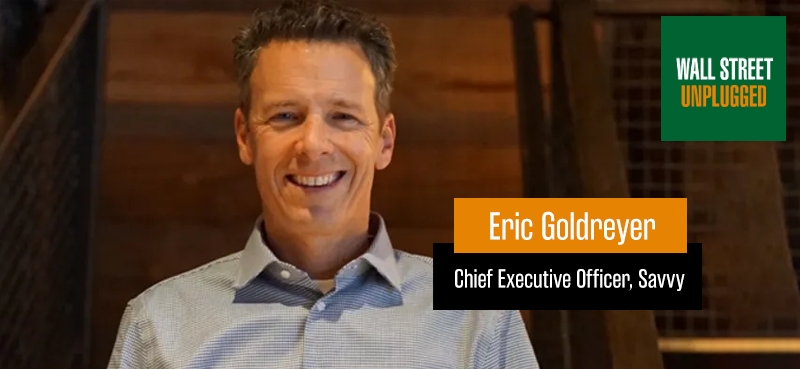
Savvy CEO Eric Goldreyer breaks down the secret to the company's success—and its next growth phase… how AI is helping unlock customer savings… and his exit plan for this hospitality disruptor.
These tech stocks are buys on the pullback. Plus, is it still a "buy-the-dip" market? … What's driving the outperformance in small caps? … Steer clear of this SPAC… Accenture's (ACN) management should be fired… And the broken housing market.
Iran reportedly suspended indirect talks with the U.S. and is threatening to completely block the Strait of Hormuz. That matters because roughly 20% of the world's oil flows through this narrow chokepoint. Here's what it means for oil prices, energy…
The U.S. is tightening sanctions on Iran's oil network. But Iranian barrels are still moving through China and a shadow fleet of tankers, shell companies, and middlemen. Here's why that fragile workaround system matters for crude prices—and energy stocks.
The latest economic data has revived fears of stagflation—a painful mix of weak growth and stubborn inflation. But today's economy isn't the 1970s. Here's what the numbers actually say… and what investors should watch next.
AI is this century's gold rush—and the biggest fortunes will once again go to the companies selling the "shovels." These seven sectors are providing the energy and infrastructure to power the AI boom.
Oil’s sustained price is a major indicator that few are watching. If crude stays elevated, it could keep inflation sticky, limit the Fed’s flexibility, squeeze corporate margins, and shift market leadership. Here’s how to position your portfolio.
War-risk insurance premiums on Strait of Hormuz transits have surged from pre-war levels, and shipping traffic has collapsed by roughly 95%. Here's how insurers are controlling oil transit… and what it means for your portfolio.
The Trump administration plans to drop $2 billion on nine quantum computing companies in exchange for equity stakes. IBM (IBM) gets the biggest slice, but the pure-play names are seeing the real upside. Here's what this signal means for investors.

 Ordinary Items, Remarkable GainsBrady Corp. (BRC) is another example on an elite small-cap dividend company that few people ever heard of.
Brady was founded over 100 years ago. The company makes signs, labels, badges and ID cards. This includes everything from the “high voltage” signs you might find in factories and storefront windows … to the tiny barcode stickers you see on thousands — even millions — of items.
These items fall into the category of “things you see everywhere but never notice.”
They now operate on six continents and employ over 6,400 people. The company also pays a huge 3.9% dividend that has been raised annually for 30 consecutive years.Below is a 30-year chat of Brady. This is another small dividend elite company that’s steadily moved higher over the past few decades while increasing their payout to shareholders.
Ordinary Items, Remarkable GainsBrady Corp. (BRC) is another example on an elite small-cap dividend company that few people ever heard of.
Brady was founded over 100 years ago. The company makes signs, labels, badges and ID cards. This includes everything from the “high voltage” signs you might find in factories and storefront windows … to the tiny barcode stickers you see on thousands — even millions — of items.
These items fall into the category of “things you see everywhere but never notice.”
They now operate on six continents and employ over 6,400 people. The company also pays a huge 3.9% dividend that has been raised annually for 30 consecutive years.Below is a 30-year chat of Brady. This is another small dividend elite company that’s steadily moved higher over the past few decades while increasing their payout to shareholders. However, Brady has been in a rough patch over the past few years. Growth has slowed, which resulted in the stock trading sideways over the past few years.I suggest using this weakness to buy shares right now.Over the past two years, Brady has restructured its business. This included closing underperforming factories and adding new leadership teams to support and train employees.
Brady is already seeing strong results from this restructuring. The company generated $40 million in operating cash flow last quarter. This compares to just $17 million in last year’s comparable quarter.
Today, Brady trades at just 14 times forward earnings. This is much cheaper than McDonald’s or Coke — which are trading at 18 times forward earnings. Plus, the company expects to grow its earnings by more than 15% from 2015 to 2016.
Bemis and Brady are just two examples of the many excellent small-cap dividend-payers out there you can confidently hold a long-term position in.
Keep in mind: These stocks aren’t going to soar 100% overnight … but they can form the “core” of a safe retirement account. And because of their small size, we have less “buying competition,” which means we can often buy them for bargain prices.
If you are a long-term investor seeking safe and steady income, these are two names that could make a great addition to your portfolio.
However, Brady has been in a rough patch over the past few years. Growth has slowed, which resulted in the stock trading sideways over the past few years.I suggest using this weakness to buy shares right now.Over the past two years, Brady has restructured its business. This included closing underperforming factories and adding new leadership teams to support and train employees.
Brady is already seeing strong results from this restructuring. The company generated $40 million in operating cash flow last quarter. This compares to just $17 million in last year’s comparable quarter.
Today, Brady trades at just 14 times forward earnings. This is much cheaper than McDonald’s or Coke — which are trading at 18 times forward earnings. Plus, the company expects to grow its earnings by more than 15% from 2015 to 2016.
Bemis and Brady are just two examples of the many excellent small-cap dividend-payers out there you can confidently hold a long-term position in.
Keep in mind: These stocks aren’t going to soar 100% overnight … but they can form the “core” of a safe retirement account. And because of their small size, we have less “buying competition,” which means we can often buy them for bargain prices.
If you are a long-term investor seeking safe and steady income, these are two names that could make a great addition to your portfolio.