Crisis creates opportunity. But the first part of that aphorism—the “crisis” part—is what you want to avoid as an investor…Economic crisis is in the air… whether it’s Italy or Turkey or Argentina (again).
Crisis creates opportunity. But the first part of that aphorism—the “crisis” part—is what you want to avoid as an investor.
In a book published last year, The Rise and Fall of Nations: Forces of Change in the Post-Crisis World, Ruchir Sharma—head of emerging markets for global bank and funds manager Morgan Stanley’s asset management business—talks about a number of indicators to assess the health of an economy.
These aren’t “tipping into crisis” indicators… but signposts of the long-term trajectory of an economy.
These are some of the indicators that Sharma looks at…
Demographics
Two things drive economic growth: population growth (whether it’s natural or through immigration), and higher productivity (that is, how much a person, business, or country produces within a certain period).
If a country’s population isn’t growing, its economy will have difficulty growing. By this measure, Africa is in a great place, and parts of Asia are poised to benefit from growing populations. Japan, on the other hand, is the poster child of terrible demographics. And for much of the developed world—with the important exception (for now) of the U.S.—the demographic destiny isn’t a happy one.
Billionaire lists
Over the long term, Sharma says, socioeconomic inequality tends to result in political revolt. To gauge this, he looks at billionaire wealth (for example, from those lists in Forbes magazine) as a percentage of GDP; the share of billionaire wealth that’s inherited; and wealth that comes from corrupt industries. If too many people hold too much of an economy’s wealth, there will eventually be redistribution—and the rich people won’t like it.
A more common way to look at this is using the Gini coefficient, which measures the level of income inequality within a country. By this measure, South Africa and Namibia are the most unequal economies in the world… and Finland and Romania are among the most equal.
Cover story curse
The mythology of cover curses—for sports stars, the price of oil, stock markets, and much else—is a reflection of the mainstream lagging reality.
As soon as the hot stock, market, or country hits the cover of Forbes magazine, it’s already crested—and is on its way down. (Or with the image below, it’s on its way back up.) As my former colleague Peter Churchouse says, “If it’s in the press, it’s in the price.” If you see that hot stock or market on the cover… that’s the time to sell.
Inflation
In recent years, the fear of deflation—that is, prices going down—has haunted central bank policy makers around the world (Japan, again, is a trend leader). Sharma advises keeping a close watch on asset price inflation because of the tight link between asset bubbles and recession.
If asset prices—like stocks or real estate—move up too much too fast, a bust may be on its way.
Debt
You might think that the 2008-2009 global economic crisis delivered a crowbar-to-the-head message about debt: Too much debt is bad. But since then, overall levels of debt haven’t declined. Total lending is up by more than 40% since then.
Markets where private debt rises a lot faster than the economy as a whole are particularly worth keeping a close eye on. And in particular (see: Argentina, now) beware of markets that have borrowed a lot in hard currency, only to see the local currency depreciate to the heavens. These are especially dangerous.
The “second city” rule
If the population of the capital of a country is far bigger than the second-largest city (for example, more than three times bigger), Sharma looks for a high risk of rural rebellion.
For example: Bangkok, Thailand’s capital, has 8.3 million people. The country’s second-biggest city, Samut Prakan, has just under 400,000. And… Thailand has a long and rich history of “city vs. country” divisions.
But it’s not always the case. The Philippines, for instance, has 24 million people living it its capital of Metro Manila. Its second largest city, Cebu, has 2.8 million inhabitants. Both are growing fast and have a booming middle class.
Recommended Link
Why is Silicon Valley Pouring Millions Into a Burger Restaurant?
According to a Business Insider report, some of Silicon Valley’s top tech firms and venture capitalists invested US$18 million into a secretive burger restaurant.Why are Silicon Valley billionaires suddenly backing fast-food restaurants?This presentation has the answer.
–
Domestic capital flows
If local capital leaves the country, it’s bad news. After all, no one knows better than people at home whether their currency is in trouble, and whether they can earn a reasonable return that reflects the risk of holding the currency.
Foreign capital—”hot money”—is often pointed to as the cause of currency crises, but frequently it’s local money that is the first down the spillway.
I’ve seen this in a number of markets… most memorably in 1998, when Russian investors were selling everything that wasn’t nailed down to ditch the ruble. Meanwhile, foreigners were gleefully lining up to buy ruble-denominated sovereign bonds, drawn in by sky-high yields. Then the ruble collapsed and the Russian government defaulted on its debt. Local investors may have missed out on a bit of yield. But they weren’t blown up when everything went to pieces
We recently wrote about corollary to this rule: Where are rich people moving from… and to? Maybe they’re leaving their home in search of a better lifestyle… or lower taxes… or more opportunity. Whatever the reason, it’s not a good sign when a country is hemorrhaging millionaires. (Last year, China, India, and Turkey saw the largest number of high-net-worth individuals leaving for good.)
Stale leaders
Sharma shows that economic reform—for many emerging markets, a critical building block of growth—usually happens during a leader’s first term. After that, it probably won’t happen at all. Leaders lose the impetus to change and grow content with the status quo. That’s especially true (in more corrupt countries in particular) if the status quo entails state-sponsored stealing by the head of government to enrich himself.
For example… during the first few years of his first term, Russian President Vladimir Putin was hailed as a reformist hero. He brought about big and important changes in regulations and policies regarding land, fiscal issues, the judiciary, and pensions. And then, after a few years, his interest in changing things ended, as Sharma suggests.
Good spending vs. bad spending
An investment bubble that results in acres of empty office buildings—which don’t produce anything or help anyone—is an example of “bad” spending. But if investors, or the government, go overboard spending on assets that will eventually boost productivity (like technology, research, or manufacturing), it will be a lot better for the long-term health of the economy.
No country is going to fail on all these measures—just like no economy is going to sail through. But they’re important to keep in mind as you look at market opportunities around the world. If a country fails more measures than it passes, chances are that it’s going to face problems soon.Kim IskyanP.S. Investing in a crisis, when done right, can be highly profitable. In my advisory, Strategic Wealth Confidential, we uncover investment opportunities—and life-changing gains—in some of the most disliked, unloved, and ignored markets in the world.
Investing in these markets is like “going back in time” to find companies like Facebook, Google, and Amazon—long before they soared thousands of percent. Find out more here.
Read the signs. Beat the market.
The market intelligence you need to invest one step ahead. Go beyond the headlines. Invest with an insider’s edge.
Books are a big part of Wall Street culture. Luke shares his favorite book of all time… and the simple lesson that helped him find the path to big, long-term investment gains.
Learn why Chinese property manager Evergrande rocked the market this week… why it poses a threat to the global economy… and why U.S. investors should invest in China with caution.
It’s time to put on our rally hats… As we near the end of the year, we’re about to enter the mega green zone for stocks. And Luke’s spotted two ETFs primed for huge gains...
OpenAI's HuggingFace debacle: Is AI a cybersecurity risk? Plus, SuperMicro's (SMCI) margins… Open-source vs. closed-source AI models… 2 no-brainer AI power winners… The sector with the most AI risk… China's market manipulation… And stay cautious on SpaceX (SPCX).
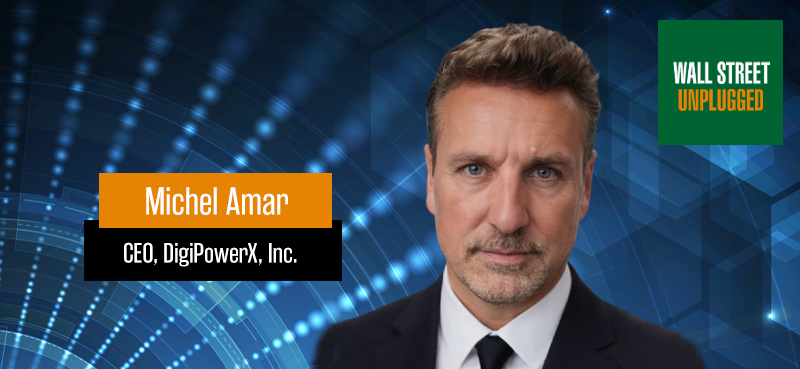
DigiPower X (DGXX) CEO Michel Amar breaks down the company's milestone contract with Cerebras (CBRS)… its AI stack roadmap, from real estate to GPU-as-a-service… key catalysts through 2026… and why DigiPower X is in a league of its own.
IBM's (IBM) worst day in 58 years—is it a buying opportunity? Plus, Fed Chair Warsh's testimony… The odds of a rate hike dropped significantly… Two AI buys… The perfect backdrop for big banks… And Wrap's (WRAP) growing TAM.
Meb Faber, cofounder and chief investment officer of Cambria Investment Management, breaks down his new book on the rise of the 250-year bull market… and how much longer it can last. Plus, why U.S. investors should look abroad.
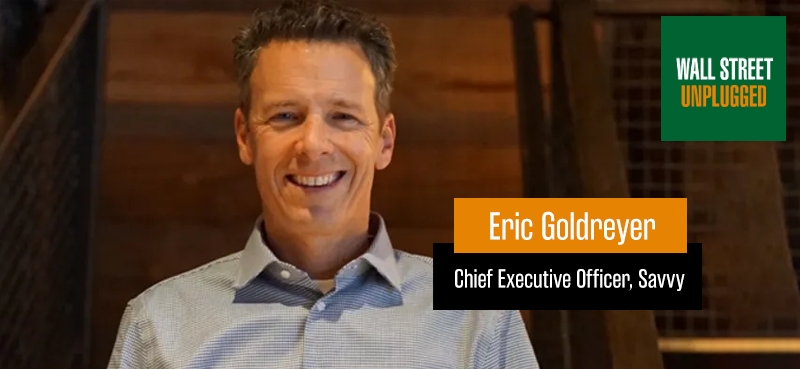
Savvy CEO Eric Goldreyer breaks down the secret to the company's success—and its next growth phase… how AI is helping unlock customer savings… and his exit plan for this hospitality disruptor.
These tech stocks are buys on the pullback. Plus, is it still a "buy-the-dip" market? … What's driving the outperformance in small caps? … Steer clear of this SPAC… Accenture's (ACN) management should be fired… And the broken housing market.
Iran reportedly suspended indirect talks with the U.S. and is threatening to completely block the Strait of Hormuz. That matters because roughly 20% of the world's oil flows through this narrow chokepoint. Here's what it means for oil prices, energy…
The U.S. is tightening sanctions on Iran's oil network. But Iranian barrels are still moving through China and a shadow fleet of tankers, shell companies, and middlemen. Here's why that fragile workaround system matters for crude prices—and energy stocks.
The latest economic data has revived fears of stagflation—a painful mix of weak growth and stubborn inflation. But today's economy isn't the 1970s. Here's what the numbers actually say… and what investors should watch next.
AI is this century's gold rush—and the biggest fortunes will once again go to the companies selling the "shovels." These seven sectors are providing the energy and infrastructure to power the AI boom.
Oil’s sustained price is a major indicator that few are watching. If crude stays elevated, it could keep inflation sticky, limit the Fed’s flexibility, squeeze corporate margins, and shift market leadership. Here’s how to position your portfolio.
War-risk insurance premiums on Strait of Hormuz transits have surged from pre-war levels, and shipping traffic has collapsed by roughly 95%. Here's how insurers are controlling oil transit… and what it means for your portfolio.
The Trump administration plans to drop $2 billion on nine quantum computing companies in exchange for equity stakes. IBM (IBM) gets the biggest slice, but the pure-play names are seeing the real upside. Here's what this signal means for investors.



 Kim IskyanP.S. Investing in a crisis, when done right, can be highly profitable. In my advisory, Strategic Wealth Confidential, we uncover investment opportunities—and life-changing gains—in some of the most disliked, unloved, and ignored markets in the world.
Investing in these markets is like “going back in time” to find companies like Facebook, Google, and Amazon—long before they soared thousands of percent. Find out more here.
Kim IskyanP.S. Investing in a crisis, when done right, can be highly profitable. In my advisory, Strategic Wealth Confidential, we uncover investment opportunities—and life-changing gains—in some of the most disliked, unloved, and ignored markets in the world.
Investing in these markets is like “going back in time” to find companies like Facebook, Google, and Amazon—long before they soared thousands of percent. Find out more here.