
For years, investors have been trained to watch the Federal Reserve for clues about where markets are headed.
Every inflation report gets dissected for clues about the Fed’s next move on interest rates.
But that strategy has a problem today.
Borrowing costs pressuring housing, businesses, and the stock market are increasingly driven by long-term interest rates the Fed doesn’t directly set.
This week’s wild moves in the bond market gave us a perfect example.
What actually happened this week in the bond market?
On Monday, weaker U.S. economic data caused investors to reduce expectations for another near-term Fed hike.
Normally, that should ease pressure on interest rates.
Instead, long-term rates kept climbing.
By Tuesday, the yield on the 30-year U.S. Treasury had surged as high as 5.34%—its highest level since 2007.
Then came Wednesday.
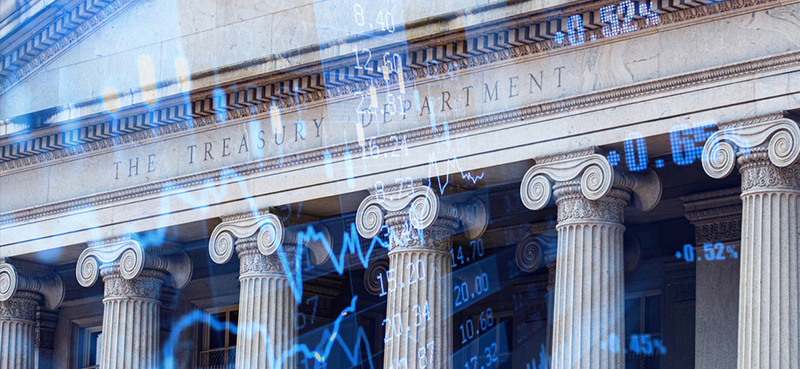
The U.S. Treasury Department announced it would at least double the size of certain buybacks of 10- to 30-year Treasury securities, from a maximum of $2 billion to at least $4 billion per operation beginning September 9.
In plain English, the Treasury said it would buy back more older long-term government bonds from investors. That adds an extra source of demand to that part of the market, helping support bond prices and push yields lower.
The reaction was immediate: The 30-year yield dropped nearly 10 basis points, stocks rallied, the dollar weakened, and gold surged more than 3%.
Those moves all pointed back to the same thing: investors suddenly expected slightly easier financial conditions.
But the move also exposed something important: The Fed has less power over long-term borrowing costs than most investors realize.
The Fed only controls one part of the interest-rate market
When people hear that “interest rates are going up,” they usually think of the Federal Reserve’s benchmark Fed funds rate.
But no single interest rate determines borrowing costs throughout the economy.
The federal funds rate determines the overnight rate banks charge one another.
Changes to that rate ripple through short-term borrowing costs, like credit card rates, bank lending rates, and other short-term financing.
But the bond market determines longer-term rates.
The 10-year Treasury is especially important because it acts as a benchmark for long-term borrowing throughout the economy. Mortgage rates and corporate borrowing costs tend to move with longer-term Treasury yields.
Think of it this way:
If investors can lend money to the U.S. government for 10 years and earn nearly 5%, they’ll demand more to take on the added risk of lending to a homeowner or corporation.
Rising Treasury yields can also pressure stocks. When safe government bonds pay 2%, investors have a much stronger incentive to look elsewhere for higher returns—and high-growth stocks become more attractive.
When Treasuries pay nearly 5%, that calculation changes. Investors can earn a substantial return from a much safer asset, so expensive stocks have to offer a more compelling payoff.
So even if the Fed stops raising its overnight rate, rising long-term yields can continue tightening financial conditions throughout the economy.
And right now, the bond market has plenty of reasons to demand higher yields.
Washington and Big Tech are competing for capital
The U.S. bond market is being asked to finance an extraordinary amount of spending.
To start, the national debt has surpassed $40 trillion, and Washington continues to run huge deficits.
In order to cover the gap between what the government collects and what it spends, the Treasury issues bonds.
Meanwhile, AI is creating one of the largest corporate investment booms in history.
Companies are spending hundreds of billions of dollars building data centers… buying GPUs… securing electricity… installing cooling and networking equipment… and even building their own power infrastructure.
Global tech companies are expected to spend more than $730 billion this year, primarily on AI.
Even companies with enormous cash flows are increasingly turning to debt markets to help finance that spending.
Amazon, Alphabet, Meta, and Oracle issued about $194 billion of bonds through early July—79% higher than all of 2025.
All else equal, a flood of new debt means borrowers must compete harder for investors’ money—and that can require offering higher yields.
It’s one of several forces helping keep long-term borrowing costs elevated even as expectations for Fed policy have shifted.
And those higher rates are already having consequences.
Why housing is frozen
Housing gives us the clearest example. The average 30-year mortgage rate is sitting around 6.8%.
As a result, homeowners who locked in 3% or 4% mortgages several years ago are choosing to stay put. Fewer homes are hitting the market.
And because inventory remains constrained, home prices aren’t collapsing enough to restore affordability.
When that happens, the market simply freezes.
We’re already seeing the consequences: Single-family housing starts fell nearly 10% in July to their lowest level in roughly three and a half years.
The exact same interest-rate pressure is spreading into corporate America.
A factory or data center that made financial sense when money was cheap becomes harder to justify as financing costs rise.
For companies that already carry significant debt, refinancing becomes more expensive too.
And for growth stocks whose valuations depend heavily on future profits, higher bond yields make those profits less valuable relative to what investors can earn elsewhere today.
That’s why rising long-term yields can hit housing, AI investment, and stock valuations at the same time.
And that’s what makes Wednesday’s Treasury announcement so revealing.
The Treasury just showed us where the pressure is
The Treasury says the expanded buybacks are intended to support liquidity in the market for older long-term government bonds.
It’s important to note that this isn’t the government announcing a new interest-rate target.
And $4 billion per operation is tiny compared with the roughly $32 trillion Treasury market.
In fact, the initial relief has already begun to fade as investors return their attention to the enormous amount of debt still hitting the market.
The buybacks can add demand and relieve some short-term pressure… but they don’t eliminate the reason yields have been climbing.
Washington still needs to borrow enormous amounts of money.
Big Tech is still raising record sums to fund AI.
And investors still get to decide what return they require to absorb all of that debt.
The number investors should be watching
The Fed’s benchmark rate still matters; it influences short-term borrowing throughout the economy, and expectations about future Fed policy also affect Treasury yields.
But watching the Fed alone no longer tells you what’s happening to the cost of money.
Right now, one of the most important numbers for investors is the 10-year Treasury yield.
If it keeps rising, the consequences are straightforward:
Mortgage rates stay elevated, keeping housing locked up…
Companies pay more to borrow, making factories, data centers, and other major investments harder to justify…
Highly leveraged businesses feel more pressure as they must eventually refinance old debt at higher rates…
And stocks face greater competition when investors can earn increasingly attractive returns from government bonds.
If the 10-year sustainably falls, those pressures begin to ease.
That’s why this week’s action in the Treasury market deserves more attention than another debate over whether the Fed hikes rates at its next meeting.
For years, investors have looked to the Fed to tell them where interest rates are going.
But the Fed only directly controls the very short end of the market.
The bond market largely determines the baseline cost of borrowing for the next decade.
And until long-term yields come down, the most important interest rate for this bull market may be the one the Fed doesn’t control.
Frank and Daniel just did a deep dive on this topic on Wall Street Unplugged. Check out the full episode.
Curzio Research publishes market commentary for informational and educational purposes. The opinions expressed and market conditions when the content is published may change. It is not personalized investment advice or an offer to buy or sell securities. Investing involves risk, including possible loss of principal. Do your own research and consult a qualified investment professional before making investment decisions.