
The stock market looks pretty healthy right now.
The Nasdaq is hovering near record highs, and several of the biggest technology companies continue to post massive profits. If you only looked at the major indices, you might assume investors are making money across the board.
But a closer look reveals a more concerning picture.
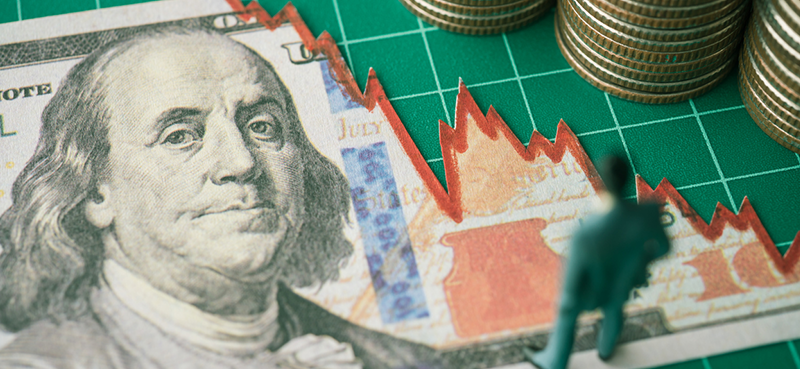
More stocks have recently traded at or near 52-week lows than 52-week highs, including some very recognizable names like Nike, Pepsi, Lowe’s, Las Vegas Sands, and McDonald’s.
That creates a strange situation for investors.
You can turn on CNBC and hear that “the market” is near an all-time high… then open your brokerage account and see half your portfolio deep in the red.
There’s a reason for that.
The major indices are increasingly telling us what a handful of enormous companies are doing—not what the average stock is doing.
And right now, those are two very different stories.
A stock index isn’t the same thing as the stock market
The Nasdaq 100 and S&P 500 are both heavily influenced by company size. Technically, the Nasdaq 100 uses modified market-cap weighting, while the S&P 500 uses float-adjusted market-cap weighting. In both cases, larger companies have greater influence.
So a move in a trillion-dollar company like Microsoft, Apple, Amazon, Alphabet, or Meta matters far more to the index than a similar move in a smaller company.
That’s especially important today because many of those giants are still performing extremely well. Meta, for example, recently surged roughly 30% in a month. And it’s not alone.
That strength can mask a lot of weakness underneath.
Consider the S&P 500. As of August 31, its 10 largest holdings represented ~38% of the entire index.
As a result, those 10 stocks can have an outsized impact on the headline number. In a simplified example, if the top 10 collectively rose 1% while the other ~62% of the index fell 0.5%, the S&P 500 would still finish slightly higher.
In other words, hundreds of stocks can struggle while a relatively small group of enormous companies keeps the index afloat.
That’s what we’re seeing right now.
Big Tech is still generating enormous profits, even after spending staggering amounts on artificial intelligence and data centers.
Meanwhile, the rest of corporate America is dealing with a much tougher set of conditions.
Some of America’s most recognizable brands are under serious pressure. Consumer stocks, such as restaurants, retailers, casinos, home-related companies, and other discretionary businesses, have been hit especially hard.
It’s becoming a two-speed market
So, what’s behind the divergence?
For one thing, interest rates.
The 10-year Treasury yield has been surging, pushing borrowing costs higher across the economy. That feeds directly into mortgages, auto loans, corporate debt, and other forms of credit. And when borrowing becomes more expensive, consumers and businesses eventually have less money left to spend and invest.
Meanwhile, companies also face higher operating costs. For example, rising diesel prices affect almost everything in the economy because nearly every physical product must be transported somewhere before it reaches the customer.
Combined, these factors hit retailers, restaurants, homebuilders, manufacturers, and smaller companies much harder than they hit the cash-rich tech giants.
That’s why simply saying “the market is strong” misses what’s actually happening. Depending on which stocks you own, your experience can look completely different from the Nasdaq.
In other words, there isn’t one “market” right now. Rather, several different markets exist beneath the same headline indices.
And that makes stock selection far more important than simply deciding whether you’re “bullish” or “bearish” on the market.
Weak breadth doesn’t automatically mean a crash is coming
This is where investors need to be careful.
When fewer stocks participate in a rally, it can be a warning sign. If the handful of companies holding up the indices suddenly weaken, there may be less strength underneath them to pick up the slack.
That’s where market breadth comes in. Market breadth simply tells us how many individual stocks are participating in a move.
When hundreds of stocks are making new highs together, that’s broad participation. When an index is making new highs while more individual stocks are making new lows, the rally is much more concentrated.
But poor breadth doesn’t give us a countdown clock to the next crash; markets can remain concentrated for a long time. And some of today’s weakness could eventually create opportunities.
Take a company like Nike. The business has plenty of problems, and we’re not telling you to rush out and buy the stock today.
But when a major global brand becomes hated enough, expectations can become incredibly low. At that point, the company doesn’t necessarily need everything to become great again overnight. Sometimes it only needs things to become less bad.
We’ve seen this play out countless times in the market. Microsoft, Amazon, IBM, Starbucks, Disney, and many others have all gone through periods when investors wanted nothing to do with them.
Then the fundamentals stabilized, expectations improved, and the stocks recovered. That’s why some of today’s biggest losers are worth watching.
What investors should watch next
Three signals could tell us whether this divided market is beginning to improve.
- Market breadth: If more stocks begin making new highs and participating in the rally, that would suggest the strength is spreading beyond a handful of megacaps.
- The 10-year Treasury yield: A meaningful decline in long-term rates would ease pressure on housing, borrowing, consumer spending, and stock valuations.
- Corporate guidance: Watch for management saying conditions have stabilized. For a stock where investors have already priced in plenty of bad news, that can be enough to drive a significant rebound.
The bottom line
The Nasdaq can continue making headlines… But the index only tells you part of the story.
Right now, some of the biggest companies in the market are doing extremely well… But large portions of the rest of the market are already struggling.
That doesn’t mean the rally is about to end… But it does mean investors need to look beneath the headline numbers.
Because the next big opportunity may have less to do with whether the Nasdaq rises or falls another 5%… and more to do with recognizing which parts of the market are still working, which ones have already been repriced, and where the fundamentals are finally starting to improve.
That’s why stock selection matters so much right now.
In Curzio Alpha, Frank and Daniel look past the headline indices to find the strongest setups—including opportunities the market is overlooking.
Curzio Research publishes market commentary for informational and educational purposes. The opinions expressed and market conditions when the content is published may change. It is not personalized investment advice or an offer to buy or sell securities. Investing involves risk, including possible loss of principal. Do your own research and consult a qualified investment professional before making investment decisions.