- This is the most exciting uranium market Amir has ever seen [2:35]
- Uranium used to be a partisan issue—not anymore [5:12]
- Microsoft’s Three Mile Island deal is an inflection point for AI [11:40]
- MSFT also joined the World Nuclear Association: Why it’s a big deal [18:19]
- The U.S. uranium market is coming back with a vengeance [21:52]
- President Trump’s energy agenda = a major tailwind for UEC [25:30]
- Why uranium prices could surge nearly 100% [39:33]
Wall Street Unplugged | 1286
Why uranium prices could surge nearly 100%
Transcript was automatically generated.
0:00:00 – Announcer
Wall Street Unplugged looks beyond the regular headlines heard on mainstream financial media to bring you unscripted interviews and breaking commentary direct from Wall Street right to you on Main Street.
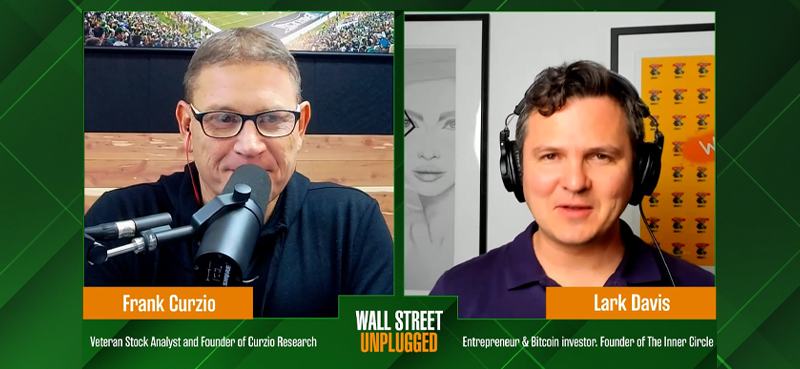
0:00:16 – Frank Curzio
You know, man, I’ve been looking back to see how long we’ve known each other. You know how long that’s been. Have you any idea?
0:00:24 – Amir Adnani
It sounds like you’ve thought about it, so what’s the answer?
0:00:34 – Frank Curzio
It’s like about 15 years, so I knew you when you had your BlackBerry.
0:00:36 – Amir Adnani
You were like one of the last to have BlackBerrys like a BlackBerry. If you still have that, it’s probably a BlackBerry. I was one of, I think, the last two people left that still use that.
0:00:42 – Frank Curzio
But I went back and looking at when your stock was trading really low. I mean, it was like it was around $1, $1.25 back then and even I don’t know if you remember this and this is going to be awesome, you’re going to love this, but do you remember this?
0:00:56 – Amir Adnani
Yeah, when you came to Corpus. It’s so funny because since then I’ve gained weight and you’ve lost weight.
0:01:05 – Frank Curzio
We were so young then and having fun like who knew right, like who knew what would happen, and then we had this picture as well, if you remember, and I thought this was kind of funny when I was at the hobson plant. So, uh, with the yellow cake, yeah, and just to put this in perspective to people watching.
It’s like a mirror, is probably like a mile away and being like you could hold that. I’m not not touching it and you know, I was like I think like four months later I had another arm coming out of my chest and had to get surgically removed. But I’m okay. I really appreciate you doing that for me when I went to your opposite plane. But it was in all seriousness. It was such a great experience learning like really everything about the processing part and back then, when uranium prices were a lot lower this and back then, when uranium prices were a lot lower.
This is just after Fukushima. Who knew like today you’re actually a production company? Right, and let’s talk about that. Because when I look at your company and I see this, even when you put up like a five-year chart, I was looking at UEC was trading below a dollar during COVID in 2023, fell to 250250 from $600 in April six months ago. We’re looking at a company that was below $4. Now you’re near an all-time high of $1,350. After what? 20 years of finding this company has the ups and downs. Have you got used to the ups and downs yet? Because it’s been a wild ride. It’s so nice to see where it was compared to where you are right now.
0:02:24 – Amir Adnani
The ups and downs are definitely in the context of key events. Fukushima was a key event. That obviously was a very difficult moment for the industry. Who would have known back then how long that bear market was going to last? Along the way, obviously, having things like COVID or even like this year, like around Liberation Day, sort of volatility and sell-off there are these sort of non-nuclear uranium events. But where we are now just feels fundamentally so different.
Frank, from the point of view of for the first time in 20 years that I’ve been doing this, the US is actually a growth market for baseload.
Like we actually have baseload growth now, and that’s what nuclear has always been good at is providing baseload.
But the reality is we didn’t have baseload growth for 20-plus years, and what has fundamentally changed now is this has gone from not just being a story where it was only China and Russia and emerging economies that were building new nuclear reactors and wanting to expand nuclear capacity for energy production, but now we’re actually seeing the US become in growth mode when it comes to nuclear. It’s the most exciting thing I’ve ever seen, because we’re talking about possibility of potentially 10 large new reactors to be built or to be under construction by 2030. We have this whole new universe of small and advanced micro-reactors that are being developed by an array of companies and the presidential executive orders that are absolutely unprecedented in nature to quadruple nuclear power in the US. So, yes, we’ve had ups and downs to your point over the last 15 plus years in the nuclear uranium world, but those ups and downs have been turbulence before hitting this inflection point, and this inflection point being we’re now in a proper growth mode market for nuclear, and particularly in the US.
0:04:38 – Frank Curzio
How important is it to really have the right administration in there? Because, if you’re looking, you mentioned where Trump signed executive order to quadruple US nuclear energy In terms of the US uranium refining conversion corporation, fast tracking, permitting for sweet water, banning Russia-Iranian imports. I mean, how much fun is this? Because you know someone that’s coming to you. For a long time you didn’t really have the right administration. Then you had Fukushima. A lot of countries were just you know, we’re worried about uranium and we hate uranium, and now it’s just the growth that you’re seeing with this. How important is that to be in that right circle? Because it seems like if you’re in the right circle with Trump especially what we’re seeing, even with Intel, especially what we’re seeing with AI companies and if you’re in that circle, it seems like you know you’re getting the business, but it’s, it’s the perfect scenario, also on a political front. Talk to about how important that is to you.
0:05:29 – Amir Adnani
For the 20 years I’ve been doing this and for my colleagues who’ve been doing this for 40 years or longer, it would be normal that if you were in the uranium business or the mining business or the nuclear energy business, you would pray to have a Republican administration and the Democratic Party didn’t even officially acknowledge or support nuclear energy. There has been a fundamental shift in that, and that fundamental shift really started around four years ago, which was the fact that nuclear truly became a bipartisan issue and as much as there’s a lot to be said for President Trump’s executive orders that are transformative in nature, we actually have to truly acknowledge that today we have this incredible benefit in the fact that, politically, nuclear is accepted for different reasons by the left and the right, Truly bipartisan support. The Russian uranium ban that you touched on did pass Congress while President Biden was in office, and it passed Congress with unanimous support. Not a member, not a single member, voted against it. It’s rare to find too many you know any topic in Washington these days where there’s bipartisan support on.
So I think that also really confirms that the growth and the thematic in front of us of growth for nuclear energy it’s not one that’s limited to political cycles. It really transcends that, and that again, I think, is what is necessary in an industry like this, where life of a reactor Frank don’t forget is measured in 50 to 100-year cycles. I mean, the usefulness, life of these assets are tremendous, way more than a gas-fired power plant or an LNG terminal. That’s the huge advantage of nuclear power and it’s for that reason so critical to know that that bipartisan support is there.
0:07:30 – Frank Curzio
You know you talk about the bipartisan support and it is amazing, right to really have that. It just seems like everything’s clicking for you. But I want to give you credit here because I know you’re a modest guy and you’re a very good friend of mine. So I want to talk about some of the stuff you did to position yourself in a market that was pretty shitty for a long time. All right, and sorry to put it that way, but it’s the truth. And even if you look at the past 10 years or so and I want everyone to take a look at this because I thought this was fascinating this is just some of the things that you did during a period where, yeah, I’m not going to say a lot of people sat on their hands. But look at these acquisitions that you made since 2016 and you could have just sat there and said, okay, you know, uranium prices are down and you have the green line showing uranium prices here. Most of these deals are done below 40, I believe. Uh, we’re at over 80 right now. Just, you know, uranium one started the physical uranium program, but north reno, rito creek, dybase, you know. Then you have ux, rough Riders, sweetwater Talk about this part of the strategy, because where you were, where you positioned your company, just to acquire these companies during times when things are bad.
That, to me, shows true character of a leader. How difficult was it, and do you feel like you’re in a good position where you might look to acquire more? Or is it like, hey, now we’re producing not so much on the M&A side? I guess, if the right deal comes along, it’d be great. Where are you right now with your company, because it seems like you’re positioning yourself perfectly after these acquisitions.
0:08:56 – Amir Adnani
Well, looking back, it was not difficult to have conviction in the thesis that it was the right time to be acquiring those assets and that the uranium prices when they were $20 a pound or even sub $20 per pound, it was actually easy to understand that that was not sustainable, because we could see that mines were being shut down, not just any mine. Some of the best mines in the world were being shut down. You can see that supply side discipline was ultimately going to cause uranium prices to recover and that we lived in a world where, year in and year out, over 400 nuclear reactors operating around the world were consuming uranium and it was a depleting commodity. It was being consumed. Uranium isn’t used as jewelry. There’s no other demand for it other than just being used in a nuclear reactor to generate electricity. So I would say it was not difficult to understand that it was difficult to find ways to finance these acquisitions at the bottom of the cycle and compete for them and to be able to complete them. That was difficult when we acquired Uranium One from the Russian government and, believe it or not, the Russian government owned some of the biggest, best assets in the Uranium industry in the United States. Let’s not get into how they got their hands on that, but the reality is they owned them and before their invasion of Ukraine. With Uranium around $25 per pound, it was a difficult task to come up with $110M in cash, which is what we did to go acquire those assets. And of course, you look at the value of those assets which are now in production today in Wyoming. With $80-plus Uranium, with the ban on Russian Uranium imports now in place and with everything else that I’ve touched on taking place now it makes a lot of sense.
But in terms of back then, what was difficult and what wasn’t difficult, I think the thesis is always the key thing. Execution yeah, execution can be very difficult, but look, we did a billion dollars of acquisitions at near cycle lows, even our acquisition of Sweetwater, which was in a very competitive process. Sweetwater we were fortunate in acquiring before the hyperscalers came into nuclear energy. We announced that acquisition from Rio Tinto a few days before Microsoft’s announcement that they were going to invest in reopening Three Mile Island Unit 1. I don’t think anything can be as important of a symbol of the rebirth of nuclear energy in the US as reopening Three Mile Island Unit 1. When you think about the site of the only nuclear accident on US soil and one of the largest, most forward-thinking companies on the planet like Microsoft, believing so much in the importance of nuclear power that to make an investment, to sign a premium price power purchase agreement, to get Constellation to reopen, that we were fortunate enough that our acquisition of Rio Tinto from Sweetwater occurred before that, because I think, Frank, that Microsoft-Constellation deal from last September was definitely another inflection point.
Since then, we’ve seen numerous hyperscalers or large tech companies announce deals with small modular reactor companies or with large reactor companies in finding a solution to powering data centers in nuclear energy. Now, for the first time, people talk about the fact that it’s this reality, that the energy end user has now got the deepest pockets on the planet to be able to underwrite the future growth of nuclear energy, that this isn’t about government subsidies or loans or anything. It’s market forces and some of the biggest companies on the planet voting with their wallets that’s really underpinning this growth in nuclear energy. So you go back to our acquisitions. Our acquisitions didn’t just happen near cycle lows, but they fortunately, because we didn’t have a crystal ball that told us Microsoft and all these hyperscalers were coming in with AI driven demand, but you got to get lucky as well. That’s growth on top.
We saw a great business case to buy these assets and do a billion dollars of acquisitions based on fundamentals that existed before data centers to power AI, growth was even a thing, and so that for us is now the ideal scenario to be in that we see this whole other leg up in growth that wasn’t previously there.
And, yeah, we’re extremely well positioned. In fact, the way we’re positioned is that we are now the largest company, the largest US uranium mining company, by estimated resources, by the size of our license production capacity. We’re that national champion and that’s what we’ve been building for 20 years that when people in this country whether it’s the government, utilities, investors, whoever it is think about uranium, think about the nuclear fuel cycle, we want to be top of mind and we want to have the assets. That puts us in being top of mind and that’s exactly, after 20 years and all those acquisitions that you showed. That’s the positioning that we have. And, yeah, I think we’ve gotten a bit lucky, because we couldn’t have asked for a better market setup than the market setup that we have right now.
0:14:22 – Frank Curzio
The creative acquisitions of over a billion dollars. I could say not lucky, right. The whole market when it comes to hyperscalers, it is unbelievable, right. We’re going to talk about that in a minute. But even you know we’re talking about, like, over the past 10 years. You close, I believe, sweetwater in December 2024. Uh, you were able to buy 175 million pounds of historic resources for 175 million dollars, right, I mean with infrastructure already in place. I’m like, really, you know from r and that’s an amazing deal.
And you know it’s not just the past 10 years of deals that I showed, I put up on the screen, that’s a recent deal, right, which is a creative. So you know, my question to you is and hopefully you can answer this, if you can’t, I perfectly understand. You have been walking into rooms and different conferences and traveling around the world nuclear and stuff like that. What is that environment when you have a Microsoft and Amazon one of the hyperscalers talking to you now and you walking in that room? I mean these are guys that are capable of probably writing a check that’s the size of your market cap and they won’t even know they wrote it the second they walked out the door. I mean it is a different mentality of you going into a meeting like that and meeting some of these people, because I’ve been covering this trend easily for the past two years.
When it comes to energy, we do not have enough energy to power the AI energy needs. People do not realize that. I mean they’re focusing on AI energy where you know I could put this chart up and I’m sure you saw some of this, at least when it comes to a google search right, it’s 0.3 watt hours of electricity. A single ChatGPT query is 25 times more power. I mean all the analysts that I look at, whether it’s Goldman, whether it’s Morgan Stanley, all people that cover this sector. They’re basing their energy in the gigawatts that we’re going to need over the next three to five years. Based on this agentic, ai is using 70 times 79 times, more power.
This is reasoning. This is where they’re going to operate autonomously. This isn’t the first inning right. This is a new power chips which I’m going to get a look at. As you know, you’ve come with me to the Consumer Electronics Show one year. You know, last year it was in video with the keynote. They’re probably going to do that again as well. AMD is going to be there they’re going to announce the next generation more power. So being positioned here when you’re walking into the room with them, how is that landscape? I don’t know if you could talk about it, but I’m sure there’s a lot of those meetings going on where you’re just like whoa. This is a lot different from the traditional meetings I used to have.
0:16:38 – Amir Adnani
Well, yeah, so there’s so much to unpack there. But, just in context, to achieve what we’re talking about here in terms of the scaling needed in data centers to meet the energy needs, it’s going to take a lot of Uranium, it’s going to take a lot of Copper, it’s going to take a lot of Steel, it’s going to take hard assets. To realize this, when you look at the capex commitment from the hyperscalers just in one year, over the next 12 months and we’re talking in the hundreds of billions of dollars, that number forget about UEC’s market cap but that number of total CapEx commitment is greater than the market caps of all mining companies, including BHB. I mean, that’s the reality of the size and magnitude of what we’re talking about. And traditionally, as you know very well, the hyperscalers, the Microsofts of the world, we’re not CapEx spenders For the benefit of the audience. When we talk about CapEx, we’re most of the time talking about hard assets, commodities, things that basically you can touch and feel. That’s the reality that Microsoft that was traditionally focused on writing code and then marketing software didn’t have.
It’s a whole new paradigm shift for these companies. It’s much larger than the magnitude of, like I said, the entire mining complex, yet alone the uranium. End of it. Number one. Number two, yes, Frank, as UEC has achieved more and really positioned itself to be the American national champion for uranium. We’ve also made sure to get a seat at the global table and make sure that we’re making the US uranium case relevant again on a global basis. Recently, I’ve joined a board of the World Nuclear Association and I can tell you, being there this past September where we had our annual event, it was exciting to welcome Microsoft as the newest member of the World Nuclear Association.
0:18:30 – Daniel Creech
Think about that.
0:18:31 – Amir Adnani
This association just turned 50 years old and, for the first time in its history, a company like Microsoft has become a member of this organization. So, yeah, the people sitting around that table are not just state-owned companies of China, Russia, the Japanese, the Koreans, but now an American company like UC is at the table, but so are people like Microsoft. So the table, the number of seats at the table and the players sitting around the table pay attention to that. We pay attention to that and we look at sort of what the issues are and how we can position our company to not only grow but grow in providing the right solutions as a fuel supplier. And the big issue that we identified was the serious shortage of uranium refining and conversion.
Uranium refining conversion sits in the middle of the fuel cycle between uranium mining, or so mined uranium or yellow cake, U308, and enrichment. And in order to be able to get the uranium to enrichment, you got to be able to convert it. It’s this key middle step bottleneck, and there’s only one facility in the US that does this, and that facility is 70 years old and on its own it does not meet the US requirements for conversion. And that’s current requirements. Yet alone if we were to quadruple this domestic capacity for generation. And remember, if we’re going to quadruple nuclear generation, then we need to quadruple the size of the fuel cycle. That’s mining, conversion, enrichment.
So that’s where we’ve also really positioned ourselves and announced recently, as you touched on briefly there the intention, plans and this initiative to build the newest and largest uranium refining and conversion facility in the US, and it will be one of the largest in the Western world. And so, again, having the Microsofts around the table, being at that table, being at that table with size and scale as a result of the acquisitions we made at CycleLost, all of that combined is what makes the opportunity today so exciting, because you can genuinely see that you’re solving bottleneck problems. You’re providing solutions to these issues in order to provide the ability for energy generation and energy production growth to be realized, for energy generation and energy production growth to be realized Without conversion, without uranium, we can’t just run nuclear reactors on air right. Nuclear reactors without fuel are just buildings with expensive equipment inside. So fuel is really critical to this whole equation and we’re solving for that in a big way.
0:21:07 – Frank Curzio
So you were modest about it and you just breezed over the World Nuclear Association One. I want to say congratulations that you’re in April, right, I believe you got elected to the board. That’s like being in the Hall of Fame of nuclear energy, and I’m not kidding here, because if you bring this up and again, I love your modesty here. But I mean, if you look at some of the names on here and the vice chairmen, you have Cameco, you have Orano, two of the largest producers, you have GE here. You have all kinds of countries here, whether it’s Korea he’s the CEO of Cameco, constellation executive, vp.
There’s a lot of heavy hitters on here. Congratulations on that. How do those meetings go? I mean, it’s probably really, really exciting for everyone because you have the biggest spenders with the deepest pockets that are in dire need of energy and I feel like you guys just sitting there in nuclear going, hey, we’re here, we’ve been here and now the growth that’s taking place in this industry is incredible. It’s got to be fun being in that meeting and being in that room, isn’t it?
0:22:10 – Amir Adnani
Well, I mean, first of all, I wouldn’t say it’s the Hall of Fame, because Hall of Fame is where you go to retire, I guess, right, and this is hardly that. This is very accurate, good point. But look, here’s the interesting dynamic, Frank right. The dynamic is that the US used to lead the world in uranium mining. Okay, until you know, from the 70s through the 80s, number one Uranium producer globally. Then the Cold War ends and, as a way of accommodating the end of the Soviet Union era, the US signs this highly enriched Uranium treaty with them to dismantle Soviet-era warheads and take Uranium out of those basically bombs and blend it down and sell it into the US market. This basically displaced the domestic industry for uranium mining and this went on for 20 plus years. And then, of course, Fukushima happened, which delayed the inevitable, and the inevitable was that we had to rebuild the domestic industry.
Well, fast forward to today, and when I joined the sport, it was incredible to me that the US today, despite the fact that we’ve gone through a period of no growth, us is the largest consumer of uranium and nuclear fuel on the planet. Ninety-six units are operating, it’s 20% of the electricity grid and it’s a quarter of the world’s nuclear fleet, yet there wasn’t a single person on that board of the WNA representing the domestic US Uranium industry. We really felt that it was important as well to really get there to really show the global industry and from a global point of view that hey guys, us industry is coming back, us uranium miners are coming back and we’re coming back with the vengeance because our industry has basically been in a complete down and out mode again due to other geopolitical dynamics, and now we’re reshoring. Now we’re rebuilding the supply chains full supply chains to support the nuclear fleet in the US and more in terms of the growth that’s coming. And so it’s great to be at that table, because you sit around the table and you touched on some of the individuals who are there, who are all CEOs of companies, major utility companies, but half of them are state-owned. That’s the big thing.
We compete with state-owned companies of China, Russia, Korea, the Koreans are huge players in this, but these are more or less government-owned companies. Even Cameco has its roots in having been a government-owned state, a crown corporation in Canada. That’s why I keep emphasizing the fact that we need Team America when it comes to the fuel cycle, and that means uranium mining domestically, conversion domestically, enrichment domestically. You know when people like Department of Interior Doug Burgum talk about mine, baby mining, you know it doesn’t mean mining in Africa or Asia. Mine, baby mine means rebuilding the mining industry in the US, reshoring these capabilities domestically, and we’re at the forefront of that and we’re telling that story on a global stage. When it comes to an association, like.
WNA.
0:25:19 – Frank Curzio
So I want to talk to you and I’m going to ask you a couple of tough questions now. So we’re talking about this administration questions now. So, uh, we’re talking about this administration. We just saw the Trump administration take use taxpayers money to take a stake in lithium of America’s great for investors. Mp materials I mean intel is different, a little bit outside the industry, but mp materials, we’re earth miner.
Do you see the possibility of Trump doing that with nuclear companies, uranium companies, with your company? And if they do that, I mean, how do you, I guess? But is it kind of like crossing this road where, as an investor, you’re probably like, hey, you’re in Trump’s circle and now you have all the resources of all these countries and when he signs tariffs you’re going to be in the room with everybody? Or is it kind of like all right, we kind of like where it is right now in actual companies and they’re doing it within your industry, of where earth metals, lithium will go to nuclear, will it go to uranium? I don’t know. Is that something that you think about at all or just not really Look as you point out, these are developments around us.
0:26:23 – Amir Adnani
Literally, we’re seeing deals like this get announced on a weekly basis, and so there is a paradigm shift here where clearly there’s a recognition politically that supply chains matter and supply chains of critical minerals that have national security implications and energy security implications matter even more. We’re not talking about toys or gum or soccer balls. We’re talking about issues that go to the heart of national security. Uranium in particular is interesting because not only does it power data centers and power homes and is fundamentally an energy commodity, but uranium also powers the nuclear navy. The microreactors that power aircraft, carriers and submarines run on nuclear power require uranium. Department of Defense and Department of War, as it’s called now, as it looks to power military bases using small modular reactors will require uranium and nuclear fuel, and in particular, the uranium and nuclear fuel requirements for the US government have to be, by law, what is called US origin, unobligated uranium. That means, in essence, it has to be produced on US soil. It can’t be Canadian, it can’t be Australian, sure as hell. It can’t be Russian and Chinese For sure. When you think about what are those critical supply chains with national security implications, uranium is on the top of that list. Now there is no priority order in terms of which deals you’re going to see get done first, whether it’s a rare earth deal or a lithium deal, but I would argue the most important transaction or announcement the US government could have had on uranium.
There are a couple of things that have already been announced. In fact, they were announced during the Biden administration. It was the standing up of the Uranium Strategic Reserve, where the Department of Energy is now buying uranium for the government account and we’re a very proud supplier of uranium to that, and we have also we were the largest recipient of the award for that program and the fact that the Russian uranium ban was passed, which hard codes and end December 2027, beyond which no more Russian material can be imported into the US, and so it codifies the fact that we have to build the domestic capability and currently there is a Section 232 investigation as well on critical minerals, including uranium. That Commerce is running Frank and recommendations from Department of Commerce are going to the president very soon. Commerce did this, by the way, in the first Trump administration and their recommendations back then were that there is a national security problem on uranium, that there’s too much imports from Chinese and Russian sources and that there should be remedies like quotas or tariffs, et cetera that the US implements quotas or tariffs, et cetera, that the US implements.
So stay tuned because there is, in my opinion, more news to come on matters related to nuclear fuel, uranium and the whole supply chain that supports the 96 reactors that are operating, the needs of nuclear navy and the growth that’s coming from small modular reactors and large reactors. Just two days ago I don’t want to date this interview there was a massive $1.6 billion reward that DOE gave to another company for enrichment capacity. As you work down the cycle, the fuel cycle, you’re not going to award billions of dollars to enrichment and not be thinking about what feeds enrichment and what feeds enrichment is conversion and what feeds conversion is uranium mining. Supply chains matter and I think you got to keep your eye on that.
0:30:16 – Frank Curzio
That’s a good point and I want to stay on that topic because if you’re looking at the industry the largest traded publicly uranium companies, and let’s take out chemical, which is like 50 billion, but if you look at USC NextGen Centris, energy Fuels, denison, uranium Royalty I get a combined market cap around 25 billion. It’s funny, it’s a drop in a bucket to Amazon, who’s spending 100 billion alone on AI this year, right, just to put in perspective 25 billion market cap with those companies. And you’re in with USC, also in Uranium Royalty, but royalty. But then when I pull this chart up and you’ll see this is a company called Oklo and Oklo, what we just mentioned, which is the poor portable electricity this is a company that has remember those companies, 25, but it’s a 19 billion dollar market cap and and no revenue.
You look at bloom energy is another one, I mean. You look at SMRS is another company. When you see the demand that these companies are getting, with no revenue compared to all the assets that you own, does it ever make you think of maybe somehow changing the business model where there’s a reason why Tesla trades is bigger than all the car companies combined, because it’s not a car company, right? It’s kind of like they’re looking at the future and they’re talking about optimists. They’re talking about robotics, they’re talking about robo-taxis, solar energy, powering, a lot of this stuff. Have you ever looked at that and said, wow, how do we capture that premium these companies are getting when they don’t even have revenue?
When you’re looking at Oklo, who’s not going to generate revenue for another two, three years? I haven’t seen if they have proven technology yet. I mean, they say they do, but it’s not scalable yet. Yet they’re not generating revenue. It’s a $20 billion. They’re going to have to generate over $100 billion of revenue to support that, just at five times sales. Do you look at it that way? Or do you just say, hey, you know what? Like you said just before I ask this question, look, it’s all going to be coming from mining and we’re in the right position. But do you think about that at all?
0:32:00 – Amir Adnani
We think about it a lot and I think we’re doing things about it. So, first of all, we’re the first Uranium mining company anywhere in the world who in the last few months has announced major initiatives to go beyond mining Uranium and go downstream and to announce our initiative on refining and conversion, which we’ve been working on for over two years. But these things take time to develop and if you’re going to be a serious player you have to put in the time to do the groundwork, to do the tech, to do the engineering, to be able to make those announcements. UEC today is already highly differentiated, not just as the largest US uranium company, but as the largest US uranium company and the only American company that’s now covering end-to-end capabilities, from uraniumium mining to planned initiatives around refining and conversion of Uranium. That’s one of a kind in the US and arguably the only company in the world that’s doing that right now in terms of going vertically integrated into the two key segments of the fuel cycle to support growing enrichment. Second, we recognize and actually see tremendous upside in the development of what’s going on with SMRs.
Now, SMRSfor us, regardless of where they’re valued in the market today, represent a future source of demand for Uranium and conversion and nuclear fuel. So we want to see as many of these units come online. We want to be supportive of that, especially in the US, where the SMR companies are leading the charge. To that end, you’ve seen that we’ve signed a supply agreement with Bill Gates’ TerraPower, who’s in Wyoming. We’re in Wyoming and we’re looking to supply their Uranium needs. We made that deal with them over a year ago. Recently, as you may have seen, nvidia even made an investment into TerraPower. These are the players that we are supportive of in terms of trying to support their plans and initiatives. These are some of the best players you could be involved with. We also have a supply agreement with Peter Thiel’s Radiance.
That’s another SMR company. These are private ones. I mean, you touched on Oklo. That’s a publicly listed one, but there are many, many of these SMR companies out there who are looking to stand up the generating capacity on a small to medium-sized basis. And again, none of that potential future demand for fuel is reflected in the market today. And that’s where I get excited, Frank, is that we have a market today for uranium where we’re in a supply deficit. The world is only producing enough uranium to meet 75% of current demand. So 25% of current demand is uncovered. That’s the production gap. That’s massive, and that does not include SMRs coming online, new large reactors being built, life of reactors being extended, and so I think that’s a really key message here.
0:35:01 – Frank Curzio
Yeah, and I love that you put this in your presentation and stuff just showing the massive imbalance has always been there, even before the huge demand from hyperscalers. And I guess I’ll ask you this you know it’s great because you also have some other partnerships that I could talk to talk about as well, because you’re not just partnering, you’re partnering with, like, the biggest companies in the world, like it just seems like your position where you have, you know, partnership with Cameco Orano. Orano is ariva, right, but one of the largest uh uranium producers as well. But my next question to you is how do you position yourself? Because now you have a lot of money in the bank over 300 million if you include in your investments and also I think it’s 300 000 pounds of uranium on the balance sheet. Uh, you’re looking at uh, just you’re going into production mode right now. Your stock’s ramping higher and you’re at an all-time high at 13. I’m going to show you a chart of that in a minute. Which investors are loving it because we’ve covered this for such a long time.
I’m still getting emails from people saying thank you so much for introducing it to me, and I own UEC forever. It’s the kind of investors you really want to go on that journey with you not just buying in certain times, but buying a whole long term and go on that journey with you not just buying in certain times, but buying a home long-term. And then you have Goldman Sachs right you have some of the largest investment bankers covering you. Now Is the next step focusing on the production. What is that next step? Will you talk a little about SMR? Are you investing in some of these companies, which is great, I guess? Where do you see you going in the next year? To three years, and I’m saying a year.
I know you doing this for over 20 years, but we’re talking about $500 billion in investments in AI just in the month of September alone. When it comes to just so many deals with NVIDIA, with CoreWeave, with Microsoft and Nebius and just going into open AI deals and stuff like that, what’s the next step for you guys to position yourself right in the next year? Hey, we’re ramping up production right now. You got uranium prices going to $80, now ramping higher, you know, and you are a very low cost producer One of the lowest in the industry. I think it’s at $36. You can correct me if I’m wrong on that, but what is the next step, is it like? And I think there’s so many avenues right now open to you.
0:37:09 – Amir Adnani
If we zoom out right and just context right, in the 20 years that UEC has been formed and has been active and has been growing, we’ve had cumulative 17 bad years and cumulative three good years in terms of market conditions. Okay’s context. For most of our 20-year life we were either focused on making acquisitions to grow our platform or just fighting for survival. Just to be blunt, this was not an easy industry to be in. What makes me excited more than anything when I wake up in the morning is that I know we have some of the most talented people in this company when it comes to understanding the business of exploring for Uranium, mining uranium, developing uranium, constructing uranium. It’s just so rewarding for me to see that this incredible team, this incredible team of talented individuals that we have, don’t have to come to work and think about survival. They’re coming to work and now we’re thinking about growth. You look at the most recent announcements that we’ve had building new mine units in Wyoming, commissioning and building and bringing online a new mine in South Texas, our Burke Hollow project. We’re in construction mode, we’re in development mode. We’re growing the team we’re hiring. This is the first time in 20 years that we have a window that is opening where you can have sustained growth.
We have had really two false starts here in these 20 years. We had the Fukushima issue. That just completely disrupted the growth. There was no sustained growth. There was nothing but sustained downturn. Also, 2008, the financial crisis that interrupted a mini bull market that was developing for Uranium. So we have, for the first time, a window and environment where you can see this is where you can have sustained growth. This is where you can bring out the best of what your team and the talent that we’ve assembled.
We talk about the assets we’ve assembled. You have to appreciate the team that we’ve assembled, the personnel that we have, with very scarce skill set, because uranium mining as an industry has been dormant for these 20 years. It’s tough to find the people that actually understand the business and the operational side of what we’re talking about, and UEC has that in spades. And so when you think about sort of the steps ahead, context is important, and part of that context is to understand the uranium price. We’re at $80 a pound. That’s nothing to write home about. Conversion, enrichment prices are at all-time highs. Everything on this planet right now is priced at all-time highs, from the stock market to the price of commodities from gold and silver. Uranium is at 50% of its all-time highs. Uranium has no business sitting at $80 a pound. Uranium should be at $150 a pound, its previous all-time highs, and arguably higher than that. That’s when it starts to get interesting. And I’m not just saying this because I’m biased towards a higher uranium price. I’m telling you that because I see at $80 uranium, the large companies are not commissioning new mines. So what that tells you is that this is not incentive level pricing. This is not the clearing price at which we’re going to see new mine development, and new mine development is going to be spurred by higher prices, and higher prices are previous highs and just like again, we’ve seen previous highs in conversion and enrichment and in just about everything. We’re going to see that in Uranium as well.
Uranium has been lagging due to, again, policy paralysis, the issues around tariffs, the issues around the Russian ban. It’s really forced utilities into sitting on the sidelines. Trying to make sense of all of this Context is important In that sense. When you look at UEC, Frank, you’ve got a couple of things about UEC that I’m proud of and that we’ve positioned this company for having size and scale, but we have a company that’s debt-free. That’s really key.
The balance sheet of this company couldn’t be stronger no debt, ample liquidity with what you just touched on over $300 million of cash and inventory. We actually have 1.4 million pounds of inventory in our account and another 300,000 pounds that we’re purchasing in December at $37 a pound. These are parts of contracts that we signed when uranium prices were low and we just wanted to create a physical stream that we can buy in the future at low prices. All these things that we planned for years and years in advance, anticipating this turn. You have a company that’s unlevered no debt unhedged.
Tomorrow, the US government comes and says we need uranium, we need US origin uranium. Guess what? All of our production is available and we can sell it. We haven’t gone and pre-sold our uranium production, which is what hedging is to not be available when the right strategic opportunities come at the right point in the market. This company also, as you touched on, has a really deep, deep bench of assets. We talk about Wyoming and Texas, but in Arizona, in Canada and Athabasca Basin, joint ventures with Cameco and Orano a million acres of land, three countries outside of the US.
0:42:27 – Frank Curzio
We’re in three countries.
0:42:28 – Amir Adnani
We’re in Paraguay. I mean, there’s a deep bench of assets that, frankly, we don’t even spend time talking about, other than what’s immediately in front of us, which is what we’re producing from in Wyoming and what we’re going to be building in South Texas. But behind that you’ve got a very significant pipeline of projects, permitted assets, the Sweetwater plant that we acquired from Rio Tinto. I can go on and on, but that is not even enough time to cover it in the time that we have together. But again, context is important. These are early innings in an industry that was down and out for most of the last 20 years.
0:43:07 – Frank Curzio
Yeah, it’s incredible and you’ve been talking a lot about your team and everybody coming together. It’s because they got a good leader man. Seriously, I followed you for a long time. I see you at booths when uranium is not good and you’re always hanging out there talking to people and you don’t see a lot of CEOs doing that and you know who else is really really happy right now, I can tell you is your shareholders. I mean, this is a really great chart just to see the success of what you built right and going here, which is awesome. And also I want to add, you haven’t sold. I don’t think you’ve sold a share right, since you’ve owned this company right.
0:43:37 – Amir Adnani
No, since you’ve owned this company, right?
0:43:38 – Frank Curzio
No, no, no, when you do dinner’s on you, bud, I’m just letting you know Dinner’s definitely on you. So listen, I know that you’re traveling. I know you go crazy. I wish we could talk a little bit more, but I just want to say I really appreciate you coming on. We have a lot of investors here. You know how long I’ve been in business for for a long time, covering a long time. A lot of people own your stock and they followed you. They’re really happy and they love when I interview you. So I really appreciate that you taking the time to come to the podcast and give us a scoop, give us the update, because I know how busy it is for you and enjoy your success. You deserve it. You worked your ass off. I saw it personally and it’s really good to see another shareholder happy too. So I appreciate you coming on.
0:44:15 – Amir Adnani
Thank you.
Frank, I appreciate it and those photos that you shared at the beginning, that’s real. And it’s real in that you recognize the potential that you see and then the sector offered really early on. You were a contrarian. When you recognized it, you put boots on the ground and came and visited what we were doing when I invited you to come out, and I appreciate that. And so I’m sorry that it took so long for things to recover for this industry, but we hung in there and we kept the company in a good position and it makes me extremely happy that we’re able to generate the returns that we are for our shareholders and I’m grateful to you for having seen that potential so early on, ahead of anyone else, and I came and spent time and you got the photos to share as well, with the yellow cake, which is super cool and you know, obviously open invitation to you because Texas, which is where you visited last, we have a whole new, brand new mine coming online, our Burke Hollow project, and that’s going to start operating in December.
We’d love to have you attend when we do our ribbon cutting there and hopefully we’ll have people that will invite from the government side, from the industry side, from our shareholders. It’s an exciting moment because this is the newest uranium mine to come online in America and it’s one of the newest uranium mines to come online anywhere in the world. We want to show that this can happen in the US, that the industry here and companies like UEC are not just talk but actually capable of standing up brand new mines to answer the call of the president to rebuild the nuclear industrial base to support the quadrupling of nuclear power, and we’re going to lead the way in doing that. So thank you and I see you in South Texas soon yeah, I’m definitely in for that invite.
0:46:03 – Frank Curzio
That’s awesome and hopefully you join me. Consumer Electronics Show. But even before that, which you did, we did once before in January, it’s an electronic show, uh, and it’s exclusive here. Uh, you’re going to be doing you agreed to a live virtual zoom for our first ever Curzio One conference on November 10th. I know that you squeeze it in because you’re going to be overseas. I think it’s at a Goldman Sachs conference and we set we put it sometimes, you know a time slot together where you know we’re going to make it happen. So you know, I really appreciate it. I think everyone’s going to love it. We’re going to do live Zoom for my Curzio One conference and I can’t wait to. So I really appreciate everything, Amir, I look forward to that too.
All right, man, I’ll talk to you soon. Thank you so much and yeah, great job and really appreciate all your success, man, awesome.
0:46:43 – Announcer
Wall Street Unplugged is produced by Curzio Research, one of the most respected financial media companies in the industry. The information presented on Wall Street Unplugged is the opinion of its host and guests. You should not base your investment decisions solely on this broadcast. Remember, it’s your money, and your responsibility.