As you know, we’ve seen a massive destruction of capital in European nations over the past few years. In particular, Portugal, Ireland, Greece and Spain (PIGS nations) saw their markets collapse.
These nations carried massive debt loads during the credit crisis. And once economic growth began to slow, these countries needed help from the European Central Bank to pay some of their debt obligations.
Developed nations like France and Germany also struggled. After the credit crisis, the two largest European countries were expected to see a sharp upturn in economic growth. However, weak manufacturing and jobs numbers continue to be a drag on these economies.As of last quarter, the European Union countries (19 in total) grew just 0.3%. To put this in perspective, the U.S. economy grew a whopping 3.7% last quarter.
I don’t expect Europe’s sluggish growth to last. That’s because the ECB is doing everything in its power to stimulate its economy. In fact, ECB President Mario Draghi recently stated:
“We have prolonged banks’ access to unlimited liquidity up to the end of 2016.”
In short, the ECB is using any means necessary to inflate their economy. Like what we’ve seen across the U.S. — this easing will eventually result in much higher asset prices and stronger economic growth.That’s why I suggest investors increase their exposure to Europe.There are many ways to invest in Europe. You can buy individual blue-chip stocks that have high exposure to European nations. This includes industrial giant General Electric (GE) and chemical manufacturer DuPont (DD).You can buy ETFs like the Wisdom Tree Europe Hedged Equity Fund (HEDJ) and the SPDR Euro Stoxx 50 (FEZ). These funds will give you exposure to the biggest blue-chip names in Europe.
Another great way to invest in Europe is through Kohlberg, Kravis and Roberts (KKR).KKR is private equity firm with over $100 billion in assets under management. For over 35 years, the company has specialized in buying assets below fair market value — and selling them for much higher prices.
Since 2011, KKR has been loading up on European assets. This includes investing billions of dollars in real estate, wind farms and distressed assets all across Europe.
During the credit crisis, most European banks needed to be recapitalized. And new rules put in place by the government required banks to reduce funding and shrink their balance sheets. This added up to roughly $3 trillion in non-core banking assets that were unloaded for 20 cents to 50 cents on the dollar.
KKR was one of the few companies in the world able to invest in these distressed assets. After all, buying distressed assets in Europe is not like buying a condo in Miami in 2009. The laws are different and you need to have good knowledge of jurisdictions.
I’m confident that these investments will pay off huge for KKR as the ECB continues to inflate its economy.
Turning to the stock …
KKR is down 20% over the past 30 days. The stock pulled back alongside the markets. I suggest investors use this opportunity to build a position.Following the sell-off, KKR is trading at just eight times forward earnings. That’s a 20% discount to the industry and a 50% discount to the S&P 500. KKR also pays an enormous 9% yield that’s easily covered by earnings.
Plus, KKR is about to cash in on its investment in First Data.
First Data is one of the largest payment-processing companies in the world. Over the past 12 months, the company processed more than $1.7 trillion in U.S. payments and 74 billion transactions globally.
KKR bought First Data in 2007. This was just before the credit crisis. It’s been a long road (First Data’s massive debt had to be restructured several times). But First Data just filed for an initial public offering.
Analysts suggest the First Data IPO will be among one of the biggest in 2015. Some are estimating a possible valuation of more than $20 billion. This is about the same market cap as KKR.
KKR owns more than 70% of First Data. This should result in a huge payday and catalyst for KKR — which is not factored into the stock price at current levels.
I suggest using this pullback to buy KKR. The stock is dirt-cheap, has huge growth potential (including the First Data IPO) and is a great way for investors to gain exposure to Europe.
Read the signs. Beat the market.
The market intelligence you need to invest one step ahead. Go beyond the headlines. Invest with an insider’s edge.
Books are a big part of Wall Street culture. Luke shares his favorite book of all time… and the simple lesson that helped him find the path to big, long-term investment gains.
Learn why Chinese property manager Evergrande rocked the market this week… why it poses a threat to the global economy… and why U.S. investors should invest in China with caution.
It’s time to put on our rally hats… As we near the end of the year, we’re about to enter the mega green zone for stocks. And Luke’s spotted two ETFs primed for huge gains...
OpenAI's HuggingFace debacle: Is AI a cybersecurity risk? Plus, SuperMicro's (SMCI) margins… Open-source vs. closed-source AI models… 2 no-brainer AI power winners… The sector with the most AI risk… China's market manipulation… And stay cautious on SpaceX (SPCX).
DigiPower X (DGXX) CEO Michel Amar breaks down the company's milestone contract with Cerebras (CBRS)… its AI stack roadmap, from real estate to GPU-as-a-service… key catalysts through 2026… and why DigiPower X is in a league of its own.
IBM's (IBM) worst day in 58 years—is it a buying opportunity? Plus, Fed Chair Warsh's testimony… The odds of a rate hike dropped significantly… Two AI buys… The perfect backdrop for big banks… And Wrap's (WRAP) growing TAM.
Meb Faber, cofounder and chief investment officer of Cambria Investment Management, breaks down his new book on the rise of the 250-year bull market… and how much longer it can last. Plus, why U.S. investors should look abroad.
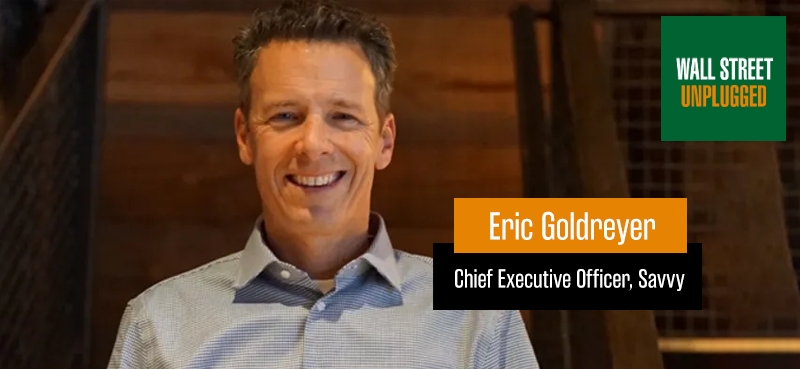
Savvy CEO Eric Goldreyer breaks down the secret to the company's success—and its next growth phase… how AI is helping unlock customer savings… and his exit plan for this hospitality disruptor.
These tech stocks are buys on the pullback. Plus, is it still a "buy-the-dip" market? … What's driving the outperformance in small caps? … Steer clear of this SPAC… Accenture's (ACN) management should be fired… And the broken housing market.
Iran reportedly suspended indirect talks with the U.S. and is threatening to completely block the Strait of Hormuz. That matters because roughly 20% of the world's oil flows through this narrow chokepoint. Here's what it means for oil prices, energy…
The U.S. is tightening sanctions on Iran's oil network. But Iranian barrels are still moving through China and a shadow fleet of tankers, shell companies, and middlemen. Here's why that fragile workaround system matters for crude prices—and energy stocks.
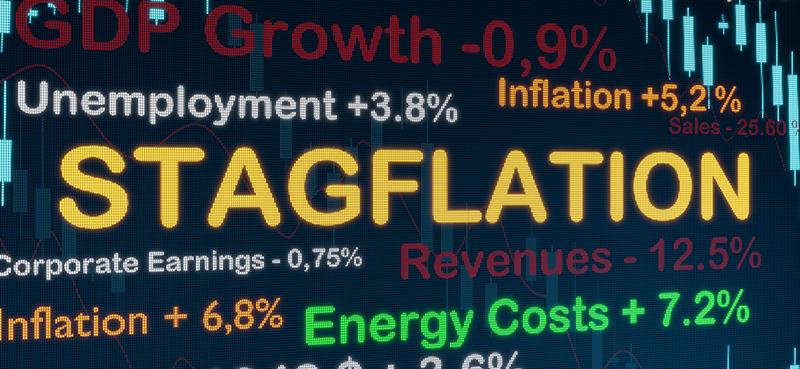
The latest economic data has revived fears of stagflation—a painful mix of weak growth and stubborn inflation. But today's economy isn't the 1970s. Here's what the numbers actually say… and what investors should watch next.
AI is this century's gold rush—and the biggest fortunes will once again go to the companies selling the "shovels." These seven sectors are providing the energy and infrastructure to power the AI boom.
Oil’s sustained price is a major indicator that few are watching. If crude stays elevated, it could keep inflation sticky, limit the Fed’s flexibility, squeeze corporate margins, and shift market leadership. Here’s how to position your portfolio.
War-risk insurance premiums on Strait of Hormuz transits have surged from pre-war levels, and shipping traffic has collapsed by roughly 95%. Here's how insurers are controlling oil transit… and what it means for your portfolio.
The Trump administration plans to drop $2 billion on nine quantum computing companies in exchange for equity stakes. IBM (IBM) gets the biggest slice, but the pure-play names are seeing the real upside. Here's what this signal means for investors.

 As you know, we’ve seen a massive destruction of capital in European nations over the past few years. In particular, Portugal, Ireland, Greece and Spain (PIGS nations) saw their markets collapse.
These nations carried massive debt loads during the credit crisis. And once economic growth began to slow, these countries needed help from the European Central Bank to pay some of their debt obligations.
Developed nations like France and Germany also struggled. After the credit crisis, the two largest European countries were expected to see a sharp upturn in economic growth. However, weak manufacturing and jobs numbers continue to be a drag on these economies.As of last quarter, the European Union countries (19 in total) grew just 0.3%. To put this in perspective, the U.S. economy grew a whopping 3.7% last quarter.
I don’t expect Europe’s sluggish growth to last. That’s because the ECB is doing everything in its power to stimulate its economy. In fact, ECB President Mario Draghi recently stated:
As you know, we’ve seen a massive destruction of capital in European nations over the past few years. In particular, Portugal, Ireland, Greece and Spain (PIGS nations) saw their markets collapse.
These nations carried massive debt loads during the credit crisis. And once economic growth began to slow, these countries needed help from the European Central Bank to pay some of their debt obligations.
Developed nations like France and Germany also struggled. After the credit crisis, the two largest European countries were expected to see a sharp upturn in economic growth. However, weak manufacturing and jobs numbers continue to be a drag on these economies.As of last quarter, the European Union countries (19 in total) grew just 0.3%. To put this in perspective, the U.S. economy grew a whopping 3.7% last quarter.
I don’t expect Europe’s sluggish growth to last. That’s because the ECB is doing everything in its power to stimulate its economy. In fact, ECB President Mario Draghi recently stated: Following the sell-off, KKR is trading at just eight times forward earnings. That’s a 20% discount to the industry and a 50% discount to the S&P 500. KKR also pays an enormous 9% yield that’s easily covered by earnings.
Plus, KKR is about to cash in on its investment in First Data.
First Data is one of the largest payment-processing companies in the world. Over the past 12 months, the company processed more than $1.7 trillion in U.S. payments and 74 billion transactions globally.
KKR bought First Data in 2007. This was just before the credit crisis. It’s been a long road (First Data’s massive debt had to be restructured several times). But First Data just filed for an initial public offering.
Analysts suggest the First Data IPO will be among one of the biggest in 2015. Some are estimating a possible valuation of more than $20 billion. This is about the same market cap as KKR.
KKR owns more than 70% of First Data. This should result in a huge payday and catalyst for KKR — which is not factored into the stock price at current levels.
I suggest using this pullback to buy KKR. The stock is dirt-cheap, has huge growth potential (including the First Data IPO) and is a great way for investors to gain exposure to Europe.
Following the sell-off, KKR is trading at just eight times forward earnings. That’s a 20% discount to the industry and a 50% discount to the S&P 500. KKR also pays an enormous 9% yield that’s easily covered by earnings.
Plus, KKR is about to cash in on its investment in First Data.
First Data is one of the largest payment-processing companies in the world. Over the past 12 months, the company processed more than $1.7 trillion in U.S. payments and 74 billion transactions globally.
KKR bought First Data in 2007. This was just before the credit crisis. It’s been a long road (First Data’s massive debt had to be restructured several times). But First Data just filed for an initial public offering.
Analysts suggest the First Data IPO will be among one of the biggest in 2015. Some are estimating a possible valuation of more than $20 billion. This is about the same market cap as KKR.
KKR owns more than 70% of First Data. This should result in a huge payday and catalyst for KKR — which is not factored into the stock price at current levels.
I suggest using this pullback to buy KKR. The stock is dirt-cheap, has huge growth potential (including the First Data IPO) and is a great way for investors to gain exposure to Europe.