The market is not short on bad news these days.
Oil prices continue to plummet. This is pushing every stock in the sector lower. Many of these oil companies are also saddled with debt. Some will not be able to survive much longer …
The biggest growth stocks are crashing. This includes Facebook (FB), Amazon (AMZN), Netflix (NFLX) and Alphabet (GOOG). These world-class growth names were up an average of 82% last year.
This year it’s a different story.Now these “FANGs” are falling out of favor, as you can see from the chart below.European banks are crashing …
Emerging markets like China and Brazil are slowing much faster than expected …
U.S. Treasury yields are at their lowest levels in over a year …This means investors are losing confidence in stocks.These are serious concerns. That’s why we are seeing a pullback in stocks and money flowing into safe havens like U.S. Treasuries and gold.
Over the past few years, investors have used similar pullbacks in the market as a buying opportunity. In fact, the markets rebounded on almost every pullback dating back to 2010.But before you buy stocks on this sell-off, there is something you should know …The markets are likely to fall much further this year based on one important growth metric.Let me explain …
Since the 2008-’09 credit crisis, we’ve heard tons of negative reports about the economy and stocks.
We were told the Greek debt crisis would spill over to U.S. equities … billions of dollars in municipal bonds would default …
We were also told the U.S. dollar would lose its reserve currency status … the Ebola virus would spread throughout the U.S., creating mass hysteria … and government shutdowns would result in huge job losses and crush our economy.
I am not poking fun at these predictions. There’s just little evidence to support that these risks pose a long-term threat to stocks.
If you are looking for a best indicator for stocks … it’s corporate earnings growth.From 2009 through 2015, corporate earnings surged more than 600%! This explains why we’ve seen one of the biggest bull markets in decades during this time period.Today, we are just past the halfway point of (fourth-quarter) earnings season.
Every three months, public companies report earnings results. More important, these companies give their short- and long-term growth forecasts on their earnings conference calls.
Thus far, earning results have not been pretty. According to research firm FactSet, earnings are projected to decline roughly 6% compared to the fourth quarter of 2014.In fact,this will be the third quarter in a row of year-over-year earnings declines.By no surprise, stocks have been falling alongside earnings over the past few quarters. To make matters worse, the largest companies in America do not see this trend reversinganytime soon …For example, Wal-Mart (WMT) is America’s largest retailer. Some economists see Wal-Mart as a bellwether for consumer spending. After all, 37 million Americans shop at Wal-Mart every day. And 90% of Americans live within 15 minutes of a Wal-Mart.
In 2015, Wal-Mart was one of the worst-performing stocks (falling 24%). After badly missing earnings estimates in October, the stock fell by its largest one-day amount in 25 years. More important, Wal-Mart predicted earnings and sales would be lower for 2016.
Wal-Mart said it plans on opening fewer stores over the next few years. They also plan to close 154 U.S.-based stores.We’re hearing a familiar refrain across several industries …Alcoa (AA) is another bellwether that sees much slower growth ahead. The third-largest aluminum maker in the world — which services numerous industries including aerospace, automotive, beverage and commercial construction — said it is slashing production.Apple (AAPL) has been the largest company in the world for the past four years. The tech giant recently reported earnings that fell short of estimates. More important, Apple said iPhone sales (which account for nearly 70% of its total sales) are slowing.Boeing (BA) is one of the world’s largest plane manufacturers. The company recently announced it would cut production of the 747 airplane in half amid “weak freight demand.” The company will take a $569 million charge to cut production.Caterpillar (CAT) is the world’s leading manufacturer of construction and mining equipment. In late 2015, it announced 10,000 job cuts to account for much-slower growth. The company also said it “does not anticipate improvement in world economic growth in 2016.”The huge slowdown in earnings is not a good sign for stocks. And America’s largest companies are cutting manufacturing and warning of much-slower growth for the rest of this year.
Based on these indicators, stocks are likely to fall much further over the next few quarters. In other words, I wouldn’t rush to buy stocks on the current pullback.
Read the signs. Beat the market.
The market intelligence you need to invest one step ahead. Go beyond the headlines. Invest with an insider’s edge.
Books are a big part of Wall Street culture. Luke shares his favorite book of all time… and the simple lesson that helped him find the path to big, long-term investment gains.
Learn why Chinese property manager Evergrande rocked the market this week… why it poses a threat to the global economy… and why U.S. investors should invest in China with caution.
It’s time to put on our rally hats… As we near the end of the year, we’re about to enter the mega green zone for stocks. And Luke’s spotted two ETFs primed for huge gains...
OpenAI's HuggingFace debacle: Is AI a cybersecurity risk? Plus, SuperMicro's (SMCI) margins… Open-source vs. closed-source AI models… 2 no-brainer AI power winners… The sector with the most AI risk… China's market manipulation… And stay cautious on SpaceX (SPCX).
DigiPower X (DGXX) CEO Michel Amar breaks down the company's milestone contract with Cerebras (CBRS)… its AI stack roadmap, from real estate to GPU-as-a-service… key catalysts through 2026… and why DigiPower X is in a league of its own.
IBM's (IBM) worst day in 58 years—is it a buying opportunity? Plus, Fed Chair Warsh's testimony… The odds of a rate hike dropped significantly… Two AI buys… The perfect backdrop for big banks… And Wrap's (WRAP) growing TAM.
Meb Faber, cofounder and chief investment officer of Cambria Investment Management, breaks down his new book on the rise of the 250-year bull market… and how much longer it can last. Plus, why U.S. investors should look abroad.
Savvy CEO Eric Goldreyer breaks down the secret to the company's success—and its next growth phase… how AI is helping unlock customer savings… and his exit plan for this hospitality disruptor.
These tech stocks are buys on the pullback. Plus, is it still a "buy-the-dip" market? … What's driving the outperformance in small caps? … Steer clear of this SPAC… Accenture's (ACN) management should be fired… And the broken housing market.
Iran reportedly suspended indirect talks with the U.S. and is threatening to completely block the Strait of Hormuz. That matters because roughly 20% of the world's oil flows through this narrow chokepoint. Here's what it means for oil prices, energy…
The U.S. is tightening sanctions on Iran's oil network. But Iranian barrels are still moving through China and a shadow fleet of tankers, shell companies, and middlemen. Here's why that fragile workaround system matters for crude prices—and energy stocks.
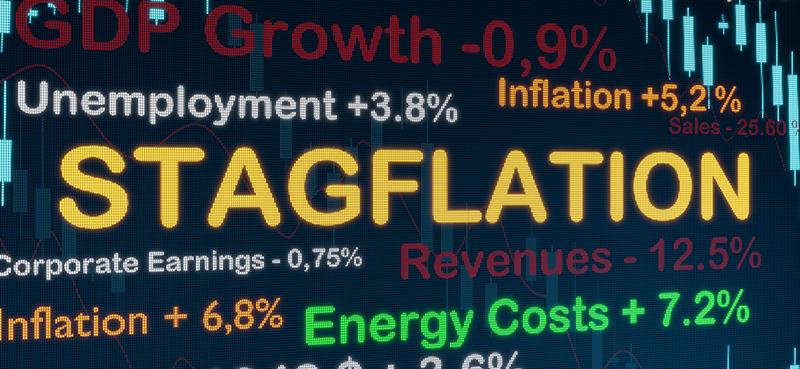
The latest economic data has revived fears of stagflation—a painful mix of weak growth and stubborn inflation. But today's economy isn't the 1970s. Here's what the numbers actually say… and what investors should watch next.
AI is this century's gold rush—and the biggest fortunes will once again go to the companies selling the "shovels." These seven sectors are providing the energy and infrastructure to power the AI boom.
Oil’s sustained price is a major indicator that few are watching. If crude stays elevated, it could keep inflation sticky, limit the Fed’s flexibility, squeeze corporate margins, and shift market leadership. Here’s how to position your portfolio.
War-risk insurance premiums on Strait of Hormuz transits have surged from pre-war levels, and shipping traffic has collapsed by roughly 95%. Here's how insurers are controlling oil transit… and what it means for your portfolio.
The Trump administration plans to drop $2 billion on nine quantum computing companies in exchange for equity stakes. IBM (IBM) gets the biggest slice, but the pure-play names are seeing the real upside. Here's what this signal means for investors.

 The market is not short on bad news these days.
Oil prices continue to plummet. This is pushing every stock in the sector lower. Many of these oil companies are also saddled with debt. Some will not be able to survive much longer …
The biggest growth stocks are crashing. This includes Facebook (FB), Amazon (AMZN), Netflix (NFLX) and Alphabet (GOOG). These world-class growth names were up an average of 82% last year.
This year it’s a different story.Now these “FANGs” are falling out of favor, as you can see from the chart below.
The market is not short on bad news these days.
Oil prices continue to plummet. This is pushing every stock in the sector lower. Many of these oil companies are also saddled with debt. Some will not be able to survive much longer …
The biggest growth stocks are crashing. This includes Facebook (FB), Amazon (AMZN), Netflix (NFLX) and Alphabet (GOOG). These world-class growth names were up an average of 82% last year.
This year it’s a different story.Now these “FANGs” are falling out of favor, as you can see from the chart below. European banks are crashing …
Emerging markets like China and Brazil are slowing much faster than expected …
U.S. Treasury yields are at their lowest levels in over a year …This means investors are losing confidence in stocks.These are serious concerns. That’s why we are seeing a pullback in stocks and money flowing into safe havens like U.S. Treasuries and gold.
Over the past few years, investors have used similar pullbacks in the market as a buying opportunity. In fact, the markets rebounded on almost every pullback dating back to 2010.But before you buy stocks on this sell-off, there is something you should know …The markets are likely to fall much further this year based on one important growth metric.Let me explain …
Since the 2008-’09 credit crisis, we’ve heard tons of negative reports about the economy and stocks.
We were told the Greek debt crisis would spill over to U.S. equities … billions of dollars in municipal bonds would default …
We were also told the U.S. dollar would lose its reserve currency status … the Ebola virus would spread throughout the U.S., creating mass hysteria … and government shutdowns would result in huge job losses and crush our economy.
I am not poking fun at these predictions. There’s just little evidence to support that these risks pose a long-term threat to stocks.
If you are looking for a best indicator for stocks … it’s corporate earnings growth.From 2009 through 2015, corporate earnings surged more than 600%! This explains why we’ve seen one of the biggest bull markets in decades during this time period.
European banks are crashing …
Emerging markets like China and Brazil are slowing much faster than expected …
U.S. Treasury yields are at their lowest levels in over a year …This means investors are losing confidence in stocks.These are serious concerns. That’s why we are seeing a pullback in stocks and money flowing into safe havens like U.S. Treasuries and gold.
Over the past few years, investors have used similar pullbacks in the market as a buying opportunity. In fact, the markets rebounded on almost every pullback dating back to 2010.But before you buy stocks on this sell-off, there is something you should know …The markets are likely to fall much further this year based on one important growth metric.Let me explain …
Since the 2008-’09 credit crisis, we’ve heard tons of negative reports about the economy and stocks.
We were told the Greek debt crisis would spill over to U.S. equities … billions of dollars in municipal bonds would default …
We were also told the U.S. dollar would lose its reserve currency status … the Ebola virus would spread throughout the U.S., creating mass hysteria … and government shutdowns would result in huge job losses and crush our economy.
I am not poking fun at these predictions. There’s just little evidence to support that these risks pose a long-term threat to stocks.
If you are looking for a best indicator for stocks … it’s corporate earnings growth.From 2009 through 2015, corporate earnings surged more than 600%! This explains why we’ve seen one of the biggest bull markets in decades during this time period. Today, we are just past the halfway point of (fourth-quarter) earnings season.
Every three months, public companies report earnings results. More important, these companies give their short- and long-term growth forecasts on their earnings conference calls.
Thus far, earning results have not been pretty. According to research firm FactSet, earnings are projected to decline roughly 6% compared to the fourth quarter of 2014.In fact, this will be the third quarter in a row of year-over-year earnings declines.By no surprise, stocks have been falling alongside earnings over the past few quarters. To make matters worse, the largest companies in America do not see this trend reversinganytime soon …For example, Wal-Mart (WMT) is America’s largest retailer. Some economists see Wal-Mart as a bellwether for consumer spending. After all, 37 million Americans shop at Wal-Mart every day. And 90% of Americans live within 15 minutes of a Wal-Mart.
In 2015, Wal-Mart was one of the worst-performing stocks (falling 24%). After badly missing earnings estimates in October, the stock fell by its largest one-day amount in 25 years. More important, Wal-Mart predicted earnings and sales would be lower for 2016.
Wal-Mart said it plans on opening fewer stores over the next few years. They also plan to close 154 U.S.-based stores.We’re hearing a familiar refrain across several industries …Alcoa (AA) is another bellwether that sees much slower growth ahead. The third-largest aluminum maker in the world — which services numerous industries including aerospace, automotive, beverage and commercial construction — said it is slashing production.Apple (AAPL) has been the largest company in the world for the past four years. The tech giant recently reported earnings that fell short of estimates. More important, Apple said iPhone sales (which account for nearly 70% of its total sales) are slowing.Boeing (BA) is one of the world’s largest plane manufacturers. The company recently announced it would cut production of the 747 airplane in half amid “weak freight demand.” The company will take a $569 million charge to cut production.Caterpillar (CAT) is the world’s leading manufacturer of construction and mining equipment. In late 2015, it announced 10,000 job cuts to account for much-slower growth. The company also said it “does not anticipate improvement in world economic growth in 2016.”The huge slowdown in earnings is not a good sign for stocks. And America’s largest companies are cutting manufacturing and warning of much-slower growth for the rest of this year.
Based on these indicators, stocks are likely to fall much further over the next few quarters. In other words, I wouldn’t rush to buy stocks on the current pullback.
Today, we are just past the halfway point of (fourth-quarter) earnings season.
Every three months, public companies report earnings results. More important, these companies give their short- and long-term growth forecasts on their earnings conference calls.
Thus far, earning results have not been pretty. According to research firm FactSet, earnings are projected to decline roughly 6% compared to the fourth quarter of 2014.In fact, this will be the third quarter in a row of year-over-year earnings declines.By no surprise, stocks have been falling alongside earnings over the past few quarters. To make matters worse, the largest companies in America do not see this trend reversinganytime soon …For example, Wal-Mart (WMT) is America’s largest retailer. Some economists see Wal-Mart as a bellwether for consumer spending. After all, 37 million Americans shop at Wal-Mart every day. And 90% of Americans live within 15 minutes of a Wal-Mart.
In 2015, Wal-Mart was one of the worst-performing stocks (falling 24%). After badly missing earnings estimates in October, the stock fell by its largest one-day amount in 25 years. More important, Wal-Mart predicted earnings and sales would be lower for 2016.
Wal-Mart said it plans on opening fewer stores over the next few years. They also plan to close 154 U.S.-based stores.We’re hearing a familiar refrain across several industries …Alcoa (AA) is another bellwether that sees much slower growth ahead. The third-largest aluminum maker in the world — which services numerous industries including aerospace, automotive, beverage and commercial construction — said it is slashing production.Apple (AAPL) has been the largest company in the world for the past four years. The tech giant recently reported earnings that fell short of estimates. More important, Apple said iPhone sales (which account for nearly 70% of its total sales) are slowing.Boeing (BA) is one of the world’s largest plane manufacturers. The company recently announced it would cut production of the 747 airplane in half amid “weak freight demand.” The company will take a $569 million charge to cut production.Caterpillar (CAT) is the world’s leading manufacturer of construction and mining equipment. In late 2015, it announced 10,000 job cuts to account for much-slower growth. The company also said it “does not anticipate improvement in world economic growth in 2016.”The huge slowdown in earnings is not a good sign for stocks. And America’s largest companies are cutting manufacturing and warning of much-slower growth for the rest of this year.
Based on these indicators, stocks are likely to fall much further over the next few quarters. In other words, I wouldn’t rush to buy stocks on the current pullback.