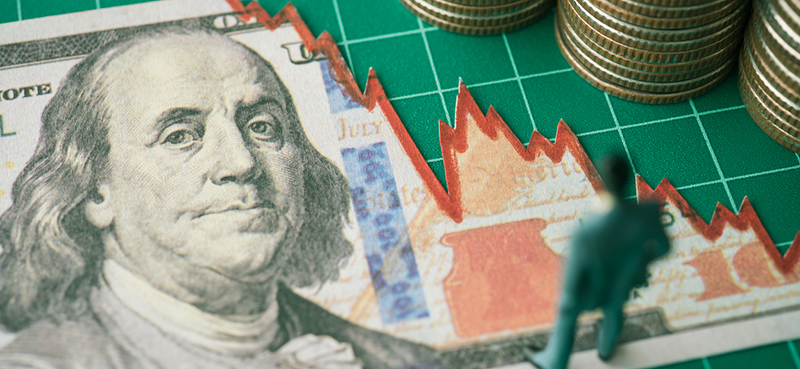


Bitcoin is trading around $64,000 today. That's roughly 49% below its all-time high of about $126,000, set in October 2025… and it's down about 14% in the past week alone.
Most people are blaming the Fed, as bets on higher interest rates pull money out of risky assets.
But there’s a bigger problem coming from inside the Bitcoin industry itself.
The biggest Bitcoin miners are turning into AI companies… and they're selling their Bitcoin to pay for it.
Let's break down why the miners are switching… how they're funding it… and why Bitcoin is headed a lot lower.
Why miners are chasing AI
Bitcoin mining is an expensive business. Miners operate enormous facilities filled with specialized computers that compete to process transactions and earn newly created Bitcoin. Those facilities consume massive amounts of electricity. And as competition grows, miners have to spend more on equipment and infrastructure to keep up.
But there's another industry desperate for access to electricity: artificial intelligence.
AI companies need enormous amounts of computing power to train and run their models. And accessing enough electricity to power their data centers has become one of their biggest challenges.
That's created a major opportunity for Bitcoin miners. They already control something AI companies desperately need: large facilities with access to massive amounts of power. And they're discovering those assets could be worth far more serving AI customers.
Just look at Riot Platforms (RIOT).
The company recently signed a 15-year lease worth about $28 billion for 910 megawatts of capacity at its Corsicana campus in Texas. Its quarterly filing names Anthropic, the maker of the Claude AI models, as the tenant.
The agreement represents roughly $1.8 billion in average annual rent over the initial term once the contracted capacity is delivered.
For perspective, Riot generated just $181 million in total revenue during the third quarter, including revenue from Bitcoin mining, data centers, and engineering.
Simply put, the lease could eventually generate more rental revenue in a single year than Riot currently earns across its entire business in several years.
And Riot isn't the only Bitcoin miner recognizing the opportunity.
Selling Bitcoin to pay the bills
Turning Bitcoin mining facilities into AI-ready infrastructure requires enormous investment.
Companies need to develop power infrastructure, build or upgrade data centers, and meet the demanding requirements of major AI customers.
And that takes cash.
For Bitcoin miners, one obvious source is the Bitcoin they've accumulated over the years.
Riot has sold 20,264 Bitcoin this year for about $1.5 billion, mainly to fund its data centers. Management also said it expects to keep selling "substantially all of the Bitcoin we mine." Its Bitcoin pile shrank 79% in a single quarter, down to just 2,418 coins.
MARA Holdings (MARA), one of the world's largest miners, is doing the same. After the quarter ended, it sold 13,597 Bitcoin for about $1.1 billion.
That's six times as much Bitcoin as it mined in the entire third quarter. MARA used most of the cash to pay off loans backed by its Bitcoin… and says it intends to keep using Bitcoin to raise cash for AI infrastructure.
Think about that. These are companies that built their businesses around accumulating Bitcoin. Now, they're selling billions of dollars' worth to invest in AI infrastructure.
And the economics of Bitcoin mining help explain why.
Mining itself keeps getting harder. Miners need faster chips, more power, and bigger sites just to keep pace with rivals. And every four years, the reward for mining a block gets cut in half, an event known as the halving.
That puts enormous pressure on profitability, especially when Bitcoin prices are falling. For miners sitting on valuable power infrastructure, the opportunity to generate predictable revenue from AI customers is becoming increasingly attractive.
Simply put, miners are adding to Bitcoin's selling pressure at an already vulnerable time. And as more companies shift their investments toward AI, that pressure could continue. Until demand strengthens enough to offset that selling, Bitcoin faces further downside.
The bottom line
Some of Bitcoin's biggest miners are sending a clear message about where they see the greatest opportunities.
They're selling billions in Bitcoin to capitalize on the AI boom. And as more miners follow suit, that selling could put even more pressure on Bitcoin's price.
Meanwhile, the companies providing power and infrastructure for AI are positioned to benefit from a massive wave of investment.
Want to know how Frank is capitalizing on this shift… and which former Bitcoin miners he's betting on?
Get access to our full portfolio when you join Curzio Alpha.
Curzio Research publishes market commentary for informational and educational purposes. The opinions expressed and market conditions when the content is published may change. It is not personalized investment advice or an offer to buy or sell securities. Investing involves risk, including possible loss of principal. Do your own research and consult a qualified investment professional before making investment decisions.