
Nvidia (NVDA) shares fell about 5% on Monday morning after the company’s board launched an independent investigation into CEO Jensen Huang.
On Sunday, Huang admitted in an email to employees that he had been unfaithful to his wife. He didn’t name the woman. But multiple outlets report she is Alice Huang, an executive at a Singapore company called Megaspeed… and U.S. intelligence reportedly believes China’s spy agency recruited her to gather information on him.
Now both parties in Congress want Huang to answer some questions.
It reads like a tabloid story. But for investors, the bigger issue is what it could mean for Nvidia’s leadership and its AI chip sales to China.
Let’s break down what we know… why Megaspeed matters… what Washington wants… and what it means for your portfolio.
What we know so far
The story started with a New York Times report on October 29. It said Alice Huang sought to cultivate close ties with Jensen Huang to learn about Nvidia’s technology.
At first, Nvidia said Huang’s meetings with her were ordinary customer contacts, and that no trade secrets or national security information were shared.
Then came Sunday’s admission. The board said a committee of independent directors, working with outside lawyers, will run the investigation. It also said it has no reason to believe national security or company secrets were compromised… and that Huang will keep running Nvidia during the probe.
As of Monday, no one in this story, including Huang, Nvidia, Alice Huang, or Megaspeed, had been charged with any crime.
Why Megaspeed matters
Megaspeed is a Nvidia customer that runs data centers out of Singapore. And according to CNBC, the U.S. has suspected it of helping China get around restrictions on AI chip sales.
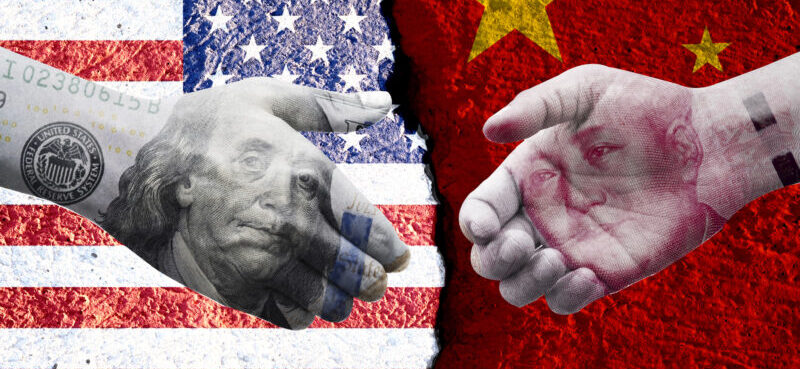
Those restrictions are called export controls. They’re rules that limit which advanced chips U.S. companies can sell to China, because Washington doesn’t want Beijing’s military and AI labs running on top American technology.
The scale is what has lawmakers worried. The government is reportedly looking into how Megaspeed bought more than 136,000 Nvidia GPUs since 2023.
Nvidia has denied that Megaspeed diverted its chips to China.
Both parties want Huang in the room
Republicans moved first. Three House committee chairmen, Brian Mast, John Moolenaar and Rick Crawford, asked Huang to attend a closed-door briefing on November 18. They want him to accept that date, or offer another, by November 11.
The requested briefing lands the day after Nvidia is scheduled to report quarterly earnings.
Democrats are lining up next. After winning control of Congress in the midterms, they’re set to demand answers on whether Nvidia is doing enough to keep its chips away from China and other U.S. adversaries, according to Bloomberg.
What it means for Nvidia investors
There are two risks to watch.
The first is leadership. Huang co-founded Nvidia in 1993 and has run it ever since. But he’s just one of 11 board members, with no designated chair. The independent directors have real power over how this ends. For now, they say they have confidence in him.
The second risk is policy. Nvidia has been lobbying to loosen export controls. A scandal linking its CEO to suspected Chinese intelligence makes that a much harder sell, and stricter rules could shut more of China off to Nvidia for good.
But what the scandal doesn’t touch is demand. The top five hyperscalers are projected to spend $1.3 trillion next year on AI. And Nvidia remains the dominant supplier of the advanced chips powering that infrastructure.
Management has projected roughly 70% revenue growth for fiscal 2028, fueled by massive demand for AI infrastructure. That’s almost double the 45% growth that analysts previously expected. Earnings are expected to grow by nearly 100% over the same timeframe.
Simply put, a scandal could change who runs Nvidia… and where it can sell. But it won’t change how many chips Microsoft or Meta want to buy.
The bottom line
Nvidia’s growth outlook remains strong. But investors now have to weigh that growth against risks that are difficult to quantify.
If the investigation finds no wrongdoing and export policies remain unchanged, the selloff could prove temporary.
But if Huang’s leadership comes into question, or Washington tightens restrictions on Nvidia’s customers, the consequences could last much longer.
That’s why the board’s findings and Washington’s response deserve more attention than the personal details of the scandal.
Watch three dates: Huang’s November 11 deadline to answer Congress, Nvidia’s earnings report, and the November 18 briefing. Then watch what the board’s investigation finds.
These developments will help determine whether the investigation becomes a temporary distraction—or a lasting problem for one of the market’s most important companies.
Frank just broke down the Nvidia scandal in more detail… including why our bullish thesis is still intact and when we’ll look to add to our position.
Get the trade update as soon as you join Curzio Alpha.
Curzio Research publishes market commentary for informational and educational purposes. The opinions expressed and market conditions when the content is published may change. It is not personalized investment advice or an offer to buy or sell securities. Investing involves risk, including possible loss of principal. Do your own research and consult a qualified investment professional before making investment decisions.