

Oil prices are soaring as one of the world’s most critical shipping lanes, the Strait of Hormuz, remains disrupted.
Roughly a third of global seaborne oil and a significant share of key industrial inputs move through that corridor. When it’s constrained, the effects don’t stop at energy.
And the ripples are spreading across the market.
Important signals are showing up beneath the surface in areas most investors aren’t paying attention to yet.
Here are three second-order effects of the Iran War… and how to position for them.
1) Commodities beyond oil are tightening
The closure of the Strait of Hormuz is impacting far more than crude. It’s creating a broader supply shock across multiple inputs tied to global production.
For instance, about one-third of global urea—a key ingredient in fertilizer—flows through the region. Worse, supply disruptions are hitting right as planting season begins. As a result, urea fertilizer prices have jumped from under $400 to roughly $650–$700 per metric ton.
Another example: Helium supply is tightening as disruptions hit Qatar, which accounts for roughly 30% of global production. That’s pushing prices higher in a market that was already constrained. (More on this below.)
And LNG capacity has been taken offline after infrastructure damage in key facilities. For context, Qatar and the broader Gulf region account for roughly 20–25% of global LNG exports. And repairs will take several years due to the complexity and safety requirements involved.
We’re already seeing the market respond.
Fertilizer producers such as CF Industries (CF) have rallied sharply as their pricing power improves.
Other areas tied to constrained supply—industrial gases, energy infrastructure, and select commodity producers—are in similar positions to benefit if these disruptions persist.
2) Housing is quietly breaking down
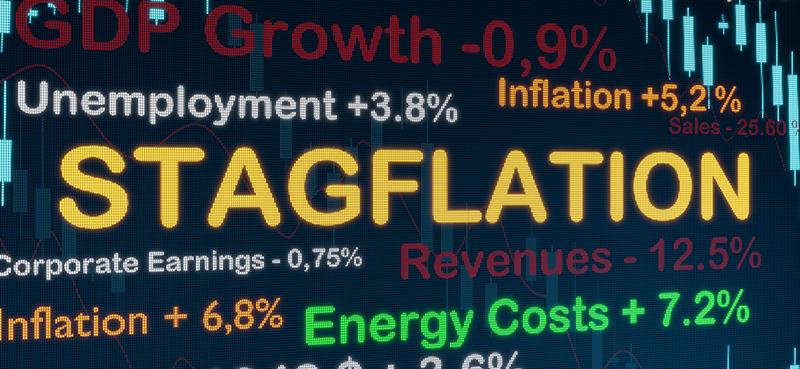
As these higher input costs (materials, energy, transportation) move through the system, they’re starting to hit consumers. Prices are rising everywhere—from the grocery store to the gas station.
At the same time, that inflationary pressure is keeping interest rates elevated.
The combination of higher everyday costs and higher borrowing costs is starting to show up clearly in housing.
During its latest earnings report, KB Home reported the average selling price declined from $488,700 to roughly $461,900—a drop of about 6%.
The market has already reacted, with housing stocks selling off aggressively—but in some cases, the reaction may be overdone.
Stronger operators with solid balance sheets could emerge from this period in a stronger competitive position.
3) The AI trade has a hidden supply problem
The AI boom depends on semiconductor production—and that supply chain has a weak link.
Helium is a critical input in chip manufacturing. And key production is tied to regions impacted by the conflict. As a result, helium supply is tightening… pushing prices higher.
At the same time, demand isn’t slowing… and chip capacity is already stretched.
Taiwan Semiconductor is operating near full capacity, with major customers such as Nvidia, Apple, and AMD competing for supply.
If supply tightens, upstream suppliers—like industrial gas leader Linde (LIN)—could benefit from stronger pricing, while downstream players (like hyperscalers) could face constraints.
The bottom line
The market is focused on oil.
But the real impact of this conflict is already showing up across a broader set of inputs—and those effects are starting to move through the economy.
Commodities are tightening… Housing is weakening… And parts of the AI supply chain are facing new constraints.
These are not isolated trends—they’re connected.
And they point to where pricing power is shifting… and where risks are starting to build.
That’s where investors should be paying attention now.
Tomorrow at 11 a.m. ET, Wall Street Unplugged is going LIVE on X! Frank and Daniel will discuss everything from Iran and oil prices… to why it looks like a pullback is imminent—and how to prep your portfolio.
Plus, they’ll answer your questions on the air. Ask them anything here.
Curzio Research publishes market commentary for informational and educational purposes. The opinions expressed and market conditions when the content is published may change. It is not personalized investment advice or an offer to buy or sell securities. Investing involves risk, including possible loss of principal. Do your own research and consult a qualified investment professional before making investment decisions.