Earlier this month, I shared two of my favorite dividend stocks with you.
These companies have strong brands. They also have competitive moats, stable cash flows and over a 30-year history of dividend growth.
Large-cap companies like McDonald’s (MCD), Coke (KO), Wal-Mart (WMT) and ExxonMobil (XOM) fit this profile. These companies have market caps in excess of $100 billion.
However, the two companies I highlighted were Diebold (DBD) and Bemis (BMS). They have market caps of less than $5 billion. And these are two of the world’s best dividend-paying stocks.Diebold is one of the largest suppliers of automatic teller machines (ATMs). It’s also a leading supplier of security products, like bank vaults and safes. It’s a 150-year-old company and pays a huge 3.2% yield.
Bemis is one of the largest packaging companies in the world. Its list of clients includes General Mills (GIS), Kellogg (K), Kraft Heinz (KHC) and Hershey (HSY). The company was founded in 1881 and pays s 2.5% yield. That’s 40% higher than the average company in the S&P 500 index.
I received plenty of e-mails from readers about this essay. Most of you were looking for moresmall-cap elite dividend ideas.
After all, companies like Diebold and Bemis are not just high-income generating names. They are small companies that could easily grow earnings and sales much faster than most large caps.
Over the past few years, I’ve closely followed more than 100 small, dividend-paying stocks. Most appear to be safe companies. And each name has been raising its dividends annually for more than 10 years and has been in business for more than 25 years.
Take Leggett & Platt (LEG) for example. Without this company, everyone would have severe back problems. That’s because they invented bedsprings more than 125 years ago.
Today, LEG employs over 18,000 people who work in 18 countries. And the company has raised its dividend annually for 44 consecutive years. Only about 50 publicly traded companies in the U.S. can say the same. And most are slow-growing blue chips.
LEG is one of the largest manufacturers of mattress bedsprings, bed frames and pocketed coils in the world. It also produces tons of steel each year, which is used to make the specialty wires found in chairs, racks (you can find in almost every retail store) and fitting rooms.
Its stock has sprung 170% higher during the past five years.LEG has a market cap of just $6 billion. That’s about 1/20th the size of McDonald’s. Plus, the company pays a huge 3% yield, which is 60% higher than the average company in the S&P 500 index.
Another example is specialty chemical company RPM International (RPM). The maker of brands like Rust-Oleum and Nature Seal just raised its dividend for the 42nd consecutive year.RPM has a market cap of $6.1 billion. And the company pays a 2.5% yield, which is 40%higherthan the average company in the S&P 500 index.
Keep in mind: These stocks aren’t going to soar 100% overnight … but they can form the “core” of a safe retirement account. They’ll allow you to put the power of compounding to work for you, while still giving you plenty of upside.
My suggestion is to scale into these small, elite dividend names over time. Once establishing a full position, be sure to hold for the longer term.
Curzio Research publishes market commentary for informational and educational purposes. The opinions expressed and market conditions when the content is published may change. It is not personalized investment advice or an offer to buy or sell securities. Investing involves risk, including possible loss of principal. Do your own research and consult a qualified investment professional before making investment decisions.
Books are a big part of Wall Street culture. Luke shares his favorite book of all time… and the simple lesson that helped him find the path to big, long-term investment gains.
Learn why Chinese property manager Evergrande rocked the market this week… why it poses a threat to the global economy… and why U.S. investors should invest in China with caution.
It’s time to put on our rally hats… As we near the end of the year, we’re about to enter the mega green zone for stocks. And Luke’s spotted two ETFs primed for huge gains...
Space Exploration Technologies' (SPCX) IPO—and the hyperscaler to buy instead. Plus, CoreWeave (CRWV) should be over $100… 2 AI stocks poised to double… Should you buy Netflix (NFLX) on this selloff? … And looking for dividends? Check this sector.
Is CoreWeave (CRWV) a buy amid its plunge? Plus, sectors to buy on the pullback… The telecom monopoly… Will the 10-year hit 6%? … Rate hikes for 2026… DigiPower X (DGXX) and VivoPower (VIVO)... And Berkshire's Lennar (LEN) move.
The bull thesis around big banks has fallen apart. Plus, why good news isn't stopping the selloff… Are we in the middle of a bubble popping? … 3 sectors holding up amid the market carnage… And more.
The winners and losers of the GLP-1 craze. Plus, what it takes to be a great stock analyst… Be cautious of this power stock—and one to buy instead… And why baseball sucks.
Will Alphabet's (GOOG) latest deal put a bottom under nuclear stocks? Plus, the Constellation Brands (STZ) CEO's crazy move… A few stocks are carrying the market… OpenAI's insane valuation… Is Disney (DIS) finally turning things around? … And more.
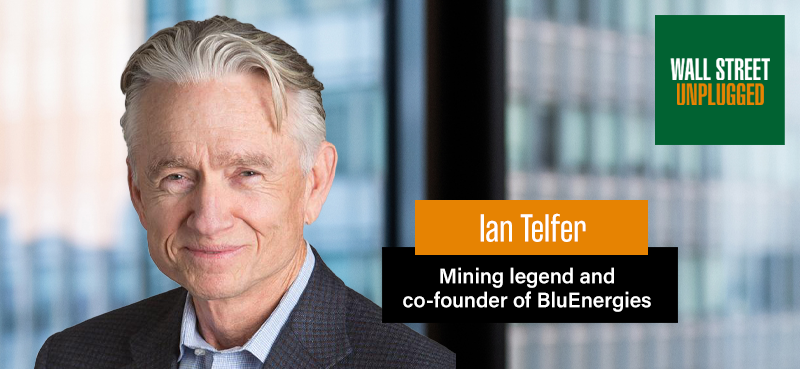
Ian Telfer, mining legend and co-founder of BluEnergies (BLUGF), reveals why gold has way more upside… gold vs. gold stocks… the overlooked ingredient behind investing success in mining… and why he came off the sidelines for this offshore opportunity.
The U.S. is tightening sanctions on Iran's oil network. But Iranian barrels are still moving through China and a shadow fleet of tankers, shell companies, and middlemen. Here's why that fragile workaround system matters for crude prices—and energy stocks.
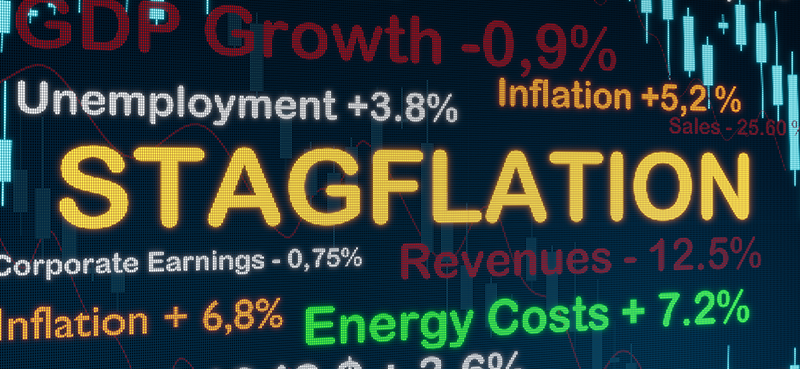
The latest economic data has revived fears of stagflation—a painful mix of weak growth and stubborn inflation. But today's economy isn't the 1970s. Here's what the numbers actually say… and what investors should watch next.
Oil’s sustained price is a major indicator that few are watching. If crude stays elevated, it could keep inflation sticky, limit the Fed’s flexibility, squeeze corporate margins, and shift market leadership. Here’s how to position your portfolio.
War-risk insurance premiums on Strait of Hormuz transits have surged from pre-war levels, and shipping traffic has collapsed by roughly 95%. Here's how insurers are controlling oil transit… and what it means for your portfolio.
The Trump administration plans to drop $2 billion on nine quantum computing companies in exchange for equity stakes. IBM (IBM) gets the biggest slice, but the pure-play names are seeing the real upside. Here's what this signal means for investors.
President Trump's Beijing summit with President Xi produced few clear-cut answers on important geopolitical topics. But beneath Trump's ambiguous comments are five important signals investors should watch.
The market thought AI spending had peaked. Big Tech earnings just proved otherwise. With CapEx accelerating and demand surging, the opportunity is expanding. Here's what the numbers reveal—and where investors should be looking next.

 LEG has a market cap of just $6 billion. That’s about 1/20th the size of McDonald’s. Plus, the company pays a huge 3% yield, which is 60% higher than the average company in the S&P 500 index.
Another example is specialty chemical company RPM International (RPM). The maker of brands like Rust-Oleum and Nature Seal just raised its dividend for the 42nd consecutive year.
 RPM has a market cap of $6.1 billion. And the company pays a 2.5% yield, which is 40% higherthan the average company in the S&P 500 index.
Keep in mind: These stocks aren’t going to soar 100% overnight … but they can form the “core” of a safe retirement account. They’ll allow you to put the power of compounding to work for you, while still giving you plenty of upside.
My suggestion is to scale into these small, elite dividend names over time. Once establishing a full position, be sure to hold for the longer term.