

In the first six months of 2026, Leopold Aschenbrenner accomplished something almost unheard of on Wall Street.
The former OpenAI researcher's hedge fund, Situational Awareness, generated a staggering 439% return.
His strategy was built around the massive demand for computing power, memory chips, and electricity needed to fuel the AI boom.
And for a while, it worked spectacularly.
Then July hit.
In a matter of weeks, the fund's portfolio lost 67% of its value.
The problem? Aschenbrenner had borrowed heavily to amplify his investments. When AI stocks started falling, his lenders issued margin calls, forcing him to unload billions of dollars in holdings.
Now, a new SEC filing reveals the aftermath.
The fund's reported U.S. holdings plunged from $20.24 billion at the end of June to just $1.58 billion at the end of September—a 92% decline.
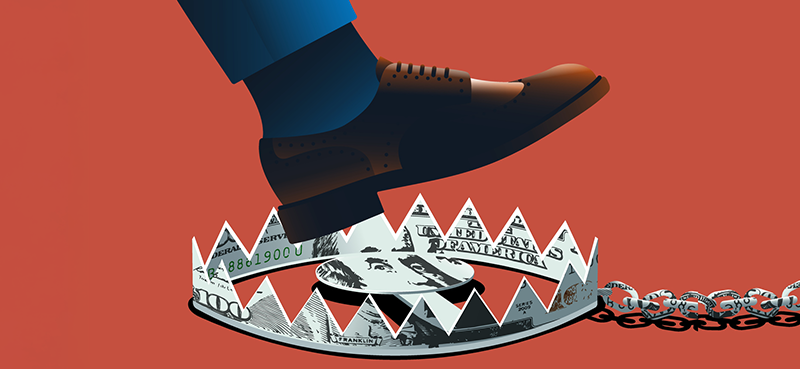
It's a stunning reversal… and it highlights one of the biggest dangers of using borrowed money to invest: Even if you're right about a long-term trend, too much leverage can force you out of your investments before you ever get to collect the profits.
Here's what happened… and what every investor can learn from it.
How leverage turned a winning strategy into a disaster
Aschenbrenner was early to recognize a critical challenge facing the AI industry: As companies poured billions into building AI infrastructure, demand for memory chips, electricity, and computing capacity would explode.
So his fund loaded up on companies positioned to benefit, including Micron Technology (MU), SanDisk (SNDK), and Bloom Energy (BE).
But Aschenbrenner took an enormous risk to maximize his potential returns… His fund reportedly used leverage of up to four times its own capital.
Leverage means borrowing money to buy more stock than you could afford with your own cash. It can dramatically increase your returns when stocks rise… but it also magnifies your losses.
Here's a simple example of 4x leverage.
Say you invest $100,000 of your own money and borrow another $300,000. You now control $400,000 in stocks.
If those stocks rise 25%, your portfolio grows to $500,000. After repaying the $300,000 loan, you're left with $200,000, doubling your original investment.
But if those stocks fall 25%, your portfolio shrinks to $300,000. That's just enough to repay the loan, leaving you with nothing.
In other words, a 25% decline in the stock has wiped out 100% of your investment.
And in reality, your lenders probably won't let it get that far.
When your leveraged investments fall too much, your broker can issue a margin call—a demand for additional cash or collateral. If you can't meet that demand, your broker can force you to sell your holdings to come up with the capital.
That's what happened to Aschenbrenner.
When AI stocks tumbled in July, his leveraged positions suffered enormous losses. And with lenders demanding more cash, he had to liquidate much of his portfolio.
That's the real danger of leverage: A temporary decline can force you to lock in permanent losses.
The new filing reveals the damage
On November 16, Situational Awareness filed its latest 13F with the SEC.
Reported holdings fell from $20.24 billion to $1.58 billion between June and September. The fund went from 26 reported positions to just nine.
Some of its biggest investments disappeared from the filing, including its Micron stake, previously valued at roughly $5.57 billion.
To be clear, the 92% decrease doesn't mean the fund lost 92% of investors' money. A 13F doesn't capture an entire portfolio, and much of the decline reflects holdings that were sold. But it illustrates the scale of the liquidation.
What this means for your portfolio
There's nothing wrong with having conviction in an investment. And Aschenbrenner had good reasons to believe AI infrastructure would become one of the market's biggest growth opportunities.
But even the strongest investment thesis doesn't guarantee that a stock will rise in a straight line.
And when you're heavily leveraged, you might not have the luxury of waiting for a recovery.
This is especially important for investors who are heavily concentrated in AI stocks. You might own five different companies and think you're diversified. But if all five depend on the same AI spending cycle, they can fall together when sentiment turns.
Add borrowed money to the equation, and a normal market correction can quickly become a financial disaster.
That's why position sizing is so important: You want to make sure that even if your stocks fall 20% or more, you won't be forced to sell them simply because you need the cash.
Plus, keeping positions manageable and some cash available can put you in a better position when opportunities emerge during market selloffs.
The bottom line
Aschenbrenner saw the enormous potential of AI infrastructure and made a fortune betting on it… But his aggressive use of leverage turned a spectacular winning streak into a devastating loss.
His fund lost 67% in a single month and was forced to sell billions of dollars in investments.
The lesson is simple: It doesn't matter how right you are about an investment if you can't afford to hold it through a downturn.
Manage your risk, avoid excessive leverage, and make sure your portfolio can withstand volatility without forcing you to sell at the worst possible time.
For more on the risks and opportunities developing in today's market—including the stocks we’re buying and selling—check out Curzio Alpha.
Curzio Research publishes market commentary for informational and educational purposes. The opinions expressed and market conditions when the content is published may change. It is not personalized investment advice or an offer to buy or sell securities. Investing involves risk, including possible loss of principal. Do your own research and consult a qualified investment professional before making investment decisions.