- Is today’s interest rate cut already priced in? [2:10]
- Why the Fed doesn’t care about inflation—for now [8:46]
- We’re in a goldilocks environment for asset prices [17:13]
- President Trump wants semiannual reporting—is it a good idea? [23:01]
- The smartest business decision I ever made [36:39]
- When AI companies go public, it’s a red flag… [38:35]
- CoreWeave’s deal with Nvidia just upended the short report [40:17]
- Join us for our upcoming live event on the AI power crisis! [44:29]
Editor’s note:
Next Thursday at 7 p.m. ET, Frank and Daniel go live to reveal the numbers driving the AI power crisis… share the under-the-radar stocks poised to skyrocket… and answer your most pressing questions during a live Q&A.
Save your spot for AI’s Power Crisis: How to Profit Before the Lights Go Out.
(Get 3 stock picks FREE when you register!)
Wall Street Unplugged | 1280
The Fed is creating a goldilocks environment for asset prices
Transcript was automatically generated.
0:00:02 – Daniel Creech
Wall Street Unplugged looks beyond the regular headlines Heard on mainstream financial media to bring you unscripted interviews and breaking commentary direct from Wall Street right to you on Main Street.
0:00:16 – Frank Curzio
This is going to be on September 17th. I’m Frank Curzio. This is the Wall Street Unplugged podcast. We break the headlines and Tell you what’s really moving these markets. It’s the Wall Street Unplugged Podcast. We break down headlines and Tell you what’s really moving these markets. We have Daniel Creech, senior analyst at Curzio Research. Overall good golfer, Overall great guy. I do play golf lately.
0:00:38 – Daniel Creech
Have you been playing? No, I played lately and my buddy who messes with? I have a friend that is from Louisiana, so they eat and grow up with alligators. It’s like normal. I guess he messes with them on the course it’s awesome.
I’ll have to show you the video. It’s nuts. Have you been playing good? No, horrible, horrible. I played twice this past weekend and I played so bad the first time that I went back against my will. And then you go out there and you hack and you look like you’ve never held clubs in your life and you say all kinds of fun words that your parents would be proud of you.
0:01:10 – Frank Curzio
It is a frustrating sport. It brings it out in you. Golf it definitely is. And the Ryder Cup, the Ryder Cup’s coming up. What Next week?
0:01:14 – Daniel Creech
I think Friday, Saturday, Sunday, this weekend, next weekend, the last weekend, many times, Speaking of courses, one I never get to play somebody out of the two of us has a new course open, Did you play that lately.
0:01:27 – Frank Curzio
A new course open. Yes, I lost a lot of balls. So Jim Furyk designed just opened and unbelievable, it’s nice. There’s no tee time policy. There’s nobody on the course, even on the weekends. I think I went 11 am. I went on Sunday Nobody on the course. It’s past Sunday, which I was surprised. Usually any place else, 11 am on a Sunday, you’re playing a five-hour round. It was two and a half hours with two people. So it’s pretty cool. So, yeah, really excited that’s finally open. It took about two years and a lot of money has been put into it. So it’s a really nice course and pretty exclusive and, yeah, happy to start really playing again. Just been practicing a little bit but, yeah, starting to swing a little bit better, a little bit better, not too better, anyway. So let’s get to.
There’s an important announcement coming after this. So when you listen to this, you’re probably going to know, you know what happened with the Fed. You should. So we’re doing a little bit before, which I like to do actually, just so we can give you our thoughts before, because it’s easy to play Monday morning quarterback and everyone’s like I told you, this is going to happen, this is going to happen. This is going to happen. We’re going to provide some statistics and everything our thoughts, sector analysis and stuff. It’s important. We’re going to talk about stuff that’s really not being talked about on TV, especially when it comes to stocks and the stock market in relation to what this Fed cut is going to mean, because they’re definitely going to cut. We’re expecting a 25-point basis cut, Daniel.
Any thoughts that the Fed may wait from that? 50 basis or 25? I mean, it’s either going to be one or the other. It’s not going to be nothing. No, 25 it is in my opinion. I think it’s 3% odds of 50 basis points. They could cut 50, but anyway, there’s a lot. The odds have increased dramatically for three cuts and a lot of people are looking past this meeting, so much so that the option pricing they’re pricing a 0.7% move for the S&P 500 after this meeting. That’s the second lowest expected move for this big index after a Fed meeting in 18 months. So a lot is pretty much priced in.
We’re going to see the dot plot, which I always love, which is, I won’t say, meaningless because you could trade off. It says what the Fed they think they’re going to gonna go. But how do you have a dot plot. When you just had 818 000 jobs eliminated that you thought were part of the jobs report over the past 12 months that are gone, it’s, it’s what. 50 of the jobs that you thought were there were not really there after revisions. So what does that do to a dot plot where it just throws everything out? Because if, if the Fed really knew that, they should have been lowering rates six months ago, you know, in January, February, March and continued, because the last time they lowered they lowered by one percentage point between September and December 2024.
And everyone has been expecting this rate cut and everyone’s been talking about it since January and it’s been going on and on and on and on. Where we haven’t seen any cuts, one of the only countries that has not cut, really, I mean there’s like three countries out of all the countries the major countries, developed nations and also emerging markets that have not cut. Every country has been cutting rates, except for us in 2025. This is going to be our first time in 2025. So you know it is interesting, but I also see why there’s not such a big move price into the option market after this, because see why there’s not such a big move price into the option market after this, because the you know, I don’t think the fed’s going to say anything. They’re probably going to be dovish.
If anything that could derail this and we see a decline, which, again, you’re going to know this when you listen to this is if they really talk about how bad the job market is to the point where, oh, the job market’s bad and bad news is good news because that means you’re going to lower rates.
However, you know you’re easing. But but if Powell comes out and says, look, the job market’s really really, really a lot shittier than we thought, he’s not actually going to say that, but you’ll see it in the words. If he says that people are going to be like, wait a minute Just because we see a decline in overall statistics or economic and not just jobs, maybe it’s a lot worse than we think and I think that could result in the market coming down. But let’s see what he says. But we’re not expecting too much and nothing too crazy. However, I’ve said that before and we’ve seen major moves in the market, including the Jackson Hole Fed pivot, which nobody really expected except for him, because he probably knew the revisions were coming in the jobs data which we all got just a couple weeks ago.
0:05:17 – Daniel Creech
Well, on Jackson Hole, I expected it to go down, so I look silly because the market rallied over a percent.
0:05:21 – Frank Curzio
You did, didn’t you go vacation?
0:05:22 – Daniel Creech
And I’m still. No, I was a working vacation.
0:05:24 – Frank Curzio
I was working from outside the office, you sure I thought it was like your seventh vacation of the year or something, but I know you were here and you were like I’m going to say it before I go on Wednesday that I’m expecting the market to go down.
0:05:33 – Daniel Creech
I had to eat crow when I got back on the podcast, but today, as you said, a lot of it has to be priced in. What I want to joke about here is not joke, but bring to your attention. Imagine the irony in this meeting. Now, I’m not completely sure how the process works here, Frank. I don’t know if, like everybody’s seated down at this, you know oval or circle table, or maybe it’s a big rectangle table. I have no idea, but I can opine. I guarantee it’s in a very expensive room. I’m sure the decorations are nice. Do you think they all sit down and then pal walks in last and takes a seat and it’s like an honorary thing? How do you think that works?
0:06:11 – Frank Curzio
I don’t know how it works.
0:06:13 – Daniel Creech
Anyway, the point is Frank, if you go around the table and introduce yourself, you got Lisa Cook who can’t be fired, so she’s only there because of appeals court. Let her there. Appeals court let her there, let her hang there. That’s got to be irony. And then you got how do you say his name? Steven or Stefan, moran or Mirren? Yeah, who is now there today has like a bunch of jobs.
So if Fed Chair Powell is introducing one another, like when we’re in the first day of school. How awkward would that be. Wouldn’t you love to be a fly on the wall on that? And then everybody’s going to come out of there and say, boy, we just got along so well. And everybody’s just you know, all these economists and these PhDs were just geniuses. Forget, we’ve floored it up every major mistake recently, but that’s okay. So that’s number one. Number two, Frank, is on the data, because everybody not everybody, but mainstream media is on this, and even me. Bar chart. We look at bar chart at different times and things, times and things. Frank, did you see their stat about the Fed?
0:07:12 – Frank Curzio
cutting rates when stock market highs are within 2%. It’s even 1%. Jp Morgan came out with a stat too. I saw JP Morgan’s stat. So 1% when the Fed cuts rates in the markets within 1% of its all-time high, it produces an average return of 15% over the next 12 months. Is that the one you’re talking about? Because there’s a lot of stats on this. I like that one even better.
0:07:26 – Daniel Creech
Yeah, I was just going to say they have a stat they being bar chart saying that when they cut 20 out of 20 times, the markets are higher the next 12 months. They don’t give a percentage, they just mean up. Okay. So that was my takeaway there and, like I said, that’s why I would welcome a little bit of a pullback. We’ll see what’s happened there.
But, Frank, on the data and you touched on the jobs revision we’ll see how much Fed Chair Powell talks about that. If he doesn’t talk about it, I think that’s a big mistake on his part. I think he has to because it gives him the glide path to this 25 at a time because he has other opinions. But on the data, Frank, who’s your data? Truflation, who we’ve talked about a lot and I respect and am a bigger fan over time.
They have inflation at essentially 2.3%. Now it’s going to fluctuate. This changes every day, which is another reason I like it. They have it at 2.29% and they give you the highs and lows. We’ve talked about it several times. My question to you, Frank, is somebody’s wrong? Either true, inflation is dead wrong and inflation is 2.7% to 2.9%, like the Fed says it, or the Fed’s wrong and inflation is not that high, which would be a better thing for us consumers. And they are late. And if they’re late on the interest rate or the inflation data plus, we know that they’re late based on the jobs data, that’s crazy Like what am I missing there?
0:08:47 – Frank Curzio
What you’re missing is inflation no longer matters right now. I mean, the Fed’s not even focusing on inflation. If they were, they wouldn’t be cutting right. So it’s hey, we want to get down to 2% and you’re on your way there. 2.4, 2.3, and that was up to two months ago, before July, and all of a sudden now it’s starting to go up.
Inflation Now inflation is going higher. So that’s a big discrepancy between what is it? 2.3 and 2.7? That’s big. I could see, like a lot of times. You have capital IQ estimates for GDP data and different economic data. You’ll have briefingcom estimates. You’ll have the economist survey. You just have, you know, overall street estimates and they’re like pretty much in line 0.10 away from each other, expecting 0.3 or 0.2. That’s a big difference.
But right now, inflation is not on the table. This is all about jobs right now. If it was about inflation, the Fed would help. I mean, they held study at 2.3, 2.4% inflation right. So now, with 2.7, it well past 3% right now to 3.3%, 3.4%, maybe 3.5%, in order to make sure that job market is strong.
Because the job market collapses, the economy collapses. And we’re not talking about job market. You could argue okay, it’s AI taking over, it’s more productivity, more, better jobs or better for companies, higher profits that’s a different argument, but fewer so it’s a different argument. But fewer people. Having a job means less money is going into the economy and these companies are just getting richer and richer, where their balance sheets are increasing dramatically. But are they paying that out to employees? Not necessarily. Maybe some of their AI employees, but not all employees. So it’s not filtering from these companies back into the overall economy. Maybe in terms of spending and AI spending and stuff like that, it’s different to the overall economy. Maybe in terms of spending and AI spending and stuff like that, it’s different.
I will say that JP Morgan’s stat historically said, when the Fed cuts market than 1% of all time highs right, it said produce an average return of 15% of the next 12 months. That’s 100% hit rate, 100% of the time. Like every single time the Fed has done this, we’ve seen massive gains in the markets. So again, this is from JP Morgan basically saying we guarantee that the market’s going higher over the next 12 months. That’s what it’s like saying.
I would like to look at that data more closely, since we’ve been trading all-time highs pretty much for most of 2025, outside of April, in anticipation of the Fed cutting rates. Again, we’ve been waiting for these cuts for a long time, so it’s different, I think, but I’m curious to see how the market’s going to react. I don’t know if we’ll be up another 15% from here. It’s going to be based on economic growth, global growth, which we’re seeing right With lower rates. It’s going to be based on more policy, following on with more cuts. After this, if we’re ever able to cut, we’re expecting a lot more cuts, not just three this year, but into 2026. I think inflation will determine that then, like three to four months from now, four or five months from now, just not right now. It’s more about jobs, but you know I could tell you this. So I’ve been looking at a lot of stats and statistics about this and I’m going to blow your mind with some of these things. So all-time highs for the S&P 500 happen to coincide with the least bullish sentiment in a very, very, very long time.
So it makes sense, since every single day on CNBC, other media outlets, they talk about how expensive the market is, based on PE price to sales, and we say you can’t really look at those metrics because you’ve been looking at those metrics for four years and you missed the biggest bull market ever. So start looking at different metrics. Start looking at in terms of their CapEx spend their return on investment. Start looking at their total addressable market, how much they’re capturing. There’s other things, because these total addressable markets have increased substantially. Some have doubled and tripled. And if you’re capturing the same percentage but your total addressable market doubles and triples, yes, your price to sales, your P, everything’s going to go higher, but chances are you’re going to see your profits go up tremendously and you’re going to fit into that valuation because your total addressable market’s a. If your total addressable market’s a billion and you control 1% of that, your stock’s going to be trading accordingly, maybe trades at a premium. If you’re growing, if you’re in the right sector AI technology, right so you know when your total address on market increases to, say, 3 billion, now your valuation should go even higher, especially if you’re capturing, if your technology is good enough to capture a certain percentage of that total address on market and that total address on market increases dramatically. That’s what we’re seeing with an AI, which I think a lot of analysts are not paying attention to. We are and that’s why we nailed so many winners when it comes to the AI trend and power and stuff like that. We’ll get to that in a minute.
But, in short, when you look at the cuts, the cuts are needed because we talked about the horrible job market Again, half of what we thought. In terms of the jobs growth over the past 12 months, including the revisions, Daniel, it’s close to an 80% decline in hiring. Okay, that’s recessionary. I’m not saying we’re in a recession, but those are associated with recessionary times, which is why Powell pivoted. I didn’t understand why he pivoted. Now I know why because he knew his revisions before the whole world knew them.
But I’m going to share a couple of things with you. Because why we need these cuts FICA scores dropping the most since the financial crisis. Student loan delinquencies at record highs. Subprime auto delinquencies at all-time highs. Us credit card debt 1.2 trillion also an all-time high. So I know stocks are at all-time highs right now, with a lot of these risks, but it’s mostly due to what? It’s mostly due to the hyperscalers, right? So these Mag10 companies, which they really are, and if you want proof of that, just you know, I mean really that that’s what it is. It’s a mag, the mag 10 companies and I have this down with the mag 10 companies where they account for 40 of the index right now, eight of those names microsoft, apple, nvidia, google, broadcom, tesla, amazon, meta have trillion dollar plus valuations. They control the market. Now, if you want more proof to show like, okay, well, this market’s at all-time highs, I’m going to share some shit with you. That’s pretty crazy. And this is what.
If you’re looking from an economy standpoint, Daniel, from economics. If you’re looking at cyclical companies that do good when the economy does good trucking, we know very well, has been an absolute disaster. It still exists. Jb Hunt down 20%. Old Dominion Night, swift Throw in UPS.
Ups has gotten annihilated this year. Fedex, arcbest, right with the shipping companies, they’ve gotten annihilated. How come these companies at all time highs? It’s not saying that the economy is doing great. We’re under depression. That, hey, the economy’s strong. And what did the Fed say when the economy’s strong? Every single time the jobs market is strong, time the jobs market is strong, the jobs market supports our growth. You don’t have the job market anymore. You lost 50% of the jobs to revisions, airlines and hotels starting to roll over. Restaurants have been pretty bad, outside of a few exceptions, but you look at, you know, chipotle they’re down 34%. Texas Roadhouse, kava’s down 44% year to date. Starbucks, shake Shack, bj’s restaurants I mean you have McDonald’s and Darden hanging in there.
Look at some of these consumer companies like the Staples and General Mills Down 33%, constellation Brands on 38%, conagra down 30%, plus PG&E down 24%. Look at Clorox, hormel, campbell, colgate Names that you heard of that. When people say the market’s at an all-time high, there’s a lot of great names that are getting smoked right now, outside of the ones that are in the right sectors. You look at payment companies, right, you should see payment companies, global payments, paypal down a ton. Look at Best Buy, one of the biggest consumer-related companies right Down 13% year-to-date. Hewlett-packard, cura, dr Pepper, molson, coors these are names that you heard of, right. So you know, outside of those 10, which include Oracle and Netflix and all those things are on fire. And you see the NASDAQ doing.
Well, it’s pretty crazy when you look at this market as a whole where you would think all-time highs, everything’s doing great. Not necessarily. And another thing I wanted to point out when I just looked at the market it’s rare to see this. I don’t know if you see this. The S&P 500 is down like 0.2%. As we’re doing this now at 12 o’clock midday, the NASDAQ is down 0.5%. So the S&P is down. The NASDAQ is down 0.5%. The Dow is up 0.7%. Sometimes you see that Maybe UnitedHealthcare is doing great today, but the Russell is up 1%. How often do you see the Dow and the Russell up or the NASDAQ and the S&P are down? I like to get a stat on that, because you normally don’t see that. You really don’t. So it’s just like a little craziness within the market here, where small caps should do very, very, very well in a low interest rate environment.
Now, I don’t know if you want to follow up with anything I said about some of those consumer names, but I’m going to talk about. You know, these are significant underperformers Now, the significant underperformers, and the reason why I’m bringing those up is because they should get a significant boost from lower rates. It might not take a month, it might not take three months. These are names that have underperformed tremendously, that should do very well in a low interest rate environment and if we look at that backdrop over the next six months it looks incredibly positive. You have much lower rates coming, which we all can expect. I mean, the impact is already being felt with the market where the mortgage rates are lowest in three years. You see, refinancing activity is surging right now. Mortgage rates, I’ll say it again, lowest in three years. We’ve been moving higher in this market without the help of one of the biggest economic drivers in the world, which is housing, and we’re going to have that over the next couple of years as mortgage rates, if they continue to come down, you’re going to see the housing markets.
A lot of people want to buy homes, but it’s tough because, Daniel, you and I talked about this you can’t trade sideways. So if you’re in New York and California, you have a million dollar home. If you want to buy a million dollar home and just say you have a mortgage, you want to go a million dollar home, say in Florida and Texas and you like those areas better, now your mortgage is going to go up tremendously because of the interest rate, right? So you can’t really trade sideways and people don’t want to take a step down in housing, assuming that it’s the same square footage again. You guys know the point that I’m making. It’s just hey to move. I have to buy a house that’s smaller, which a lot of people don’t really want to do if they’re younger. If you’re older, you always want to trade down a little bit, but I think you guys get my point.
Throw in record money in money market accounts trillions 7 trillion plus Huge M&A. I mean M&A is on fire, with tons of IPOs, private companies, lots of mega deals taking place. I have a picture here that I’ll show you guys, which is insane. So you have, these are mega deal volumes right here. So this is 5 billion. If you’re looking at the orange, it’s 5 billion 68 deals in 2025. There’s an asteroid dip because it’s only to September, september 5th. Right, these are $5 billion deals, 68 of them, 5 billion plus deals. 25% of those are within AI. The last time we saw anything close to this number was 2021, it was 93 for the full year, but 68’s the highest going back outside of 2021 for like 12, 13, 14, 15 years. Going back outside of 2021 for like 12, 13, 14, 15 years. Also, lots of deals between $1 billion and $5 billion as well. It’s the highest amount, again going back for like 15 years outside of 2021, and we could be 2021 numbers. If you’re looking at just the spending that’s taking place within AI. It’s just incredible here.
So when I’m looking at this data, I’m looking at deregulation, banks lending more money to consumers and businesses, and we’re not just saying, okay, it’s for subprime. There’s serious restrictions on the capital, a Kalem, because they have to have so much under wraps in case we have this massive decline, which we shouldn’t worry about anymore. Why? Because the Fed’s going to fucking bail us out. They’re going to bail us out every single time. We know that it sucks, it’s terrible, it’s going to blow up on our faces, but for now, when you’re looking at the equity market, don’t care about that. Don’t care about when it’s going to be blown up, because since 1978, we’ve heard that the dollar is going to lose its reserve currency status. I still have videos of some of the guys that I’m friends with today through those times in the 80s and the 90s. When it happens, we’ll know. The bond market will tell us and it spreads and that we’re in trouble in terms of speaking of deficits. Daniel, you love this Massive government spending.
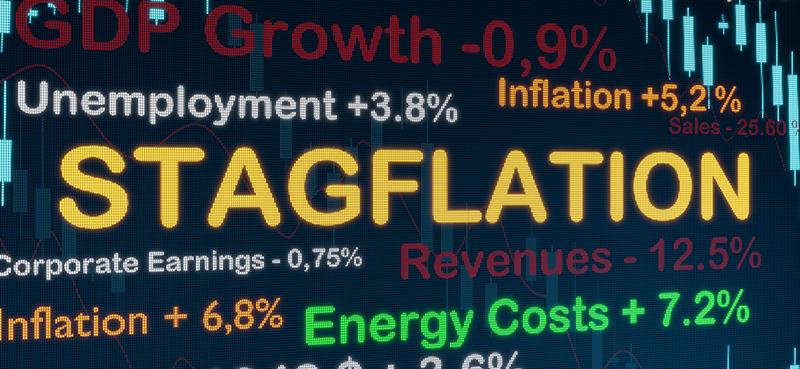
Doesn’t matter who’s elected, who you like, democrat or Republican. They’re going to spend out the ass. They’re going to continue to spend, spend, spend, spend, spend. Right, that’s great for stocks, it’s great for the economy and, most importantly, we’re still in this Goldilocks economy where stagflation is the big word, but we’re avoiding stag, we’re avoiding deflation for now.
But this scenario, goldilocks, where I just named how many losers, big-name losers, and then you have big-name winners, where you have GDP growing at 3.3% last quarter, 3.5% projected next quarter, according to Atlanta Fed when you have a lot of profits going through the roof we just reported one of the best quarters ever However, a lot of you know profits going through the roof we just reported one of the best quarters ever However, a lot of the negatives that I highlight, when you have this not too hot, not too cold, that is one of the biggest drivers of bull markets dating back in history.
Right, you don’t have like all this absolutely positive, like we had in 2004,. 5, 6, 7 for the credit crisis, you know. So you have all this, you know positives and and you have this Goldilocks You’re looking out three months, six months, nine months, into 2026. It’s a really good environment, but I really think some of the names that I told you about that have sold off. If we get much lower interest rates than we expected, a lot of those companies are going to be a layup down 20%, 30% that didn’t participate in this market, because now some of these debt payments are going to go down. They’re going to have more access to capital, which we’re seeing in the markets mass amount of capital if you’re in the right sectors. Let’s see what happens going forward, but there’s a lot of positive catalysts that I think is going to result in a lot of stocks going higher here and it’s all dependent on the Fed today starting to cut rates and ease, which is going to continue definitely through this year and probably well into next year.
0:21:35 – Daniel Creech
Yeah, well said, it will be interesting to watch some of the consumer staples see about the reaction to lower rates and then consumer behavior going forward. But yeah, overall it’s going to be clear as mud for a good while. But overall assets meaning markets, indices, path of least resistance is higher because of all the stuff you just rattled off.
0:21:56 – Frank Curzio
No, it’s true, it’s true. So let’s move on from the Fed. Okay, and again, I like reporting and telling you everything beforehand. This will be held accountable. Right Afterwards everyone says I told you so the market crash? I said it was going to crash. No, you didn’t. You didn’t say it was going to crash, you said it might come down. It might. I swear, if it was legal to smack someone in the face that said that, I’d smack everyone in the face Because, basically, you’re saying I’m going to take credit whether it goes up or down, and I hate that.
Just put yourself on the line. You want to know why so many people watch Kramer, whether you like him or you hate him, it’s because he’s never on the fence. Buy, buy, buy, sell, sell, sell, buy this stock, this stock’s great, and then this could. No, nobody wants to hear that. They want to. You want an opinion. You’re watching sports, you’re watching A. You’re watching PTI.
You want them to say you know what the Cowboys suck, the Eagles are great. That’s what you want to hear. Oh, these two teams. Yeah, they got a good shot. Maybe you know the Eagles could win the Super Bowl, but I don’t know Green Bay. No, we don’t what people want to hear and they’re drawn to. But you know, when it comes to moving on from the Fed just moving let me move on before I go on more and more rants here. But we did have a story that I wanted to bring up, because we can keep going with the Fed, but Trump says companies do not need to report on a quarterly basis. Okay, and he wants to try to remove that, and I thought that was interesting because if you listen to this podcast for 15 years, it’s what I’ve been saying for the longest time where companies do not have to report every single quarter, there is no need. Dan, what are your thoughts on this?
0:23:30 – Daniel Creech
Yeah, I couldn’t agree more. I think it’s pretty. What I worry about on data and bigger picture is the resistance to change anything because of who’s in office, but selfishly, as an analyst, it’d be not easier, but it would be. I just think it would be better on a transparency side, and what I mean by that is you don’t have to. If they pass this law, let’s just say wave a magic wand. You don’t have to report every quarter. Now you report semi-annually, so twice a year.
Okay, that doesn’t mean you cannot still be transparent and communicate to your shareholders, and I think that if you almost lift that veil, you would encourage more of that. So if you’re reporting every six months, in between six months, there’s nothing wrong with reaching out to your shareholders, and I think personally it would be wise for companies to engage more. And take the likes of Palantir, who CEO Alex Karp, controversy person, speaks directly to the retail shareholder base and I don’t know why that’s negative. And you you know Elon Musk, I think, made this pretty popular before others did, where they would take and correct me if I’m wrong, Frank, but I’m not saying he started it, but Musk was also giving. They would take questions from retail investors on their analyst calls or from a group chat or something, and so to kind of bring that in an engagement. I think that’s great. I think the narrative around why you shouldn’t do it because there would be lack of transparency or less transparency and you’d have more fraud, and I can already hear the Elizabeth Warrens and the senators like that Listen, if quarterly reporting kept you from frauds, have a look at the biotech market.
Have a look at the over-the-counter market. Have a look at how about all these companies, Frank, that, on average, come within what percentage of making all their numbers? Because, guess what, you can go down to the CFO and say hey, Frank, how many shares do we need to buy back to get our earnings per share to XYZ? Hmm, you just do a reverse back. Eh, maybe 100,000. Boom, hit it buyback program. So you’ve got a lot of financial engineering anyway, in my opinion, I Then you get on the cost-saving side, Frank. I don’t know how much you want to go into that. I think it’s an overall good idea. I really do.
0:25:39 – Frank Curzio
Yeah, it’s again. I’ve been advocating for this for a very, very long time. You have lots of conferences, which maybe we don’t talk about as much, but tons of conferences just for all the major investment banking firms and the CEOs talk there or the CFOs talk there and, yeah, that there and you could update. You could update there, you could talk to analysts, you could provide. Maybe you want vague updates like demand strong demand’s a little weak in the first three to four months. There’s a lot of bigwigs who pretty much support this. I mean, you look at Jimmy Diamond, warren Buffett as well they wrote about this, although they were talking also more about companies to you know, not allowing companies to issue guidance for some reason. But as CEO of a company and anyone who’s a CEO out there, you never look at your. You have goals to make in three months and even monthly goals, and sometimes you have weekly goals, sometimes you have daily goals, but you don’t look at your business every three months. To the point where, when you’re a publicly traded company, if you miss that quarter say if you’re Nike and you’re Starbucks you’re transitioning your whole business and that takes time, but you’re forced to focus on three months because if you miss that freaking number. You’re Lululemon Goodbye. There’s so many companies out there that you miss your numbers. And you’re Dave and Buster’s Synopsys was down 34% after earnings. So you’re forcing these companies that, hey, you better make your number that quarter and it doesn’t even matter if you miss those numbers and say next quarter’s guidance you lower, but we’re maintaining our full year guidance. Your stock’s going to get annihilated. That’s the market that we’re in. So public companies have to make those quarterly numbers every three months and if you don’t, you get crushed. So when you’re looking at the long term and how to run a business and you’re looking at every three months.
You talked about transparency. I’ve analyzed stocks all my life. I love this. I talked about Nike pretty much for years ago. I used to report about Nike and Apple and Apple probably would have missed about seven or eight of their quarters if they didn’t buy back their stock. They knew how much stock to buy back, where it was going to increase earnings by a certain percent, because eventually they saw their sales. Their sales were not increasing and neither really were earnings. But if you’re buying back a shitload of your stock like they were announcing $100 billion buybacks and $50 billion buybacks. It billion buybacks and $50 billion buybacks. It increased their earnings by 6%, 7%, 8%. That’s 8% growth for the market. Now you’re getting that growth, but it’s artificially getting that growth. And when I look at the manipulation which is legal, but it’s manipulation taking place as someone who analyzes the financials for these companies, it was a joke.
I used to say look at Nike, look at their sales, look at what they’re doing with buybacks, look how they’re increasing. They used to just tweak their numbers and, sure enough, nike. Finally people got in and said holy shit, just like we said with Chipotle. Same thing. Like, listen, when you’re opening that many more stores when you have thousands already, you’re fighting for growth. You’re trying to capture more and more growth. We already took out the best positions where these stores should be. I mean, there’s books written about this. It goes even back to Walmart, to Target.
When you reach a level where your growth is achieved and it’s so hard, wall Street wants that growth to continue forever. If not, they punish you. So what do you do? You’re going to open up new stores, but you’re going to open up in areas that you didn’t open them up, like two, three years ago, because you knew they weren’t that good, but you open them up now to try to increase sales and get that sales share. It’s the easiest way. It’s like for us, the easiest way to increase sales is launch new products. Even though those new products may suck, we’re going to get an increase in sales because our whole entire base could actually come in and buy that new product and that’s going to increase sales for three, six months. But then when people are like you know what, Frank, that product you created is really shitty, it’s going to drop off and it results in these bad short-term decisions. So when you’re looking at pushing orders into different quarters, the timing of write-offs, amortizing depreciation, notice that they’re very calculated in what quarter they come into. If you’re doing a kitchen sink quarter, you see it, everything just poured in like the Lululemon. It’s like holy cow man. Hopefully that’s the bottom. I mean the stock’s down 60% this year.
Buyback announcements right. When do buyback announcements take place? Yay, take out the hyperscalers. When do you see the most buyback announcements take place? When the company bombs the quarter right, they bomb the quarter and like but Salesforce, but we’re buying back another 50. It’s like you know, same with United Healthcare we’re going to buy back more. It’s just funny because we really don’t need this. But when you’re looking at cost Daniel I looked this up, I did some research on it because it assumes that these quarterly fees the auditing lawyers and not just quarterly, but the fees every single quarter when you combine them for annual fees, they come to about 2% of EBITDA. So if you’re looking at Microsoft, that amounts to basically the EBITDA. It’s going to amount to it’s 160 billion EBITDA. So look at how much is it.
0:30:22 – Daniel Creech
It’s several million bucks, several million bucks You’re looking at, I saw Apple does between 30 and 40. That was ChatGPT and some Google yes, so that was a year 30 to 40 million, just on that.
0:30:33 – Frank Curzio
Yeah, so you’re looking at you know I mean you’re looking at. But if you look at Microsoft, you look at Apple. They have the money, that’s fine. But look at a company like Amber Cromley and Fitch $4 billion market cap, $900 billion EBITDA, so that amounts to around $18 million to report your financials. Cut that in half I mean that’s money that you. $9 million bonuses for smaller companies, because it’s a huge expense. I mean the orders, even the orders. They don’t want to touch the small companies because they’re making such huge fees on the big companies, which leads to a lot of shitty orders for smaller companies, even if they’re publicly traded on the low end, say, if they’re below like $300 million, $400 million market cap.
So if you’re looking for more transparency, I feel like you get more over the six months than everything forced in three months because there’s so much shit that goes into those reports and so much lawyers. It just doesn’t make sense. It does make sense if you’re a trader or something like that, or it makes sense for a lot of companies. Of course, congress is filled with lawyers and I can’t see lawyers voting for their peers to make less fees. Maybe you could bypass this through the SEC with an executive order. I don’t know how this would be done, but there is really, Daniel, zero argument anyone can make to support change my mind that we need quarterly filings, unless you’re a trader, unless you’re a lawyer, an investment bank with trading operations, you make more money. The more volatility that’s really what you want, right? The more liquidity, the more trading and stuff like that. There’s so many companies, lawyers everybody makes more money.
That way. I get it From a business point of view and an investor point of view. I don’t need to know every three months what a company’s doing. It could be every six months and then you could update it. All the conferences that you attend, which every single company out there, even through the Russell 2000,. They have small cap conferences. All these conferences these companies could talk about their company and talk about their initiatives there with analysts, but every three months within this, you know it’s just a hot mess and it’s so manipulated. It’s been like that for a long time. But you would save a shitload of money and hopefully that money would go back into the economy somehow and employees or you know, more spending, more capex spending, whatever it is. But there is tons and tons of money being spent on this and I think it’s a complete waste. I agree with trump on this.
Well Trump agrees with me. I’ve been saying this for literally. I’ve been saying this for like 20 years, 20 years. Like why do we have to do every single? I like it don’t get me wrong because we’re updating. You see inconsistencies sometimes and we’re able to. You know, I’m able to see like companies forcing shit in there. That’s really why I told you crash, nike’s going to crash. It’s because, looking at the financials and seeing what they’re pushing in there, I’m like this isn’t sustainable. It’s just not. It’s like Disney. It’s not sustainable.
0:33:05 – Daniel Creech
I mean, I don’t know if you saw the.
0:33:06 – Frank Curzio
Emmys. Did you see how many Emmys they got, like Hulu and Disney Plus Frank, do I look like a guy that watches the Emmys? I mean, I don’t watch the Emmys, I really don’t. But then you had Netflix and streaming services. You know how much content is, how important new content is. If you look at Disney and Hulu, barely like not a lot of nominees. So it’s just a new content that you need and stuff like that. But still, anyway, I don’t want to get back and forth. I just want to mention that because I was going to mention that actually tomorrow’s podcast. But getting back to that, the reporting I do think.
0:33:37 – Daniel Creech
I don’t think it would hurt transparency. I get that at knee jerk reaction. I just think once you have the discussion it doesn’t stand. I do think it also could lead to more volatility in the short term, but I don’t think that that’s a reason not to go down and change it, if that makes sense.
0:33:51 – Frank Curzio
Yeah, and that’s what I was like. The point I was getting with Disney is they were padding their numbers, adding free subscribers just to meet their quarterly results, and that stock went up to 180, 100, whatever it went to. And then they realized they’re adding subscribers but they’re not making any money off of it because they’re giving the shit away for free. The average revenue per user is 70% lower than Netflix and everybody else. But I was able to see that. But a lot of that might have not taken place with all the BS and some of the stuff like the stars stuff like the stars, which is the international division. Again, they make it $2, $3, average revenue per user. Whatever it was, it was nothing.
But you know what? I think a lot of that was forced because, hey, the quarter’s coming up, we have to add, we have to add, we have to add here, the quarter’s coming up. You know what? You know what I’m seeing like crazy, like $5 or $4 service for Hulu for Going into the quarter. What is that going to result in? Well, now you’re going to get the biggest metric that everyone looks at when it comes to streaming services.
Right, it is how many subscribers did you add? Well, we added them and no one’s going to look under the hood to say, okay, well, you added them for a small promotion, because you knew they were coming in light. These are the decisions you make over three-month periods instead of looking six months and one year out. I think it’s better for businesses, it’s better for investors, but it’s not going to be better for traders, investment banks and lawyers. But I really agree, I think this is a good idea. I don’t know if it’s going to happen, but I just think it’s a really good idea, sir. No, that’s it for that, yeah. So I just again, just to see it and him mention that I was so surprised because that kind of came out of left field, I think right, I never heard him mention anything like that before.
I think he went to China and said look what China is. I don’t know. He actually used China as a comp, Like Trump. Really, Come on man, I don’t know if I it’s not that far.
0:35:26 – Daniel Creech
I mean I hate to act like I’m carrying water for the guy, but you have the TikTok deal. There’s a China call. There was meetings between Treasury Besant and Chinese counterparts. There’s supposedly a call between Trump and Xi Friday and he’s over in the UK getting the red carpet rolled out and all the he’s riding around in that horse chariot with the king. I can’t believe how much we pamper our president, including this one who loves it. Oh gosh, I know. Thank goodness I was born here and don’t have a fleeting kingdom.
0:35:53 – Frank Curzio
He loves when another president praises him or when a company says hey, mr President.
0:35:59 – Daniel Creech
He’s an egomaniac. We’re doing $500 billion.
0:36:01 – Frank Curzio
Like he goes hey, tim, how much you build in America? Again, tim Tim’s like $500 billion, that’s right. Wait, say that number again.
0:36:09 – Daniel Creech
Crazy.
0:36:10 – Frank Curzio
He loves it. They are playing the game he loves it. I can see why, like a lot of people do hate him, but some of the things that he says is funny. But anyway, look, he’s getting more money into the US, which is good, and I guess, again, that’s good for stocks. He’s a president that focuses on the stock market, which is really good if you’re an investor, and you could ignore a lot of the BS if that’s the case, because at the end of the day, we all want to make more money.
Because I have an AI newsletter called Curzio AI and you know it’s, you know the main issue goes out every month that I update, you know during. You know during the month and stuff like that, and we have some amazing picks in that newsletter doing very, very well. Probably the best decision that I’ve ever made since I started this company is to launch that newsletter, because people have been doing very, very well. We’ve been part of this trend. I’ve built amazing contacts and we have one stock up 400%, another one up over 200% Just really been dialed in thanks to so many listeners and people within this industry who help hyperscalers build these plants that are in chip sectors and stuff like that. That have helped me tremendously and being able to pass this information on to this podcast and telling you hey, I don’t see it through my contacts where AI spending is slowing. We never saw it. Everybody was reporting that it was, and look at it now. Now it’s not slowing, it’s increasing. Now, if you look at the first six months of the year this is from Guardian big tech has spent $155 billion on AI this year. Okay, this year, this year, Daniel happens to be until August. Right, what was the figure? $155 billion Billion, nice, that’s through August.
Let’s talk about September, because the reason why I’m bringing this up is, with our Curzio AI newsletter, is I’m always highlighting stuff that just happened over the past couple of weeks. I’m not saying, oh, do you remember that? Nvidia two years ago and they blew out the numbers? No, I’m always, because there’s so much information and stuff taking place and the sources and the resources that we have are incredible, just to see what’s happening in real time. It’s September, this is just September. Oracle blew out the numbers. They increased that backlog for 350% to $455 billion, mostly due by one massive investment, a new client, a small client called OpenAI, who’s spending trillions. It keeps raising money and everyone keeps giving it to them. Stock was up 35% today, kind of one of the largest in the world top 10.
Microsoft just announced and these deals okay, these deals are not tiny, we’re not talking about small deals microsoft 17 billion dollar deal with nebius for gpu infrastructure. We have anthropic raises 13 billion for 183 billion dollar valuation. We talked about the people and the partners who came in and the investment firms that came in for that 13 billion. It’s just a who’s who. I mean it’s massive. It’s. They raise that 13 bill like immediately.
Immediately, someone asked me you think Anthropic’s going to go public? If any AI company goes public right now, it’s a red flag. There’s no reason for any AI company to go public because you’re able to get the funding privately. There’s so much sketchiness within these AI things. Openai is behind Microsoft. Microsoft’s going a little bit away from that and doing deals with Anthropic.
But when it comes to AI companies, the last thing you want is people really looking under the hood, Because when we looked under the hood, it’s why Altman got fired. When you looked under the hood, this guy had stuff and loans and stuff like that and he lied to the board. These AI companies, the shit that’s going on behind closed doors. You have some of the smartest people in the world, including lots of former employees from OpenAI who are not disgruntled employees and talk bad about AI. They’re just saying, listen, people don’t understand how dangerous AI is. It’s really really much more dangerous than even Elon Musk as well. So when you look at Anthropic raising $13 billion and everybody coming in, there’s no reason for these companies to go public, because why go through that scrutiny, why worry about reporting every single quarter and making your numbers, when you could raise an unlimited amount of money in the private markets, so much so that you’re paying your employees. You’re getting their payday, because every time they’re raising this, you’re going to have someone that’s selling this and you could sell a little bit.
Some of the early investors get to sell some of this. Some of the original investors get first rights to invest in the next round. I think this is a serious f round, abcdef. So I think it’s the f round. And then we have the nvidia deal with core weave right, dan, which was 6.3 billion, which I know you want to talk about. But before really quick, keresdale capital that morning it was this week, a couple days ago came out with a short report saying core weave is going to drop 90. The morning before nvidia and core weave came out with the announcement for $6.3 billion. I read that whole report on CoreWeave because I like CoreWeave and it just destroyed the whole report. It poured cold water on the whole freaking report after I read it.
Just this one deal, because it cites how CoreWeave has weak pricing power Not that weak, I guess Eroding relevance from hyperscalers Okay, that’s bullshit off of this deal. No moat. Hyperscalers okay, that’s bullshit off of this deal. No moat. I don’t know, it sounds like they have I wouldn’t say a moat, but they’re one of three or four companies that have the technology that hyperscalers love. And they’re saying that microsoft is so big where it accounts for 70 percent of sales, so they have, you know, one client and they say microsoft is actually going to other people, but yet now you have core.
We just signed this, a deal with nvidia for 66.3 billion. So the four or five reasons you said this company is going to go 90%. This one deal basically threw this right in. The stock went up 7% that day. And I love Kerrisdale and short sellers because they’re allowed to short the shit out of the stock and then tell you that, hey, this is going to go down 90% and, as they’re reporting it, they could actually cover their shorts as everyone’s selling it, which is 1,000% illegal to do. If you are long, if I come out, Daniel, you come out and we say hey, this stock’s great.
We buy the crap out of a stock, a small stock, and then we say whatever. And then we say this stock’s going to announce a major deal, it’s a whole positive report, and then people stop buying it. And I go on CNBC, fox Business, all the channels. People stop buying it and I dump it into that. I get arrested. I’ll get arrested for that. However, you could do it on the short side, so they’re covering their short a little bit. It’s interesting to see, but I know NVIDIA and the deal with CoreWeave was a big deal as well, but these are just the deals in September, right? It’s insane.
0:42:11 – Daniel Creech
Yeah, that is nuts and I have a little bit more. But the CoreWeave NVIDIA deal. The interesting thing about that to me was going out to 2032, 2032,. Nvidia is going to purchase any unused capacity at the data centers that CoreWeave provides and they have the partnerships with the chips and stuff. That’s just incredible because, to your point I didn’t look through the short report but if you have somebody that’s going to buy all the unused capacity, I mean I don’t know. I’m not saying this is a bad deal on NVIDIA at all. I’m simply saying, looking quickly at the headline, that is an amazing like. That shows you the power and the belief that NVIDIA must have in CoreWeave to do something like that. I think that’s a long.
Um, yeah, my biggest thing with core weave which, hey, I, I’m nervous about that which means it’s probably going to keep going up I just want to see in a couple of years, how, how did the GPUs depreciation on your balance sheet work and how does that figure out with the recycling aspect? Okay, so you know, you know they’re going to buy these every few years. What are they going to be used for in three years, since they’re not the newest cutting edge? But just because you think out loud and have those questions doesn’t mean that I’m knocking the stock and or the participation in it, so don’t confuse the two there.
But yeah, I thought that was a hell of a deal on CoreWeave and to your point, Frank, I just think that that do not try to pick the top in the hyperscaling spending and all this kind of stuff, because just as much as you want to say, Frank, we’re getting a little over our skis here in the US and you’ve got these data centers going up. Guess what? You go across the pond and they invest $30 billion in data centers overseas. Frank, I’m talking about the hyperscalers. So don’t get caught up in the media trying to pick the top here. Just enjoy this, because it’s going to take some time to play out whether or not AI is the savior or whether it’s Terminator.
0:44:05 – Frank Curzio
Well, what we’re clearly seeing is spending is increasing, and you know just the Oracle deal. I mean the shock that the world and Oracle have a stock up 35%, that nobody saw this. Microsoft $17 billion. Nvidia $6.3 billion. Anthropic $13 billion Again.
This is just the past two to three weeks and it’s continuing. It’s this massive race between the biggest companies in the world, who have the deepest pockets, that have to get the best systems, because they know they’re going to control the world if they do that and they have to support these trillion-dollar valuations. That’s just the way it is. So on Thursday, september 25th, 7 pm, please mark your calendars because we’re going to be holding a live event. It’s live, it’s free again, I would suggest, because when it comes to trends and within ai and power, I usually I’m not emotional. When it comes to this stuff, I’m usually like, okay, this is what’s going to happen. Holy cow, this is crazy and position yourself accordingly. This. This really scares the crap out of me because I’m looking at statistics and it doesn’t make sense on how we’re going to get the power. I have no idea the name of this event. We’re calling AI Power Crisis how to Profit Before the Lights Go Out, and it sounds funny I’m not kidding. When you’re seeing during peak hours, you’re going to see this in major cities, starting in about 18 months or two years. We just don’t have the power and what we want to do is okay, fine, it’s scary, but if you invest in the right names and you position yourself, which we’ve done with our AI newsletter we have lots and lots of winners.
I’ll give away one Bloom Energy. Bloom Energy you know just again a new technology, anything that’s portable, like the SMRs technology as well. I missed Oklo. I didn’t think that you know again a $10 billion company with no revenue. But Bloom Energy, I saw, and I saw the orders coming in. There’s massive orders coming in. We’ve been ahead of this trend and following it, and when you crunch the numbers, the real numbers, which we, Daniel and I, are going to highlight and show you the charts during this event, there’s just no way you’re going to see, there’s no way we’re going to have the power to support this trend.
And you’re probably familiar with large language models. I bet 50, 60% of you probably use these. Right, you use them if you’re helping your kids in school. You use them. I do as well. I use them for work and everything. That’s fine. And this is ChatGPT, google, which is like holy cow. Okay, but that’s yesterday’s news. This is fixed. We know this is like programming this is fun. You know what you’re going to get.
The next wave is agentic AI, where these systems include reasoning, understanding, they ask questions about the outcomes, they learn. They also can operate independently and autonomously. This trend is in the first inning right now, and this is where the analysts are dead wrong when it comes to these statistics. Because when you look at the complexity of these systems, when it’s machine learning, scalability, multiple steps within the workflow to improve outcomes, the power needed to fuel agentic AI is absolutely insane, especially when you’re including memory storage tool integration, which is the APIs, and checkpoints security. Again, trying to formulate and find answers to this, just forget about kilowatts per hour and crazy metrics and use common sense. As AI gets faster and more spending and more bigger. It’s going to replace millions of jobs, yes, but it tells us we’re going to need a shitload of computing power, faster chips, to power this growth. And right now, when I’m looking at estimates from analysts, when I’m looking at you know, I won’t even name consulting firms, really good firms that provide these estimates that holy cow. We’re going to need this much energy and just gigawatts of energy and hundreds of more gigawatts of energy going forward. When I look at these estimates, they’re factoring current demand and they carry that out over a three-year, five-year, 10-year period, based on current consumption and consumption increasing a little bit. They’re not factoring in the new and next generation chips that are going to come out from NVIDIA, broadcom, amd, which have to come out, that are going to require much more power than the current chips that are on the market right now and these are going to come out every single year.
I’m going to go to Consumer Electronics Show. I’m going to do it again. Last year I had to sneak in. I had to cut the line I feel bad saying that, but it was the only way because they had the opening keynote speaker, jensen Wong, and I forgot where it was, what hotel it was, that probably fit, maybe about 12, t-mobile Stadium, I think, maybe 15,000 people, and it was like 80,000 people in lines that showed up. They didn’t tell you that you should get there like six hours early. Anyway, I was able to get in and all he did was talk about agentic AI and how we’re going to need more power. Now you’re going to see the next generation of chips. Now he’s going to come out the next generation of chips and as you come out, the next generation to fuel all these needs it’s going to require much more energy and they’re not factoring that into their calculation and that energy is going to be needed over the next couple of years, going forward forever. So we’ve seen a lot of companies again in energy do very well. A lot of those names in our portfolio I don’t want to give away too many more.
There’s three or four I can give away that are up a lot. There’s so many more plays that are opening up from this trend. I talked about water, just the power to cool some of these systems, sectors that I hate, like solar Holy cow, I hated solar. Just the amount of money that I’ve lost on a turn of energy, carbon credits, all that garbage and crap. You know it’s just now. You’re looking at solar. Solar is now economical and it’s going to be economical. The margins on solar companies are like 30% and I’m not talking about residential. I know tax credits are gone. Don’t worry about the tax credits. That’s the residential. If you’re looking at the utility side of how they’re combining the storage and the power and the batteries, which is the backup power solar is actually one of the cheapest forms of energy right now compared to everything else out there, because electricity prices are surging, they’re going through the roof, and when something becomes economical and you get in early in these trends, the gains that you can make are astronomical.
And this is just a couple of things we’re going to talk about during this live event. It’s going to be 100% live. Daniel and I are going to be on it. I’m going to highlight three companies in the AI energy landscape that have huge, huge upside potential, and I’m going to give them away for free because I’m a nice guy, right. So, again, you guys have probably attended some of this event. We’re going out to outside lists now, so it’s going to have a lot of people attending, but we’re also, dan and I, going to do a live Q&A where all the attendees are going to be in a room. You get to ask questions live and Dan and I are sitting back drinking beers, hanging out, and a lot of times that lasts for 45 minutes an hour, because we look at the room and 70% of the room is still there asking good questions and we have a lot of fun, it’s entertaining. But to sign up, you’re going to get away.
Give away, uh, get those three free picks from us and just learn a lot about this and how to position yourself, because this is one of the biggest trends ai alone, but agentic ai and the power that you’re going to need it just the analyst. Everyone’s significantly underestimating this, even when I talk to my contacts, and it’s opening so many more opportunities and spaces. Who thought solar? Who thought water? Other energy plays, natural gas plays. Everyone’s positioning themselves to get a piece of the $400 billion annually that’s going to be spent from AI companies to build out these systems going forward, not for the next year, not for the next three years, but for the next decade plus. So if you want to learn more about this, see some crazy statistics. It’s going to be a lot of fun.
How to play the secular trend get a lot of names that are tied to this trend. I could see 3X to 10X plus upside over the next couple of years. We’re seeing that right now in our portfolio, where we were really early in some of these names. This is the next generation of names. So definitely, if you get a chance to attend wwwcurzioaicom and the date is September 25th that’s a Thursday at 7 pm.
Don’t worry, we’ll finish before the football game. I don’t think it matters because Seattle’s playing Arizona and I don’t think anyone wants to see it other than people that live in Seattle and Arizona Probably the worst game that week. That’s going to be Thursday, so don’t worry about it. But we’ll probably to attend Thursday, september 25th, 7pm, and please register CurzioAIcom, just for registering. We can send you the three picks in case you don’t make that event, and we’ll send it obviously after, maybe a couple days later, a week later. You’ll get it after everybody else, but we’ll also give you a replay of the event as well if you want to attempt. So really really looking forward to that in terms of, you know, just providing you guys a lot of great information on AI. So I don’t know if you wanted to add to that, Daniel, because we’ve been covering this sector for such a long time and doing well in it, and you’ve done well in lots of names too, even in Curzio Research Advisory right.
0:52:23 – Daniel Creech
Yeah, we’re playing the AI trend there. Absolutely no, I don’t have anything to add to there on the power stuff, but that’ll be a lot of fun. So, yeah, tune in.
0:52:31 – Frank Curzio
Yeah. So what are we at? Tune in and don’t worry about the game. Yeah, we’re at 1240. Right now. We’re going to see, I think it’s what 2 or 230?
0:52:37 – Daniel Creech
2 o’clock is the announcements 230.
0:52:39 – Frank Curzio
230 is the announcements expect a 25 base point cut. And let’s see, I mean the markets. I’ll give you guys a quick check before we go here. The markets are still the same, holding about the same levels. The S&P 500 and NASDAQ are down, which is interesting, and yeah, everyone’s giving you a whole bunch of opinions on what’s going to happen and everything. But the names I gave you will cover more going forward, some of the beaten-up names, but a lot of those names. That’s a starting point.
I’m not telling you to buy all those names that I gave you that are down so much, but I want to look at who has a lot of debt. Who’s going to be able to lower their debt? What does interest rates do? What is their consumer market? What’s the demographics? I mean if you have maybe a mid-tier, lower-tier demographic, it’s going to help them tremendously if they can save money. I mean another negative, dan, really quick, is energy. Have you seen what gasoline prices are right now? I felt like they were $2.80. I just paid $3.30. It cost me like $75 to fill up.
0:53:31 – Daniel Creech
Yeah, there’s a big refining issue going on. I think we just closed another refinery down in California. Remember there’s a disconnect there between the price, because the price of oil is what? 63-ish, I think. It may be moving up to 64, but it’s been in the low 60s. Yeah, the disconnect between lower gas prices that you see on the barrel per oil and the gas prices you pay in gasoline, refining and logistics issues, no doubt.
0:53:53 – Frank Curzio
Yeah, just another negative for the consumer. But we’ll come back to you tomorrow. We’re going to report, give you an update that’s on our Wall Street Unplugged Premium Podcast For more information on that and how to subscribe to that. Again, it’s just $10 a month for that. Definitely worth it because we give away picks and we also manage a trading portfolio through that and we’ll have a pick for you tomorrow. So questions and comments, feel free to email me. Curzioresearch.com. Daniel, what’s your email?
0:54:13 – Daniel Creech
Daniel@CurzioResearc.hcom.
0:54:14 – Frank Curzio
All right guys.
0:54:20 – Daniel Creech
Thanks so much for listening. We’ll see you guys tomorrow. Take care.
0:54:26 – Announcer
Wall Street Unplugged is produced by Curzio Research, one of the most respected financial media companies in the industry. The information presented on Wall Street Unplugged is the opinion of its host and guests. You should not base your investment decisions solely on this broadcast. Remember, it’s your money and your responsibility.
Curzio Research publishes market commentary for informational and educational purposes. The opinions expressed and market conditions when the content is published may change. It is not personalized investment advice or an offer to buy or sell securities. Investing involves risk, including possible loss of principal. Do your own research and consult a qualified investment professional before making investment decisions.