

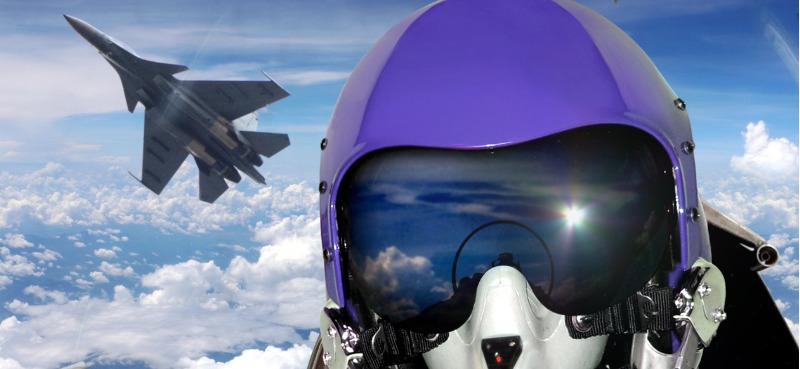
The military has long been ahead of the curve when it comes to technology…
Some of the first major applications for computers were developed to help win World War II… nearly 50 years before most folks considered putting a PC in their homes.
In fact, military and commercial pilots have been using simulation technology as part of their training for nearly a century. The first flight simulator, called Link Trainer, was developed in 1929.
Over the years, these simulations have become increasingly realistic. Today, pilots don’t just see the simulations… they can feel them. Vertical Motion Simulators (VMS) make it feel like you’re flying in a cockpit. It’s a step up from the Motion Racing Car Simulations at arcades like Dave & Buster’s… where the entire seat shifts and vibrates to recreate the feeling of being in a race car.
The Air Force has a system called Live, Virtual and Constructive (LVC) for training purposes. This allows for actual pilots to be in the air (Live), combined with real pilots on the ground flying through simulations (Virtual), as well as an synthetic image of an aircraft controlled by artificial intelligence (AI), which is the “Constructive” aspect of the program.
The problem with LVC is that once a pilot is within visual range (close enough to see with their eyes vs. on a display) the training system breaks down—meaning it doesn’t simulate pilots’ real-life ability to move their heads around.
Enter Red 6…
This company—recently relocated to Miami, America’s “crypto capital”—is revolutionizing military training applications… using the technology behind the fast-developing metaverse trend. CEO Daniel Robinson believes a military metaverse will be “critically important” to how it operates and trains combatants.
You probably know that “metaverse” has become the hottest buzzword in the tech space.
Its exact meaning continues to evolve… But to keep things simple, think of any virtual reality (VR) or augmented reality (AR) technology that creates an immersive, interactive virtual world.
We’re still in the early days of the metaverse trend—but there are plenty of folks in the U.S. military that see its potential…
For one, pilots can use this technology to engage in virtual dog fights and hone their skills. And training can be done with only one pilot in the air… avoiding the expense of multiple pilots and multiple aircraft.
Red 6 uses a first-of-its kind Airborne Tactical Augmented Reality System (ATARS) headset, which creates a virtual world to train fighter pilots for extreme and dynamic conditions. It provides full color demonstrations in real time—pretty impressive considering fighter jets can fly over 1,000 miles per hour.
It’s a safe way to build the skills needed for air combat situations… like the scenes in the recent blockbuster, Top Gun: Maverick. (Robinson, a former fighter pilot, was inspired at a young age by movies like Top Gun, Superman, and Star Wars).
If you want a closer look at how Red 6 is revolutionizing air combat training, check out this short video (10 minutes). At the 2:00 mark, you’ll see the LVC program and how ATARS improves the simulation.

The technology behind the Red 6 VR headset isn’t on the consumer market… yet. But you’ve probably seen home VR headsets from companies like Meta Platforms. (Its Meta Quest 2 headset comes with handheld “touch” controllers that provide an immersive experience when users enter a virtual world.)
Founded in 2018, Red 6 has yet to go public, but it was recently awarded a five-year Air Force contract worth up to $70 million. The Air Force believes the company’s system will offer solutions to training issues critical to national security.
As many of you know, Curzio Research also just made its biggest investment ever in metaverse tech. And we’re giving accredited investors an opportunity to join us.
If you own big tech companies like Meta Platforms (FB), Microsoft (MSFT), and Alphabet (GOOG)… you already have a stake in the metaverse trend. And the latter two have working relationships with the U.S. defense sector.
Also keep defense contractor Lockheed Martin (LMT) on your radar. LMT will have a presence in the military metaverse, if it doesn’t already (on a classified basis).
To learn more about the metaverse… listen to Frank’s interview with David Evans, CEO of TCG World—soon to launch what we believe will be the best metaverse on the market. David shares how the metaverse will soon blend with real life… and how it will give all users the ability to profit.

Editor’s note:
Frank’s pissed—and you should be too.
See, he recently uncovered something rotten at the heart of our most trusted institutions. It’s been quietly eating away at your wealth and freedom for decades… and will continue to do so if you don’t take decisive action immediately.
Curzio Research publishes market commentary for informational and educational purposes. The opinions expressed and market conditions when the content is published may change. It is not personalized investment advice or an offer to buy or sell securities. Investing involves risk, including possible loss of principal. Do your own research and consult a qualified investment professional before making investment decisions.