In early 2021, GameStop (GME)—a struggling video game retailer—suddenly found itself at the center of a financial firestorm.
Keith Gill, known by his YouTube username “Roaring Kitty” and Reddit handle “DeepF***ingValue,” began posting online about his belief GameStop was undervalued and had potential for a turnaround.
He also pointed out that the company was heavily shorted by hedge funds—creating an opportunity for a “short squeeze”…
In January 2021, Gill’s optimism sparked a buying frenzy among individual investors. GameStop’s stock—which had been trading around $20—suddenly skyrocketed… reaching a premarket high of over $500 within weeks. The short sellers scrambled to cover their losses, further fueling the surge.
It was a true David vs. Goliath story…
By the time the buying frenzy died down, several major hedge funds were out billions of dollars… while many individual investors (including Gill) became newly minted millionaires.
GME has since come back down to Earth.
But the saga is far from over…
In this article, we’ll look at how the GameStop ordeal continues to play out today… how it shines a light on the power imbalance in the stock market… and whether GME is a buy at current levels.
The market is rigged against the little guy
SEC Chair Gary Gensler recently appeared on CNBC with Jim Cramer… where the two discussed how the market is not fixed against individual investors.
They’re full of sh*t.
For proof, look no further than the latest developments in the GameStop story…
Last week, Roaring Kitty hosted a YouTube livestream for the first time since the original GameStop buying frenzy.
During the event, the New York Stock Exchange halted GameStop trading several times as the stock soared… then cratered—ending the day down about 40%.
Now, it’s worth noting that no one was pressing a big red button to halt trading… The system is controlled by algorithms. Put simply, if a stock gets too volatile in a short time, it triggers a “circuit breaker” of sorts. The halts usually last around 5 minutes, but they can go longer depending on the stock’s previous action.
However, those algorithms are designed to benefit big money investors… at the expense of the little guys.
You see, trading algorithms controlled by giant institutions are responsible for a majority of the market’s movements. And they can make trades in a fraction of the time it takes a human to buy and sell a stock… Put simply, those rapid-fire trades can send a stock shooting in either direction before an individual investor has time to blink. Rarely do we see trading halts triggered by those situations…
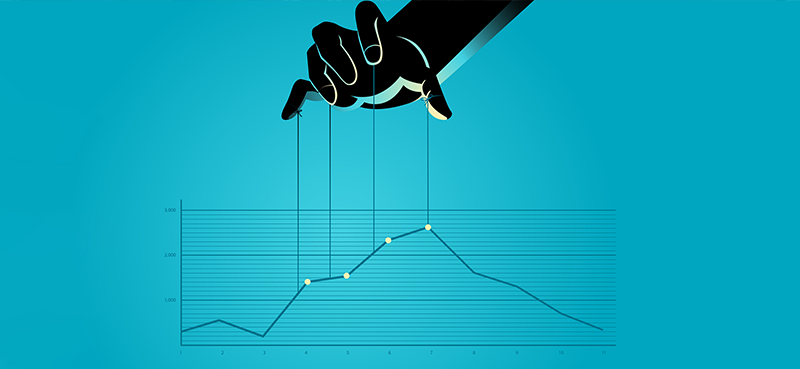
The bottom line: The system is rigged in favor of big hedge funds. Algorithms are creating an uneven playing field that individual investors can’t compete with.
And consider another point: The biggest portfolio managers, including Einhorn, Chanos, Ackman, and yes, Buffett, are permitted to use giant platforms—from CNBC to investment summits—to essentially pump up the stocks that they have massive positions in. What’s more, the SEC has been known to look the other way when it comes to big, influential investors front-running and/or not disclosing their investments.
Meanwhile, the agency is looking into Keith Gill for revealing his multimillion-dollar stake in GameStop… and whether it should be considered “market manipulation.”
Put simply, when the big guys make a move, it’s celebrated. But when everyday traders do the same, they’re scrutinized. The SEC’s double standard is clear. The agency uses loose guidelines to intervene in certain situations and not others… and it only seems to intervene with retail investors.
The bottom line: The market is rigged against the little guy.
Now, does that mean you should avoid the market altogether?
Absolutely not.
The simple truth is that market manipulation is part of investing… and yes, it typically favors big money investors.
But that doesn’t mean there aren’t tons of opportunities for individual investors to profit…
And that brings us to our next point…
Is GameStop a buy at current levels?
GameStop has come a long way from its days as a failing game retailer…
In fact, despite all the volatility, GameStop is a solid stock.
For one thing, it has a healthy $9 billion market cap. That puts it in the same stratosphere as Caesars Entertainment (CZR) and Wynn Resorts (WYNN).
It also has an impressive $4 billion in net cash. This financial cushion removes the risk of bankruptcy and allows the company to grow its business… pivot as needed for a changing marketplace… attract top talent… and invest in new tech like Bitcoin and AI.
In fact, based on their $250–300 million in expenses (and shrinking)… this cash gives the company a 10-plus-year runway for growth.
It also has a massive user base… which means it has tons of data. In today’s digital world, customer data is one of the most valuable assets a company can have.
Forget about the gaming business…
GameStop can get into anything it wants.
Now, obviously, this stock is volatile, so if you’re considering investing, it would be wise to scale in…
But looking at all the factors, we believe GameStop could easily go to $100 over the next 12 months.