When it comes to dividend investing, many investors make a big mistake …They focus solely on the world’s most-popular companies. That is, the companies everyone wants to own … the ones that are always in the mainstream media.
I’m talking about companies like Procter & Gamble (PG) and McDonald’s (MCD).This mistake can cause folks to miss the huge gains they could make in another little-known area of the market.
Most investors don’t know it, but there’s a class of small-cap dividend-payers that have great brand names.They also have …
• Competitive moats… • Stable cash flows… • And long histories of uninterrupted dividend growth.Many of these small-cap companies pay above-average dividends.
But that’s not all.
They also have the potential to grow into the next Procter & Gamble and McDonald’s.
In other words, these steady, small-cap dividend companies have much more upside potential over the next five, 10 or even 20 years.That’s why you might want to consider adding these names to your income portfolio today.Let me explain …
A Dynamic Duo: 2 Oldies but Goodies
Elite, large-cap dividend-payers can be fantastic stocks to own.
These are legendarily profitable businesses with world-famous brand names.
You probably use some of their products on a weekly basis.
The companies we’ll talk about today are similar to the large-cap dividend payers you have in your account.
In fact, these two companies have been in business for more than 100 years each.These small-caps also have products that you probably use on a weekly basis.
And both have a decades-long history of raising their annual dividends.
Wall Street does not want you to know about these stocks … because you are likely to buy and hold these names forever.
In other words, you won’t need to pay huge brokerage fees on your portfolio that has little trading activity.
There’s no “trading action” with these stocks — just steady compounding for years and years.
These two small-cap stocks are Diebold (DBD) and Bemis (BMS).
How to ‘Lock in’ a Nice Payout
Diebold traces its history back more than 150 years. The company was founded in 1859 by Carl Diebold, a locksmith who had become one of the premier builders of safes and bank vaults in Ohio.
Today, Diebold operates in 90 different countries and employs nearly 17,000 people.
The company builds the pull-out safety boxes you find while driving through a Walgreens or CVS pharmacy drive-thru.
It is also the largest supplier of ATMs in the world.
This seems appropriate, since the company seems to be printing cash to pass along to its investors …Diebold has increased its dividend every year for the past 61 years — the longest consecutive streak of any company in North America.
What’s more, the company has been growing at a compounded annualized rate of more than 10% (including dividends) since 1952.
The stock is trading at a cheaper valuation than McDonald’s and Procter & Gamble, pays a similar yield and is expected to grow earnings at a much-faster pace than these brand-name giants.
Diebold might just be the perfect income and growth stock.
But it’s not the only “little” name with huge profit potential.
Bemis: Profits ‘in the Bag’
Bemisis another small-cap dividend company with more than a 100-year history.
The company was founded in 1881. Today, it’s one the largest global packaging companies in the world with more than 16,000 employees.
You probably don’t realize how many bags and packages you use each day.
• Your cereal box has a bag in it.
• Your freshly ground coffee likely comes in a bag.
• When it’s time to feed or walk the dog, you probably reach for a bag.
Every time you tear open a package, you’re opening a bag.And there’s a good chance that bag is made by Bemis.While Bemis isn’t a household name, its customers include dozens of well-known companies:
• Kraft (KRFT)
• Nestlé
• Procter & Gamble (PG)
• Unilever (UL)
• General Mills (GIS)
• Hershey (HSY)
• Coca-Cola (KO)
• Kellogg (K)
• Pepsico (PEP)
• Heinz
• Tyson Foods (TSN)
• Hormel Foods (HRL)
That’s just a sample of the 30,000-plus companies that turn to Bemis for their packaging.
Besides being a well-run, long-term business, Bemisdominates an industry that will never become obsolete.Bemis has raised its annual dividend for 31 consecutive years. This is a longer streak than industry leaders Chevron (CVX) and AT&T (T).
Bemis also has been growing at a compounded annualized rate of more than 10% (including dividends) for more than two decades.
Bemis trades at a significant discount to McDonald’s and Procter & Gamble. On top of that, it is expected to grow earnings much faster than these brand name companies.Plus, Bemis also pays a much higher yield than the S&P 500.
Again, the reason you probably don’t hear about Diebold and Bemis is because they are not advertised anywhere.
They are small stocks designed for investors to buy and hold for decades.
That means no investment fees for brokers. It means no “action.”
If you are interested in safely growing wealth over time, I suggest taking a closer look at these two small-cap brand name dividend companies.
If you compound your returns for decades, they can turn any average investor into a millionaire.
This means you could potentially get rich … instead of Wall Street.
Read the signs. Beat the market.
The market intelligence you need to invest one step ahead. Go beyond the headlines. Invest with an insider’s edge.
Books are a big part of Wall Street culture. Luke shares his favorite book of all time… and the simple lesson that helped him find the path to big, long-term investment gains.
Learn why Chinese property manager Evergrande rocked the market this week… why it poses a threat to the global economy… and why U.S. investors should invest in China with caution.
It’s time to put on our rally hats… As we near the end of the year, we’re about to enter the mega green zone for stocks. And Luke’s spotted two ETFs primed for huge gains...
OpenAI's HuggingFace debacle: Is AI a cybersecurity risk? Plus, SuperMicro's (SMCI) margins… Open-source vs. closed-source AI models… 2 no-brainer AI power winners… The sector with the most AI risk… China's market manipulation… And stay cautious on SpaceX (SPCX).
DigiPower X (DGXX) CEO Michel Amar breaks down the company's milestone contract with Cerebras (CBRS)… its AI stack roadmap, from real estate to GPU-as-a-service… key catalysts through 2026… and why DigiPower X is in a league of its own.
IBM's (IBM) worst day in 58 years—is it a buying opportunity? Plus, Fed Chair Warsh's testimony… The odds of a rate hike dropped significantly… Two AI buys… The perfect backdrop for big banks… And Wrap's (WRAP) growing TAM.
Meb Faber, cofounder and chief investment officer of Cambria Investment Management, breaks down his new book on the rise of the 250-year bull market… and how much longer it can last. Plus, why U.S. investors should look abroad.
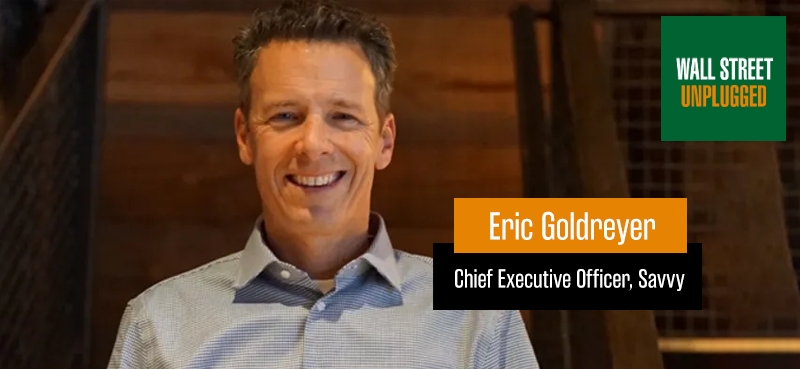
Savvy CEO Eric Goldreyer breaks down the secret to the company's success—and its next growth phase… how AI is helping unlock customer savings… and his exit plan for this hospitality disruptor.
These tech stocks are buys on the pullback. Plus, is it still a "buy-the-dip" market? … What's driving the outperformance in small caps? … Steer clear of this SPAC… Accenture's (ACN) management should be fired… And the broken housing market.
Iran reportedly suspended indirect talks with the U.S. and is threatening to completely block the Strait of Hormuz. That matters because roughly 20% of the world's oil flows through this narrow chokepoint. Here's what it means for oil prices, energy…
The U.S. is tightening sanctions on Iran's oil network. But Iranian barrels are still moving through China and a shadow fleet of tankers, shell companies, and middlemen. Here's why that fragile workaround system matters for crude prices—and energy stocks.
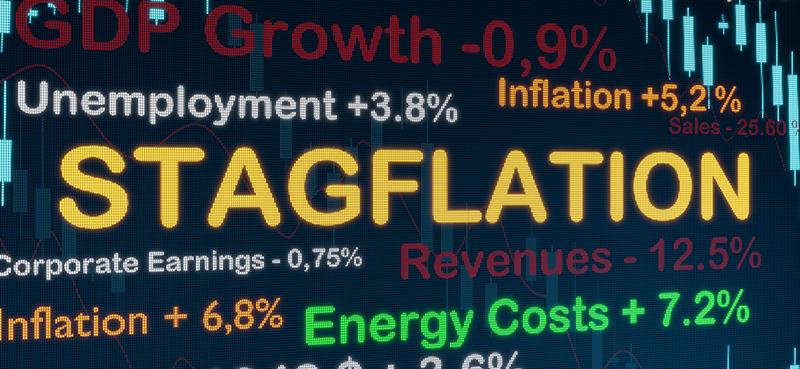
The latest economic data has revived fears of stagflation—a painful mix of weak growth and stubborn inflation. But today's economy isn't the 1970s. Here's what the numbers actually say… and what investors should watch next.
AI is this century's gold rush—and the biggest fortunes will once again go to the companies selling the "shovels." These seven sectors are providing the energy and infrastructure to power the AI boom.
Oil’s sustained price is a major indicator that few are watching. If crude stays elevated, it could keep inflation sticky, limit the Fed’s flexibility, squeeze corporate margins, and shift market leadership. Here’s how to position your portfolio.
War-risk insurance premiums on Strait of Hormuz transits have surged from pre-war levels, and shipping traffic has collapsed by roughly 95%. Here's how insurers are controlling oil transit… and what it means for your portfolio.
The Trump administration plans to drop $2 billion on nine quantum computing companies in exchange for equity stakes. IBM (IBM) gets the biggest slice, but the pure-play names are seeing the real upside. Here's what this signal means for investors.

 When it comes to dividend investing, many investors make a big mistake …They focus solely on the world’s most-popular companies. That is, the companies everyone wants to own … the ones that are always in the mainstream media.
I’m talking about companies like Procter & Gamble (PG) and McDonald’s (MCD).This mistake can cause folks to miss the huge gains they could make in another little-known area of the market.
Most investors don’t know it, but there’s a class of small-cap dividend-payers that have great brand names.They also have …
• Competitive moats… • Stable cash flows… • And long histories of uninterrupted dividend growth.Many of these small-cap companies pay above-average dividends.
But that’s not all.
They also have the potential to grow into the next Procter & Gamble and McDonald’s.
In other words, these steady, small-cap dividend companies have much more upside potential over the next five, 10 or even 20 years.That’s why you might want to consider adding these names to your income portfolio today.Let me explain …
When it comes to dividend investing, many investors make a big mistake …They focus solely on the world’s most-popular companies. That is, the companies everyone wants to own … the ones that are always in the mainstream media.
I’m talking about companies like Procter & Gamble (PG) and McDonald’s (MCD).This mistake can cause folks to miss the huge gains they could make in another little-known area of the market.
Most investors don’t know it, but there’s a class of small-cap dividend-payers that have great brand names.They also have …
• Competitive moats… • Stable cash flows… • And long histories of uninterrupted dividend growth.Many of these small-cap companies pay above-average dividends.
But that’s not all.
They also have the potential to grow into the next Procter & Gamble and McDonald’s.
In other words, these steady, small-cap dividend companies have much more upside potential over the next five, 10 or even 20 years.That’s why you might want to consider adding these names to your income portfolio today.Let me explain … Diebold has increased its dividend every year for the past 61 years — the longest consecutive streak of any company in North America.
What’s more, the company has been growing at a compounded annualized rate of more than 10% (including dividends) since 1952.
The stock is trading at a cheaper valuation than McDonald’s and Procter & Gamble, pays a similar yield and is expected to grow earnings at a much-faster pace than these brand-name giants.
Diebold might just be the perfect income and growth stock.
But it’s not the only “little” name with huge profit potential.
Diebold has increased its dividend every year for the past 61 years — the longest consecutive streak of any company in North America.
What’s more, the company has been growing at a compounded annualized rate of more than 10% (including dividends) since 1952.
The stock is trading at a cheaper valuation than McDonald’s and Procter & Gamble, pays a similar yield and is expected to grow earnings at a much-faster pace than these brand-name giants.
Diebold might just be the perfect income and growth stock.
But it’s not the only “little” name with huge profit potential. Plus, Bemis also pays a much higher yield than the S&P 500.
Again, the reason you probably don’t hear about Diebold and Bemis is because they are not advertised anywhere.
They are small stocks designed for investors to buy and hold for decades.
That means no investment fees for brokers. It means no “action.”
If you are interested in safely growing wealth over time, I suggest taking a closer look at these two small-cap brand name dividend companies.
If you compound your returns for decades, they can turn any average investor into a millionaire.
This means you could potentially get rich … instead of Wall Street.
Plus, Bemis also pays a much higher yield than the S&P 500.
Again, the reason you probably don’t hear about Diebold and Bemis is because they are not advertised anywhere.
They are small stocks designed for investors to buy and hold for decades.
That means no investment fees for brokers. It means no “action.”
If you are interested in safely growing wealth over time, I suggest taking a closer look at these two small-cap brand name dividend companies.
If you compound your returns for decades, they can turn any average investor into a millionaire.
This means you could potentially get rich … instead of Wall Street.