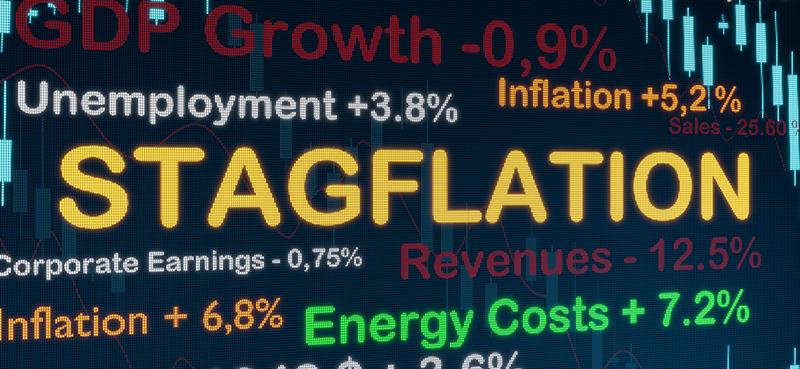


For months, the market has been celebrating the supposed death of inflation. As recently as January 2026, the Consumer Price Index (CPI) was running at just 2.4% year over year (YoY).
The Fed had cut rates. The headlines had moved on. And most investors quietly rotated back into long-duration assets, assuming the inflation fight was ancient history.
That was a mistake.
The latest data is flashing a warning sign that very few people are paying attention to right now… And if it plays out the way the numbers suggest, it will reshape the investment landscape heading into the second half of 2026.
Here’s what the numbers actually show
Over the last six months, CPI inflation has averaged 0.4% month-over-month. That doesn’t sound alarming on its own. But when you zoom out, the trajectory is what matters.
March came in at 0.9% month-over-month. April followed at 0.6%. Those aren’t rounding errors. Those are the kinds of readings we were seeing during the worst of the 2022 inflation surge.
Energy is doing a lot of the heavy lifting here, but this isn’t just a one-line-item story. Core CPI also ticked higher, which tells us the pressure isn’t limited to gasoline or oil.
Do the math, and it gets uncomfortable fast.
If the CPI continues to rise at this pace, YoY inflation is on track to hit 5.2% by the November midterms.
That would be the highest reading since February 2023, and more than double where we started this year.
And here’s the kicker: Even if monthly prints were to cool all the way back down to 0.3% from here, YoY inflation would still rise to 4.4%, the highest level since April 2023.
There is no base case here where inflation just quietly goes away.
Why this matters so much right now
The Fed spent the back half of 2025 cutting rates aggressively. Between September 2024 and December 2025, the Fed slashed rates by 175 basis points, bringing the Fed funds rate down to 3.50–3.75%.
Those cuts made sense when inflation looked contained… But now, the Fed is caught in an impossible position.
To cut further would pour fuel on an inflation fire that’s already burning hotter than anyone expected. On the other hand, raising rates again could torch a stock market that’s been pricing in a soft landing.
And doing nothing gets criticism from both sides.
There’s no clean exit here. And that uncertainty will create volatility across equities, bonds, and everything in between.
What you should be doing about it
First, don’t panic. Inflation is a problem, but it’s also a roadmap.
Commodities have historically been the most effective inflation hedge, with a higher “inflation beta” than gold, Treasury Inflation-Protected Securities (TIPS), or stocks. (Inflation beta measures how sensitive an asset tends to be to changes in inflation.) So commodity-linked ETFs are worth a look.
Gold is the other obvious move. In fact, it’s already been acting like it knows something. Investor and central bank demand for gold totaled roughly 980 tonnes in Q3 2025, more than 50% above the average of the prior four quarters. That kind of demand doesn’t show up by accident.
For fixed-income investors, TIPS are worth looking into. The principal on TIPS adjusts with CPI, which means rising inflation actually works in your favor instead of against you.
What you want to be trimming: long-duration bonds. Rising inflation pushes yields higher, which crushes the price of long-dated Treasuries. If you’re holding anything with a 20- or 30-year maturity and no inflation protection, now is a good time to reassess.
The bottom line
The inflation story isn’t over. It never really was.
The last six months of CPI data show the trend. If it holds, the Fed will have to rethink its next move. Bonds will reprice. And the investors who prepared early will have a major advantage.
The market is not fully pricing this in yet.
That’s your window.
For more deep-dive insights into the latest market-moving headlines—and how to position your portfolio—start your Wall Street Unplugged Premium membership today.
Curzio Research publishes market commentary for informational and educational purposes. The opinions expressed and market conditions when the content is published may change. It is not personalized investment advice or an offer to buy or sell securities. Investing involves risk, including possible loss of principal. Do your own research and consult a qualified investment professional before making investment decisions.