
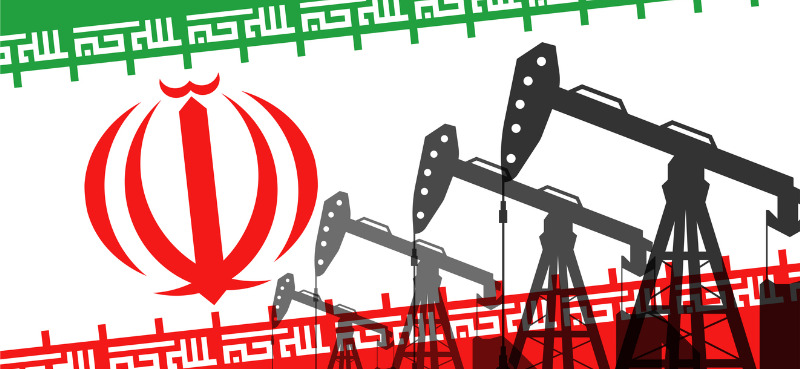
Oil prices jumped this week. Airline stocks dropped sharply. And fertilizer companies are suddenly rallying.
The reason behind all of it is the escalating conflict with Iran—and the disruption of one of the world’s most important shipping lanes: the Strait of Hormuz.
Over the past week, U.S. and allied forces launched coordinated strikes against Iran after intelligence suggested the country was moving closer to developing nuclear weapons. The strikes targeted several military locations and key regime figures.
Iran responded quickly with missile attacks. And within days, the conflict spilled into global markets when shipping through the Strait of Hormuz—the narrow waterway between Iran and Oman—effectively came to a standstill.
That’s when the energy shock began.
Roughly 20% of the world’s oil supply moves through that single shipping lane—and right now, almost nothing is moving through it.
The shipping lane that powers the global economy
The Strait of Hormuz carries an enormous portion of the global energy supply. Oil tankers leaving Saudi Arabia, Iraq, Kuwait, the UAE, and Iran all pass through it before reaching global markets. Under normal conditions, dozens of energy tankers pass through the strait every day.
In the days following the attacks, that number collapsed to practically zero.
Technically, the strait isn’t closed… But in practice, it might as well be, as insurers and shipowners are steering clear of the conflict zone.
Unsurprisingly, the energy markets reacted immediately.
Within days of the conflict escalating, oil prices surged to around $90 per barrel… natural gas prices jumped… And liquefied natural gas (LNG) markets tightened dramatically.
The ripple effects are spreading across multiple industries.
For instance, a shortage in jet fuel is pushing airline stocks down. Over the past two weeks, Delta Air Lines (DAL), United Airlines (UAL), and American Airlines (AAL) have each fallen roughly 15%.
Another example: the fertilizer market. About one-third of global urea exports pass through the Strait of Hormuz. (And it happens to be planting season in the Northern Hemisphere, where 90% of the world’s population lives.) Shares of fertilizer giant CF Industries (CF) have surged as traders anticipate tighter fertilizer supply.
Why U.S. markets aren’t collapsing
Investors might be surprised to see that the U.S. markets have held up, despite the geopolitical tensions. If a similar conflict had happened two decades ago, markets likely would have reacted much more violently.
That’s because the global energy landscape has changed dramatically. Twenty years ago, the U.S. relied heavily on Middle East oil… But today, the U.S. is the world’s largest energy producer.
Including crude oil and natural gas liquids, the U.S. produces roughly 22 million barrels per day.
Meanwhile, domestic consumption sits around 20 million barrels per day.
That means the U.S. produces enough energy to meet its own needs.
Energy independence has become one of America’s biggest economic advantages.
What history says about investing during wars—and which sectors will benefit
The instinct during geopolitical crises is often to sell stocks out of panic. But historically, that reaction often leads to the wrong decision.
According to data from Jefferies, buying equities during major conflicts has produced positive outcomes surprisingly often: Stocks ended higher about 68% of the time after one month… 62% after six months… and 71% after one year.
Once markets adjust to the initial shock, attention usually shifts back to earnings and economic growth. That’s why periods of geopolitical stress often create buying opportunities.
Several industries stand to benefit if energy prices remain elevated.
Oil producers such as Exxon Mobil (XOM), Chevron (CVX), EOG Resources (EOG), and Devon Energy (DVN) are the most obvious winners. Even relatively small price increases can have a large impact on their profitability.
Natural gas and natural gas liquids producers could see higher demand and stronger pricing as global energy supply tightens.
On the latest episode of Wall Street Unplugged Premium, Frank revealed several more stocks that stand to benefit from the Iran War. Here’s how to access the episode.
The bottom line
The Iran conflict is a serious geopolitical event. For investors, the most important takeaway is the global energy system.
The Strait of Hormuz sits at the center of oil supply, LNG exports, jet fuel markets, fertilizer shipments, and more.
And when that system gets disrupted, the ripple effects spread quickly across the global economy.
Understanding those ripple effects is where the best investment opportunities often appear.
Curzio Research publishes market commentary for informational and educational purposes. The opinions expressed and market conditions when the content is published may change. It is not personalized investment advice or an offer to buy or sell securities. Investing involves risk, including possible loss of principal. Do your own research and consult a qualified investment professional before making investment decisions.